
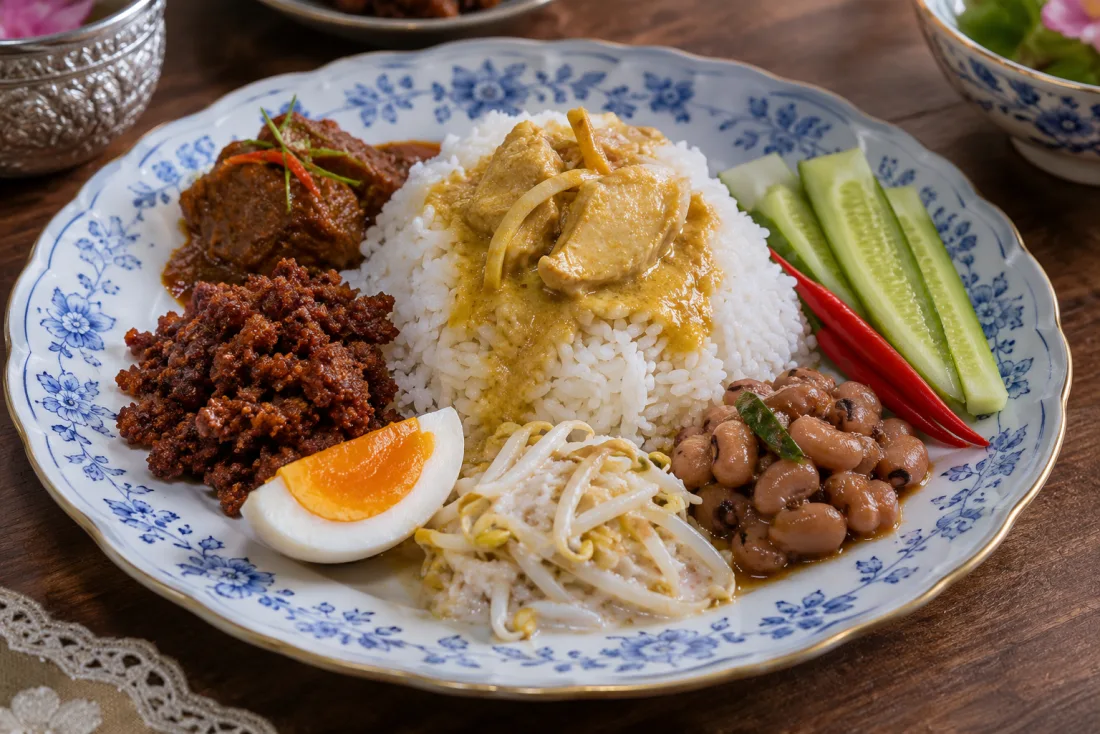

 chicken
 beef panang
How to recognize the rice and sides
Khao means rice and Chawa means Java. A mound of white rice sits with several distinct accompaniments. Coconut curry chicken supplies a sauce, while shredded salted beef, panang beef, salted egg, sprouts, cooked beans and cucumber can remain separated on the plate.
How the Thai cookbook describes the dish
Tamrap Ahan records the meal under the Thai title. It describes spooning a little of each side around the rice, moistening it with the chicken sauce and mixing it when eating. Cucumber with chili and salt is a separate accompaniment. The name records a Thai cookbook usage.
Ingredients of a composed rice plate
Chicken cooks in coconut milk with curry powder and an aromatic leaf. Panang beef supplies a thicker sauce and salted beef can be pulled into strands and fried. The archive also includes cooked salted egg, soybean sprouts, cooked beans, fresh cucumber and chili.
Soft coconut and contrasting sides
The coconut chicken is smooth, with a warm curry aroma. Panang beef tastes concentrated. Salted shredded beef brings crispness and a little sweetness, while the egg yolk is dense. Cucumber and sprouts refresh the palate between salty bites.
How to put a lunch plate together
Add chicken sauce to only part of the rice at first, then alternate bites of plain rice, curry, egg or crisp beef. Keep cucumber at the edge. Ask what accompanies the rice if a restaurant serves a smaller version.
Allergens and the two beef preparations
The salted egg contains egg and the soybean sprouts contain soy. Coconut is present. Panang paste may include shrimp paste, fish sauce or peanuts depending on the kitchen. Check each side and shared spoons. Sauces and accompaniments touch the rice after serving.
If you have a food allergy, tell the restaurant before ordering and ask about ingredients, sauces and shared cooking equipment.