

 minced pork
 shrimp paste
A southern Thai curry with a dry finish
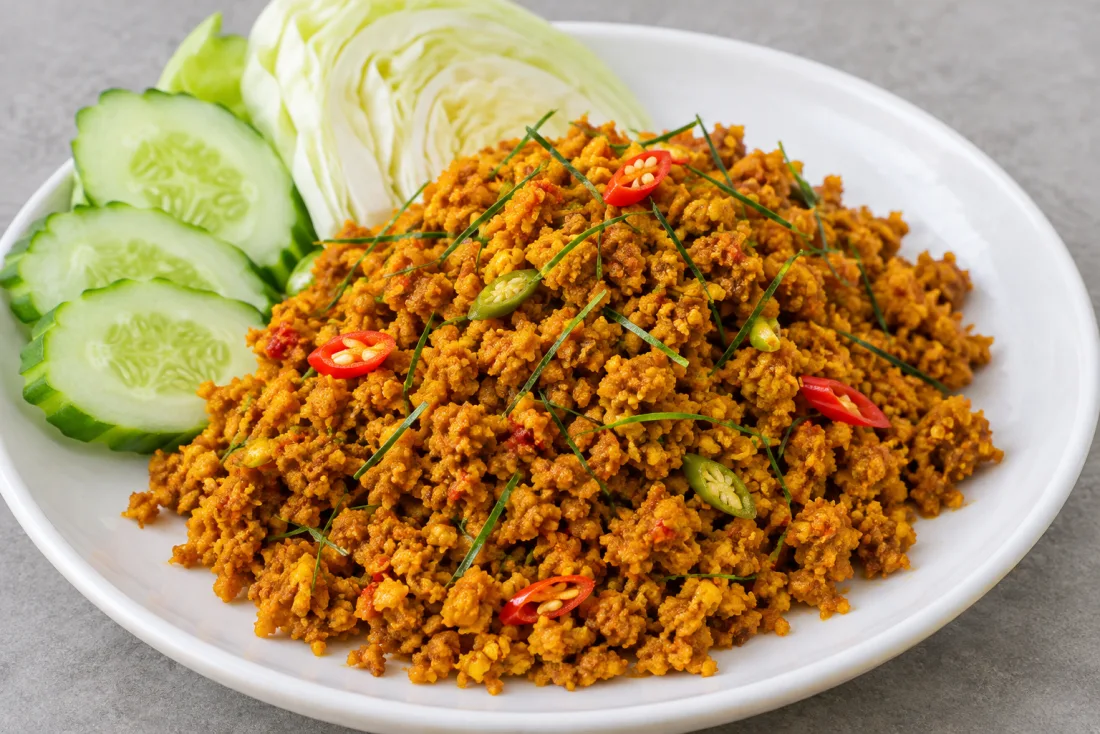
Khua is a roasting or tossing motion in the pan, and moo means pork. The dish is called a dry curry because its seasoning clings to crumbs of meat rather than forming a pool of sauce. It is yellow-orange to brown, often with green shreds and red chilli.
Mahidol University’s Institute of Nutrition places it in southern Thailand and notes its wider recognition. That documents a regional tradition and leaves the first province open. It fits a meal of rice, fresh vegetables and a smaller amount of something fiercely seasoned.
How pork, turmeric and pepper shape the dish
Mahidol uses coarsely chopped pork. Its paste combines lemongrass, garlic, galangal, turmeric, makrut lime rind, soaked dried bird’s-eye chillies, pepper, shrimp paste and fingerroot. Turmeric lends colour, the herbs give several kinds of fragrance and shrimp paste brings salty savouriness.
Fresh peppercorns and fine makrut lime leaf go in towards the end. A green peppercorn can give one bite a fresher heat. Ground dry pepper spreads its warmth through the meat. Thin lime leaves perfume the dish even in small amounts.
How the cook loosens the pork and fries the paste dry
The Mahidol method starts by breaking up the pork in the pan, then adds paste and tosses until the meat is well coated. Some southern cooks fry the paste first and use a small splash of water to help it mix with the pork. Both aim to cook off free liquid and leave loose crumbs.
A coarse chop holds more of its bite than a very fine mince. Once the curry is dry, the fragrance of the paste and pork comes through together. The yellow-orange tint comes from the chilli and turmeric carried on the outside of the meat.
Chilli heat, pepper warmth and the rice and vegetables
The first taste is savoury. Chilli gives a direct kick, and pepper brings a drier warmth that lingers after chewing. Turmeric, lemongrass and makrut lime give the meat earthy and citrus notes. The grainy texture is easy to pick up with rice.
Mahidol recommends hot rice and fresh vegetables. Cucumber is cool and moist, while cabbage gives crunch. Much of the heat is already pounded into the paste, so asking for less fresh chilli only reduces part of it.
What can vary by cook and how to read the name
The same dry-fry style can be used for chicken or beef. The last word on the Thai menu normally names the meat. The pork version can use chopped or minced pork. It stays recognisable by the crumbly texture and strong heat. Field recipes vary the fresh peppercorn, lemongrass and lime-leaf amounts.
A kitchen may pound its own paste or start with a prepared paste. One version can emphasise turmeric and another pepper. The name identifies the cooking style and the meat, while ingredients such as fingerroot or fish sauce depend on the recipe.
Allergens to ask about: crustaceans, fish and prepared paste
The main ingredient is pork. Mahidol also uses shrimp paste, a source of crustacean shellfish. Some kitchens season it with fish sauce or a prepared paste containing seafood. Ask about the paste, extra seasonings and sides even if there are no visible shrimp.
If a shop uses premixed paste, ask about the ingredient label and whether it shares a mortar, board, spatula or wok. For pork restrictions, a chicken or beef version still warrants asking about separate storage, cooking fat and shared equipment.
If you have a food allergy, tell the restaurant before ordering and ask about ingredients, sauces and shared cooking equipment.