

 chicken
 pork
Recognizing chicken-and-pork sausage
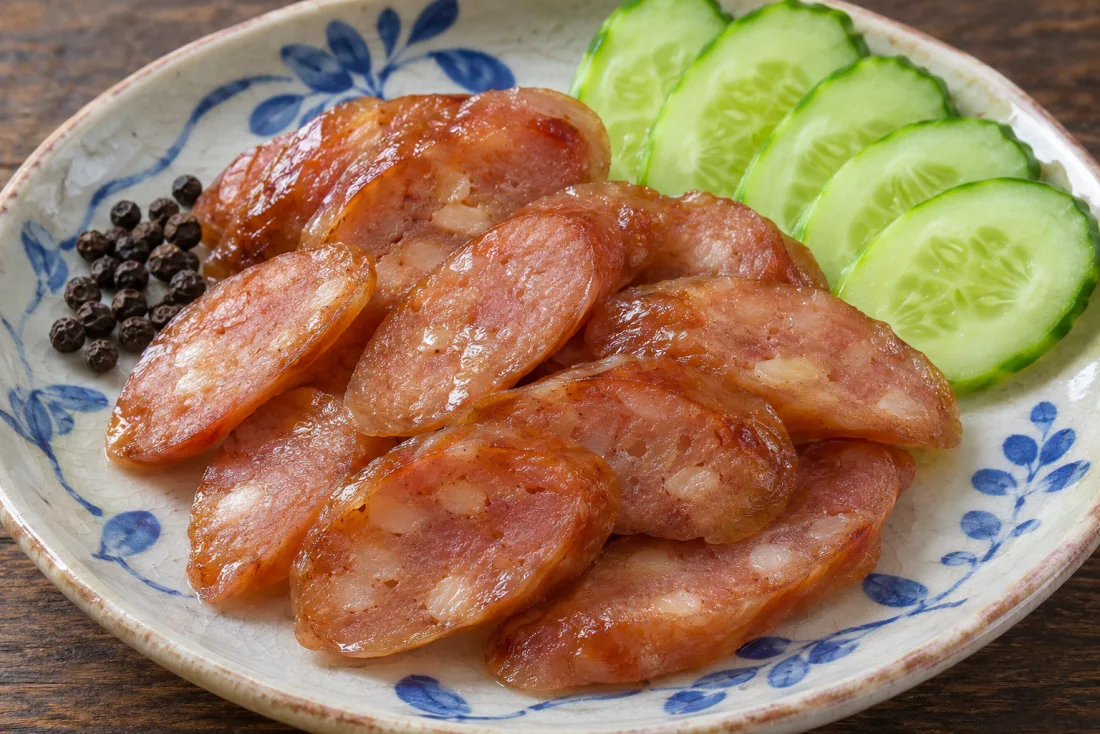
The Thai name uses an older spelling associated with kun chiang sausage. Slices show a firm, slightly glossy cut surface and small pieces of meat in different shades. On cooked slices the thin casing and browned edges make a fragrant contrast.
A sausage in a Thai cookbook
Tamrap Ahan lists this chicken version alongside a separate sausage seasoned in another way. Thai kun chiang can be understood in the context of Chinese-style preserved sausage adapted by Thai cooks. This archived recipe does not assign its chicken version to a specific province.
The roles of chicken, pork and ginger
The cook combines chicken, pork and pork fat with ginger juice, rice cooking wine, honey, sugar, salt and light soy sauce, and uses pork casing. Ginger juice disperses through the meat, and the lean and fatty parts give the slice different textures. The cookbook describes pairs of links and mentions fresh and dried forms. Follow a seller's handling instructions for the specific product.
One or two slices deliver plenty of flavor
Browning makes the outer edge fragrant, while the inside stays firm and lightly springy. Soy sauce supports the sweet-salty base; the gentle ginger aroma lingers after the honey. A thin slice emphasizes the browned edge. Thick slices emphasize the meat.
Serving slices or a rice plate
Share cooked slices with cucumber, or serve them with a portion of plain rice. Plain rice porridge also suits the concentrated sausage. Menus may shorten the name to chicken sausage, so check which meats and casing the kitchen uses.
Allergens, pork casing and cooking wine
Light soy sauce contains soy and may contain wheat. The recipe uses pork meat, fat and casing, plus a little Chinese cooking wine. Ask about shared knives and pans. Cook raw chicken sausage thoroughly. Browning alone cannot show whether the center is cooked.
If you have a food allergy, tell the restaurant before ordering and ask about ingredients, sauces and shared cooking equipment.