
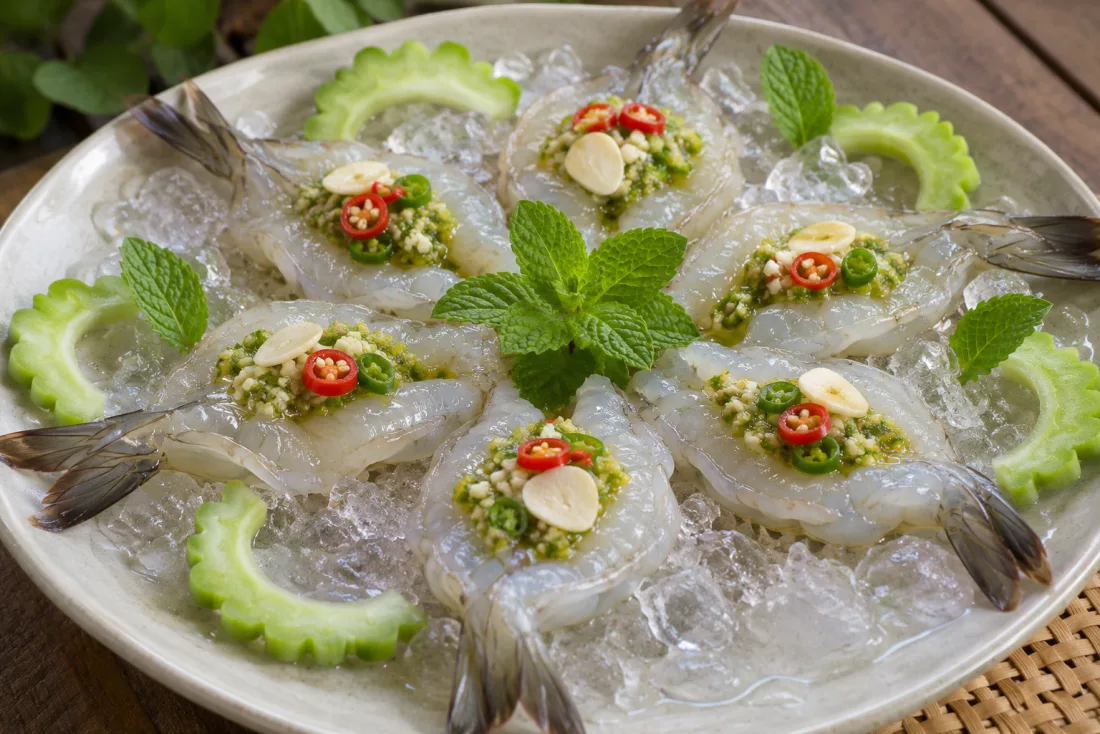

 raw shrimp
 fish sauce
A cold dish served with raw shrimp
Kung che nam pla means shrimp steeped or dressed in fish sauce. The documented Thai preparation serves raw shrimp. Ask about doneness if a menu only says marinated shrimp.
Shrimp, lime and fresh aromatics
The chef’s example uses shrimp, fish sauce, lime, bird’s eye chili, garlic and coriander root, with bitter melon, garlic and mint on the side. Other versions may use a little sugar.
Savory, sour, spicy and chilled
Fish sauce adds salinity, lime a fresh acidity, and chili and garlic give direct heat and aroma. Bitter melon adds crispness and slight bitterness. A fully cooked shrimp adaptation keeps the seasoning with a firmer texture.
Presentation and cooked alternatives
The traditional plate arranges raw shrimp with herbs and sauce. Lime juice and chilling are for flavor and service. Ask for fully cooked shrimp and clean utensils and dressing that have not touched raw shrimp if choosing a cooked variation.
Ordering and related Thai dishes
Thai menus also offer fully cooked shrimp salads, steamed shrimp and grilled shrimp with seafood dip. Ask about both doneness and whether the dressing comes separately. Color alone cannot establish safe cooking.
Allergens and foodborne illness
Shrimp is a crustacean and fish sauce contains fish. Ask about other sauces and cross-contact. Raw shrimp can carry pathogens. Fish sauce, lime, brief freezing and rinsing do not reliably replace cooking. Pregnant people, young children, older adults and immunocompromised people should especially avoid raw or undercooked shrimp.
If you have a food allergy, tell the restaurant before ordering and ask about ingredients, sauces and shared cooking equipment.