
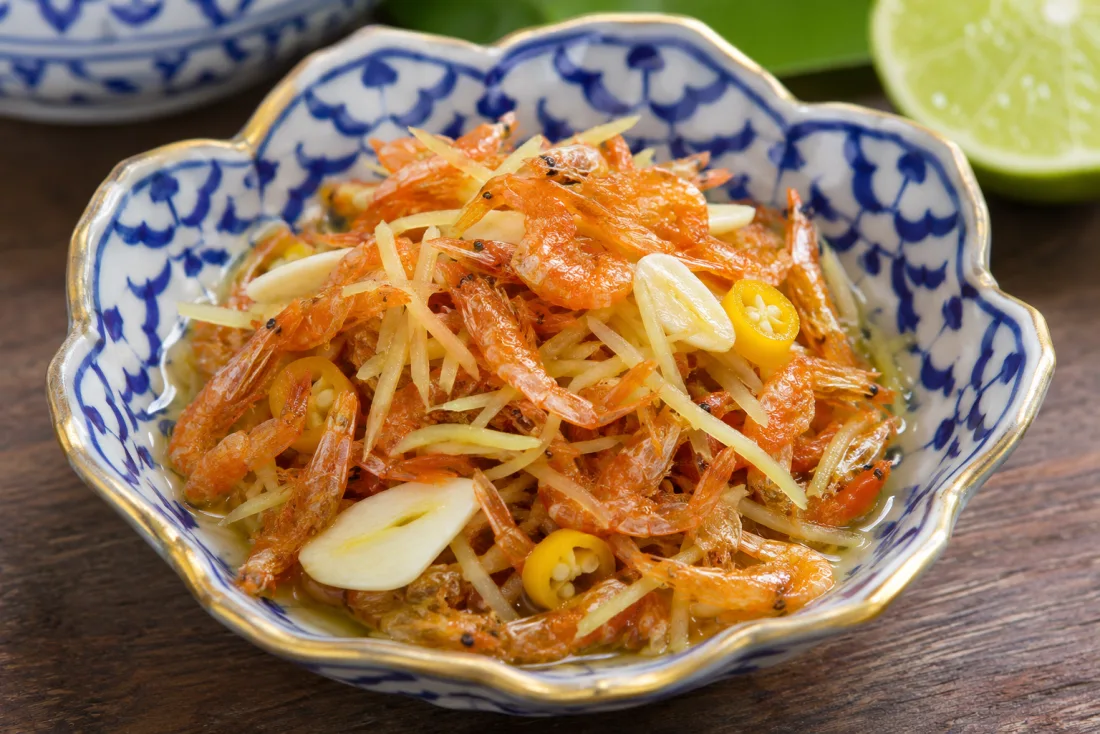

 dried shrimp
 fish sauce
Dried shrimp and fresh ginger
Kung haeng means dried shrimp and prung khing means seasoned with ginger. The small shrimp turn orange and crisp. Fresh ginger is cut into pale slivers and the garlic can appear as thin slices. The shrimp stay whole or in discernible pieces.
A Thai cookbook side for rice
A historical Bangkok cookbook records frying mild small dried shrimp and finishing with ginger and garlic. Smaller servings work beside rice, soup or vegetables. Dried shrimp vary by supplier and salt level. The documented recipe does not establish a single place of origin.
Dried shrimp, ginger, garlic and chili
The original recipe uses small dried shrimp, fresh ginger, garlic, fish sauce, lime, yellow chili and optional sugar. Shrimp saltiness determines how much fish sauce to add. Thin fresh aromatics release flavor into the sauce. Some kitchens serve a lime wedge separately.
Fry and season just before serving
Choose shrimp from a reliable supplier and follow the packaging directions. Drain before frying. Cook the shrimp through and drain with clean utensils, then combine with sliced ginger and garlic. Add lime dressing close to serving so the shrimp stay crisp.
Crisp shrimp, sharp ginger and citrus
Fried dried shrimp is crunchy and deeply savory. Ginger and garlic give a sharp freshness and lime adds a bright acidity. Yellow chili brings variable heat. Rice makes the seasoning gentler and a fresh cucumber bite can work alongside.
Allergens and shared frying tools
Dried shrimp is a crustacean and fish sauce contains fish. Oyster is a mollusk. Check labels for soy, wheat or sulfites if relevant. Ask about seasoning and shared tools and fryers. Cooking or removing the dressing cannot remove the shrimp allergen.
If you have a food allergy, tell the restaurant before ordering and ask about ingredients, sauces and shared cooking equipment.