

 prawn
Prawns and a pale melon base
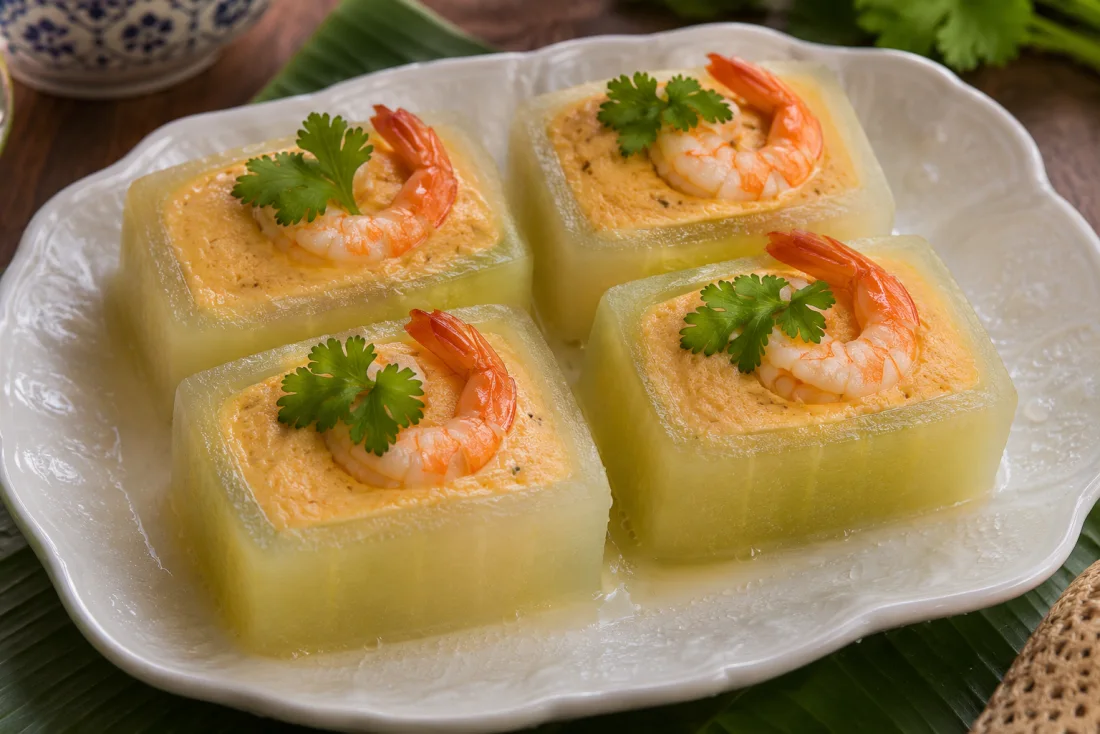
Kung means prawn or shrimp. This dish pairs the seafood mixture with shaped winter melon pieces, which can hold a small portion of savory custard. A prawn tail may be visible on top. The exact species and presentation depend on the kitchen.
Small portions in a Thai cookbook
A historical Bangkok cookbook puts prawns, coconut cream, yolks and seasonings together with cut winter melon. Small pieces are easy to share or serve with rice. This records a Thai preparation. Availability depends on the kitchen.
Prawns, yolks, winter melon and aromatics
The ingredients include prawns, coconut cream, yolks, dried chili, shallot, garlic, galangal, lemongrass, cilantro root, pepper, salt and winter melon. Some prawns keep their tails. The coconut and yolk give the mixture its rich texture.
Cook the prawn and egg mixture through
Clean and prepare the melon. Heat the prawns and egg custard through at the thickest point. Color alone cannot establish doneness. Use clean serving tools and keep equipment that handled raw shrimp and egg away from the finished dish.
Soft melon and savory coconut custard
Winter melon is mild and moist, while coconut and egg taste rich. The prawn feels springy and the herbs add warmth and citrus-like fragrance. Dried chili brings variable heat. Plain rice can soften the seasoning.
Allergens in prawn, yolk and sauces
Prawn is a crustacean and yolks are egg. Ask about coconut and any added fish sauce, oyster sauce, soy or wheat. Check shared serving and cooking equipment. A portion without a visible prawn can still contain shrimp in the custard.
If you have a food allergy, tell the restaurant before ordering and ask about ingredients, sauces and shared cooking equipment.