

 prawns
 fish sauce
What the Thai name describes
Kung is prawn, tha means to spread or rub, and phrik thai is pepper. This historical version uses black or white peppercorn seasoning in a prawn dish, with no fresh chili listed. The archive does not identify one birthplace.
Prawns, garlic and coriander root
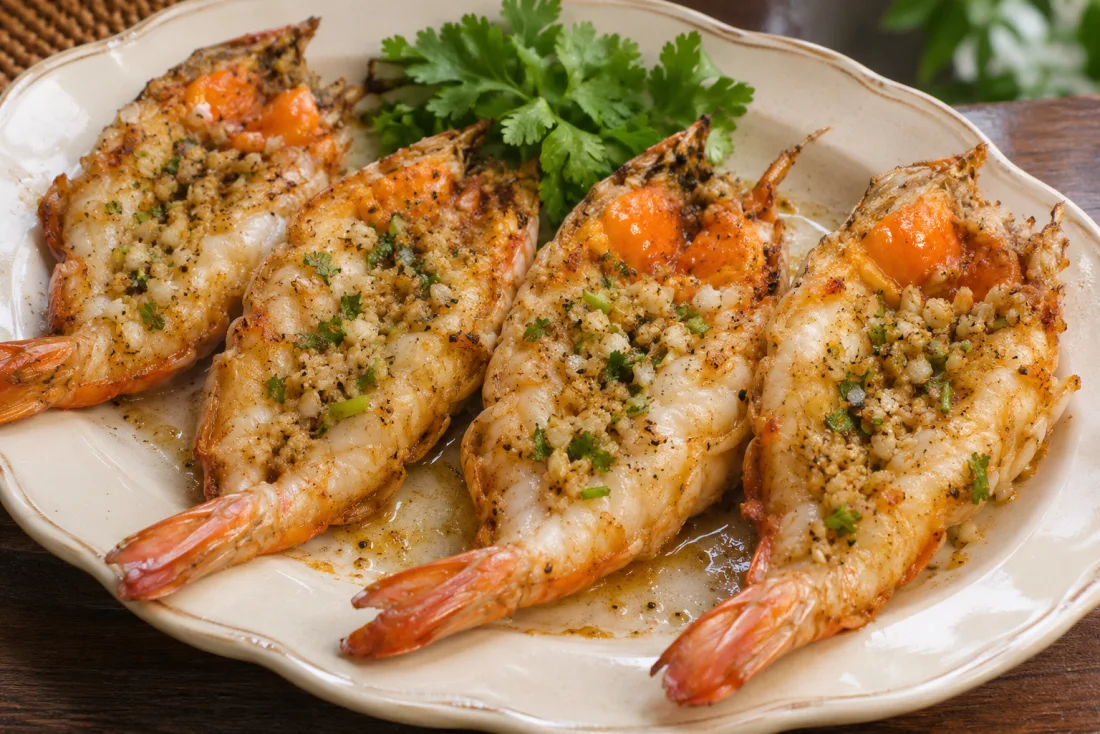
The recipe uses large prawns, peppercorns, garlic, coriander root, fish sauce and lard. The pounded paste coats the prawns. Plant oil substitutions can change the flavor and pork content.
Sweet prawn and warm pepper
The prawns are juicy and springy with savory fish sauce, garlic and a warm pepper finish. Cooking oil carries the spice aroma. A golden surface or red prawn color does not imply chili.
Scoring and pan-frying
The prawns are peeled and opened from the back. The cook rubs them with the spice mixture and fish sauce, pan-fries them until cooked and spoons some pan oil over them. No batter is listed.
Serving and related prawn dishes
Serve with rice and other dishes. Some garlic prawn dishes are stirred in a wok, topped with crisp garlic or deep-fried in batter. Ask about the prawn species, the tail shell and the restaurant’s finish.
Allergens and cooking fat
Prawns are crustaceans and fish sauce contains fish. Historical lard is pork-derived. Check added oyster or soy sauces, wheat and shared pan equipment as relevant. Removing surface paste does not remove prawn or fish exposure.
If you have a food allergy, tell the restaurant before ordering and ask about ingredients, sauces and shared cooking equipment.