
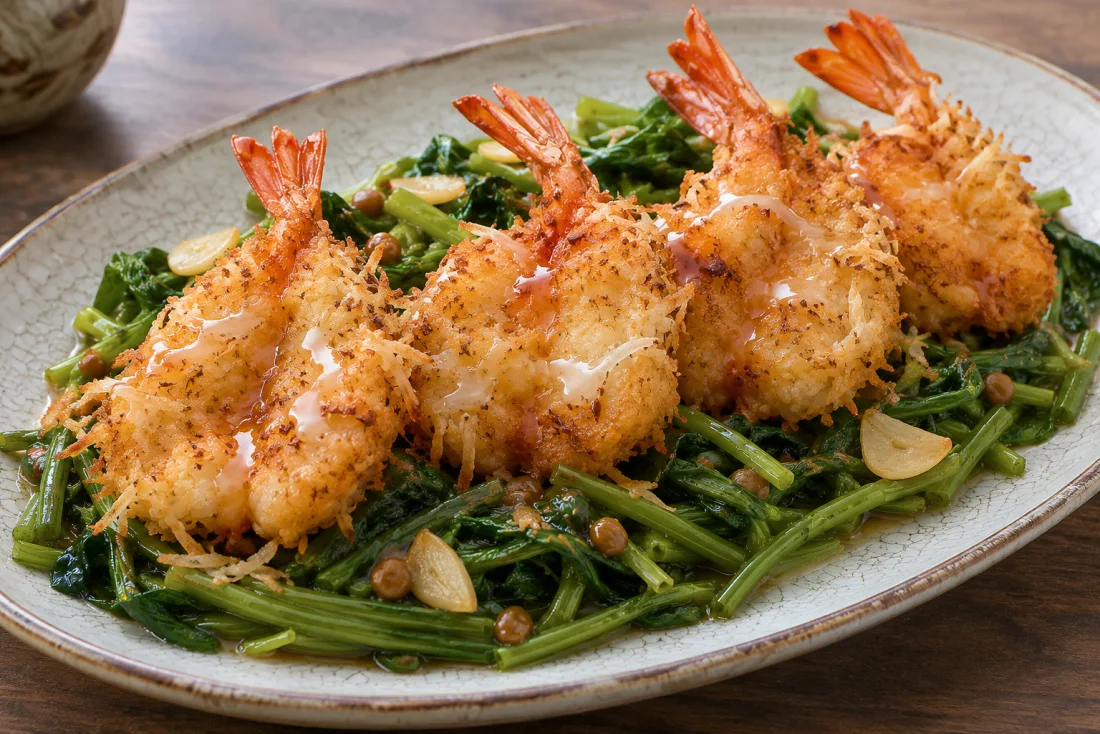

 white shrimp
Fried shrimp and greens on one plate
Kung thot prung rot means seasoned fried shrimp. The historical version uses a coconut and rice coating and pairs prawns with water spinach. Tail-on shrimp can sit over the cooked greens and dressing may come on the side. Ask about the actual coating.
A Thai cookbook fried dish
A historical Bangkok cookbook lists white shrimp, water spinach, garlic and liquid fermented soybean paste. Crispy shrimp and cooked greens bring different textures. Share them with rice or order as one dish alongside soup.
Shrimp, glutinous rice flour, coconut and soybeans
The original lists white shrimp, water spinach, garlic, fermented soybean paste, glutinous rice flour, coconut milk, salt, vinegar, sugar, traditional shrimp seasoning and lard. The batter has a mild coconut aroma. Fermented bean sauce provides savoriness.
Cook shrimp and greens properly
Coat the trimmed shrimp and fry until firm and opaque through the thickest part. Cook the washed greens, drain, and season. Keep raw shrimp equipment separate and add the dressing near serving. Store cooked food appropriately.
Crisp coconut coating and savory greens
The shell is crisp, shrimp tastes sweet and springy, and garlic and soybean paste give the greens depth. Vinegar and sugar can add a sweet-sour finish. Rice can catch the vegetable juices.
Allergens in shrimp, soy and fryer
Shrimp and shrimp-derived seasoning contain crustaceans. Fermented soybean paste contains soy and may contain wheat. Ask about fish, oyster, coconut, lard and shared frying or serving equipment. Rice flour does not rule out wheat contact.
If you have a food allergy, tell the restaurant before ordering and ask about ingredients, sauces and shared cooking equipment.