
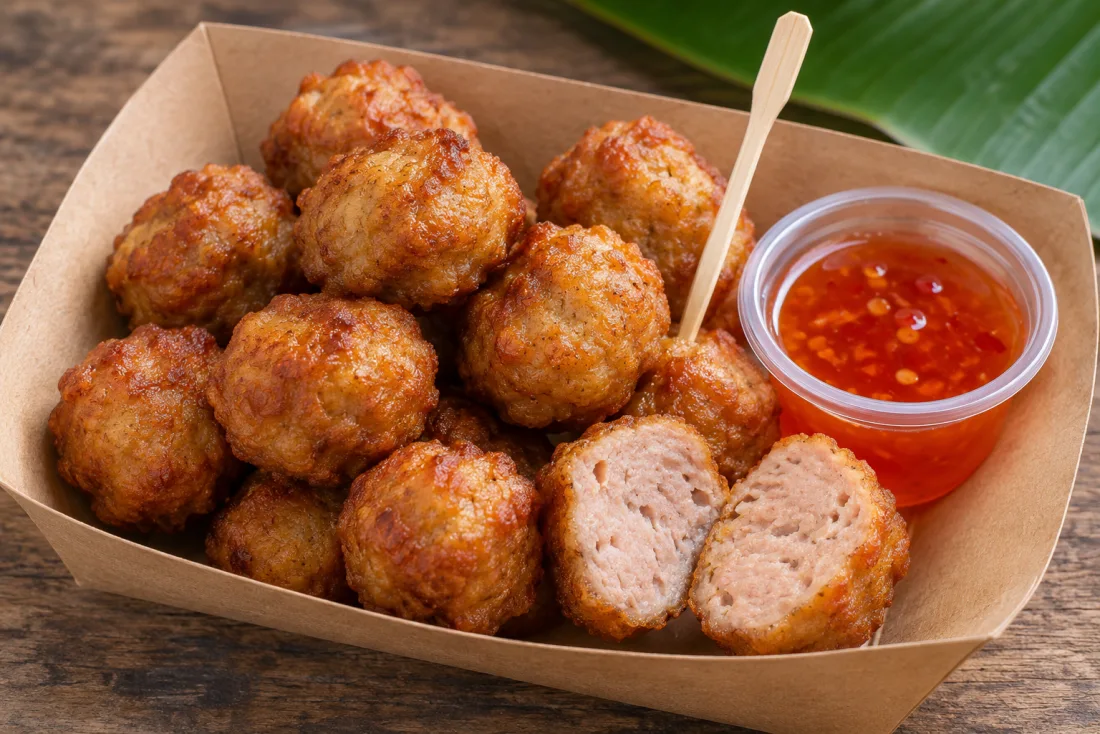

 pork meatballs
What the Thai name describes
Luk chin moo thot means oil-fried pork balls. They may be fried directly or with a light batter. Fish balls, sausages and fried dumplings can appear beside them in mixed snack portions.
Thai stalls and home snacks
Fried pork balls can be sold on skewers, in paper trays or on sharing plates. Some sellers pair them with tamarind dip and cucumber. Check the listing if you want pork balls only and the stall also sells mixed fry assortments.
Pork balls, frying oil and sauce
A Thai recipe fries prepared pork balls directly in oil. Pork ball formulas use pork, tapioca starch, salt, pepper, garlic and coriander root, among other ingredients. Another fried ball recipe adds a rice flour coating and a tamarind sauce with palm sugar, chilies and pickled garlic.
Frying the outside and heating the center
Check whether the balls are sold raw or previously cooked. Dry the surface before frying and cook the center through. A light coating or browned surface does not establish doneness. Drain the balls and keep sauce separate to preserve the crispness.
Pork, browning and different dips
A freshly fried ball is lightly crisp outside and savory and springy inside. Garlic and pepper can be noticeable. Tamarind gives fruit acidity, while sweet chili sauce delivers sweetness and heat. Cucumber refreshes the bite.
Allergens in coatings, sauces and oil
Prepared pork balls and coatings may contain wheat, soy, egg or milk. Fish sauce contains fish, oyster sauce can contain molluscs and some sauces may use shrimp or peanuts. Ask about the balls, batter, dipping sauce and shared fryer.
If you have a food allergy, tell the restaurant before ordering and ask about ingredients, sauces and shared cooking equipment.