

 beef
Reading the beef ball name
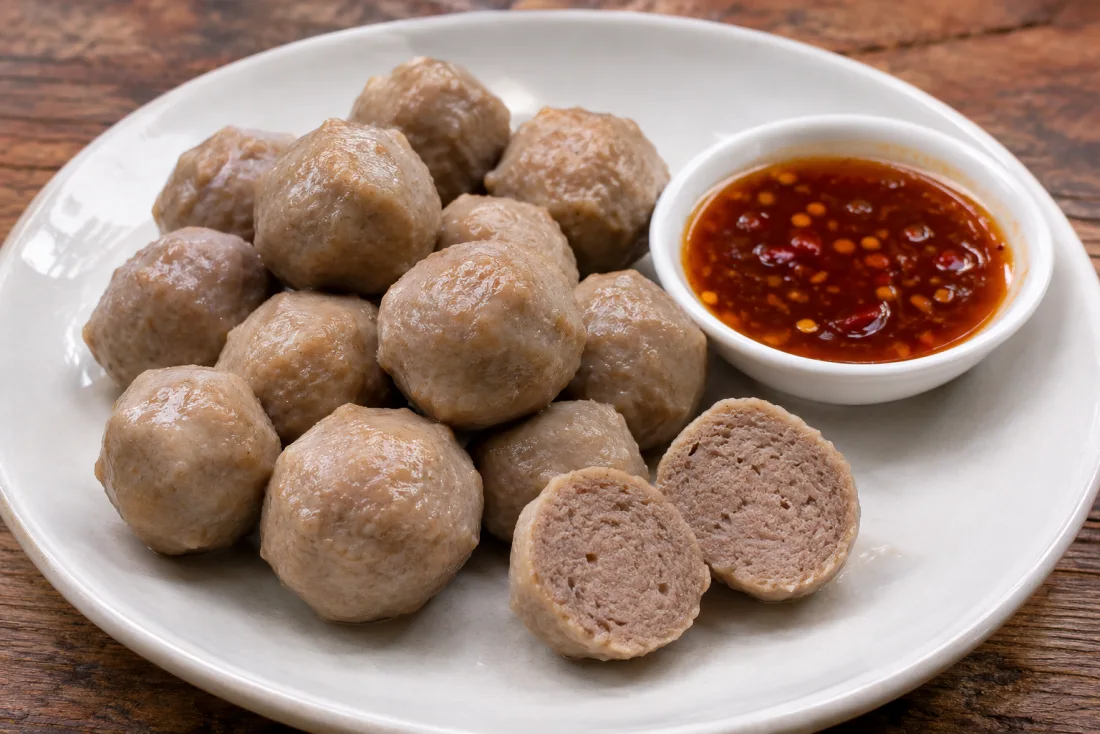
Luk chin neua identifies beef balls. A menu can specify beef tendon balls for a more varied chew. Luak chim means poached and served with a dip, while ping signals grilled skewers. The plain round ball is the example here.
Snacks and noodle shops in Thailand
Thai sellers offer poached beef balls separately, or mix them with beef slices and braised beef in a noodle bowl. A plate to share emphasizes the bounce of the meatballs. A soup serving can add herbs or vegetables.
Beef, starch and seasoning
One Thai recipe uses lean beef, tapioca starch, salt, pepper, baking powder and cold water. Another adds tendon, fish sauce, garlic and other starches. Dipping sauces can include tamarind or lime and chilies, depending on the shop.
Forming and poaching the balls
Keep the beef mixture cold while preparing it, shape roughly even rounds, and cook them through gently so they keep their shape. Floating alone does not establish doneness. Serve promptly with dip or warm them in broth.
Firm bite and savory flavor
The balls have a springy bite and savory beef flavor with mild pepper. Chili dips can bring vinegar, lime or tamarind acidity and some sweetness. Try a ball plain to distinguish its flavor from the dip.
Allergens in balls, sauces and broth
Depending on the product, meatballs can contain wheat, soy or egg. Fish sauce contains fish, and oyster sauce may contain molluscs. Check the finished ball, dip, broth and any shared blanching basket.
If you have a food allergy, tell the restaurant before ordering and ask about ingredients, sauces and shared cooking equipment.