

 fish
Recognizing fish balls
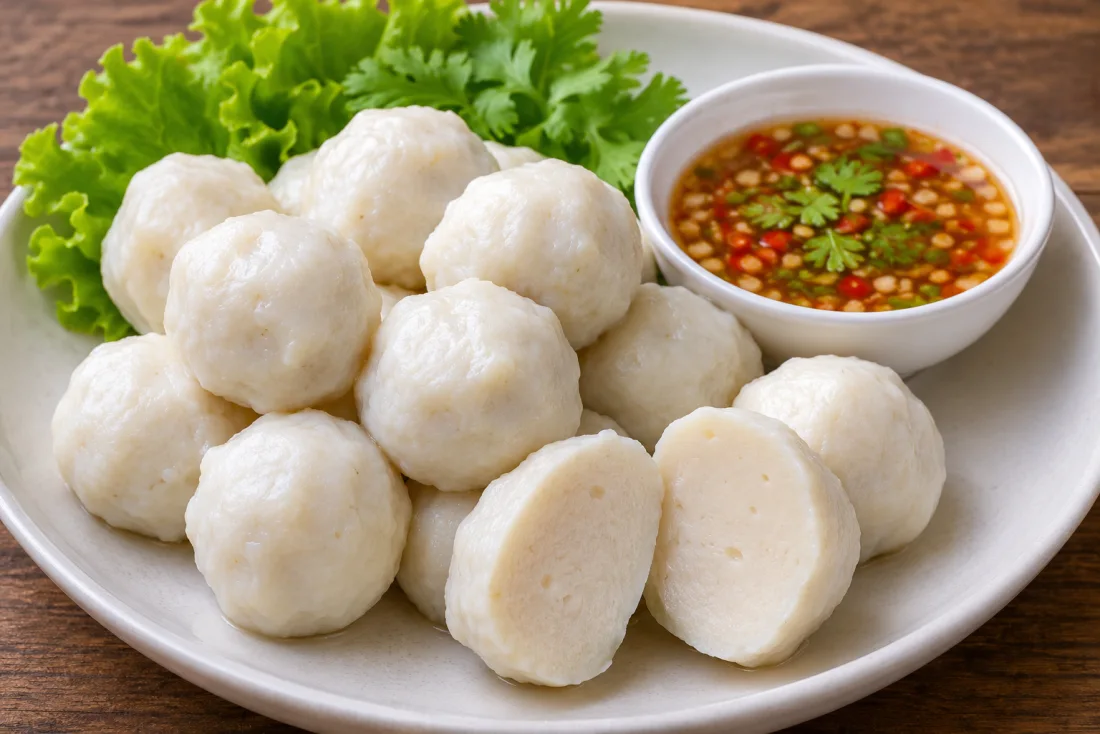
Luk chin pla are fish balls, often round or oval and pale after poaching. Fish dumplings, fish rolls and fish cakes can appear on the same menu as separate items. The fried version has a drier exterior than the poached balls described here.
Thai fish ball shops and noodle counters
Thai recipes show fish balls served warm with Chinese celery, fried garlic and dip. They also appear in noodle soup with bean sprouts and other seafood toppings. Bowls and sharing plates vary by seller.
Fish and binders
One recipe combines Spanish mackerel with two other fish, adding crushed ice, cold water, egg whites and sea salt. Another blends fish with tapioca and wheat flour, seasoning and pepper. The binders and fish differ by recipe.
Grinding, shaping and thorough cooking
Finely grind and mix the fish while cold, then shape evenly and poach thoroughly. Floating is a visual cue and does not establish doneness alone. Finished fish balls can be warmed in the serving broth. Check whether shop-bought balls are raw or already cooked.
Fish flavor and different dips
The balls taste gently briny, with a springy bite. Clear soup can add scallion or celery, while a dip can add fermented soy, lime, chili, garlic and ginger. Some fish ball noodle shops use pork stock.
Allergens in fish, binders and seasoning
The balls contain fish. Some recipes use egg whites, wheat or soy, and others may add shrimp. Check dipping sauce, soup, noodles and a shared blanching basket. The fish topping does not establish what went into the broth.
If you have a food allergy, tell the restaurant before ordering and ask about ingredients, sauces and shared cooking equipment.