

 pork
 fermented shrimp seasoning
Why the papaya is shaped like a jar
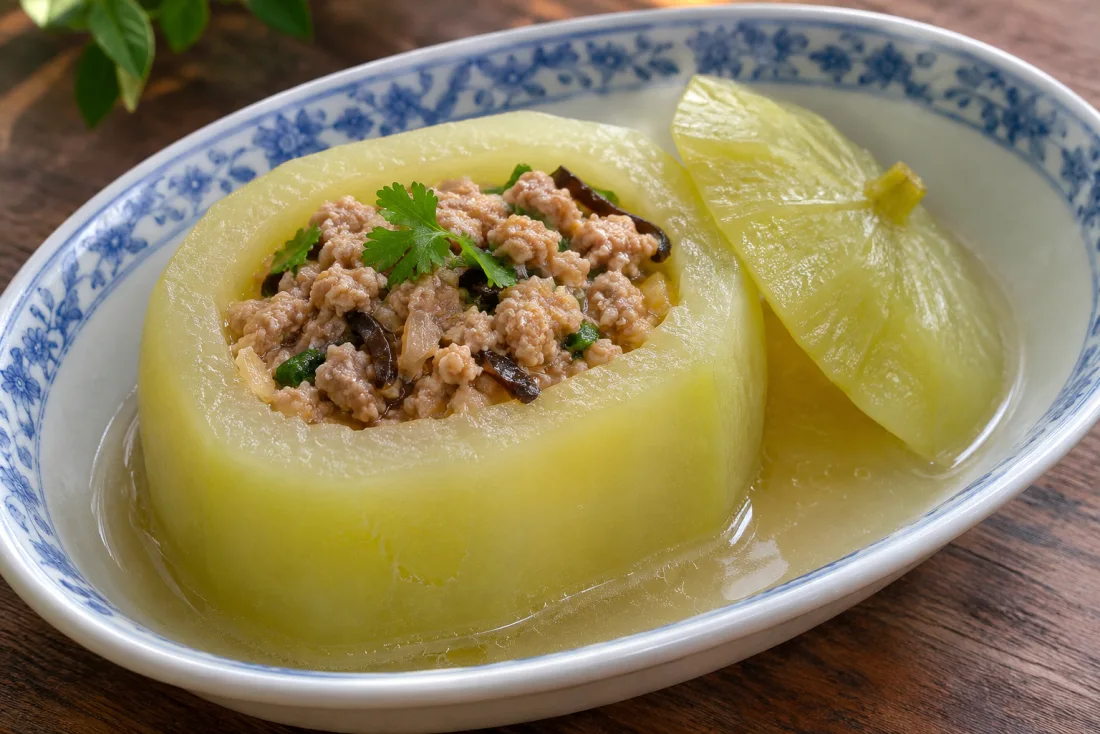
Malako is papaya, tho means a jar, and the remaining words refer to filling it. The firm fruit can be hollowed and shaped, then served whole or cut. Pale cooked papaya surrounds a distinct savory filling. Ask about its ingredients when the menu only says stuffed papaya.
Sharing from a Thai cookbook dish
A historical Bangkok cookbook describes cutting and decorating the papaya into a container. A whole presentation can be divided at the table or the kitchen can cut it into portions. This documents one Thai preparation, with outlet availability depending on the kitchen.
Pork, coconut, peanuts and aromatics
The original lists papaya, pork, coconut, dried chili, shallot, garlic, lemongrass, galangal, cilantro root and pepper. It also includes roasted peanuts, ginkgo nuts, cabbage, scallions, cilantro, duck eggs and traditional savory shrimp seasoning. Ask about any substitutions.
Cook through the center of the filling
Wash, trim and hollow firm papaya, leaving enough wall to hold the filling. Cook pork and egg completely through. USDA guidance specifies 71°C for ground pork. Use any ginkgo in an appropriate cooked form and separate raw and cooked equipment.
Tender fruit and a savory center
Cooked papaya has a mild, moist texture. The filling tastes richer from pork, coconut, pepper and aromatics. Peanuts add roasted flavor and ginkgo can add a softer texture. Serve in slices or pieces and eat with rice if desired.
Allergens in filling and sauce
The historical recipe includes peanuts, duck egg and shrimp-derived seasoning. Fish, soy, wheat or oyster can occur in substitutions. Ask about ginkgo, coconut and shared tools where relevant. Removing visible peanut pieces cannot remove blended allergens.
If you have a food allergy, tell the restaurant before ordering and ask about ingredients, sauces and shared cooking equipment.