
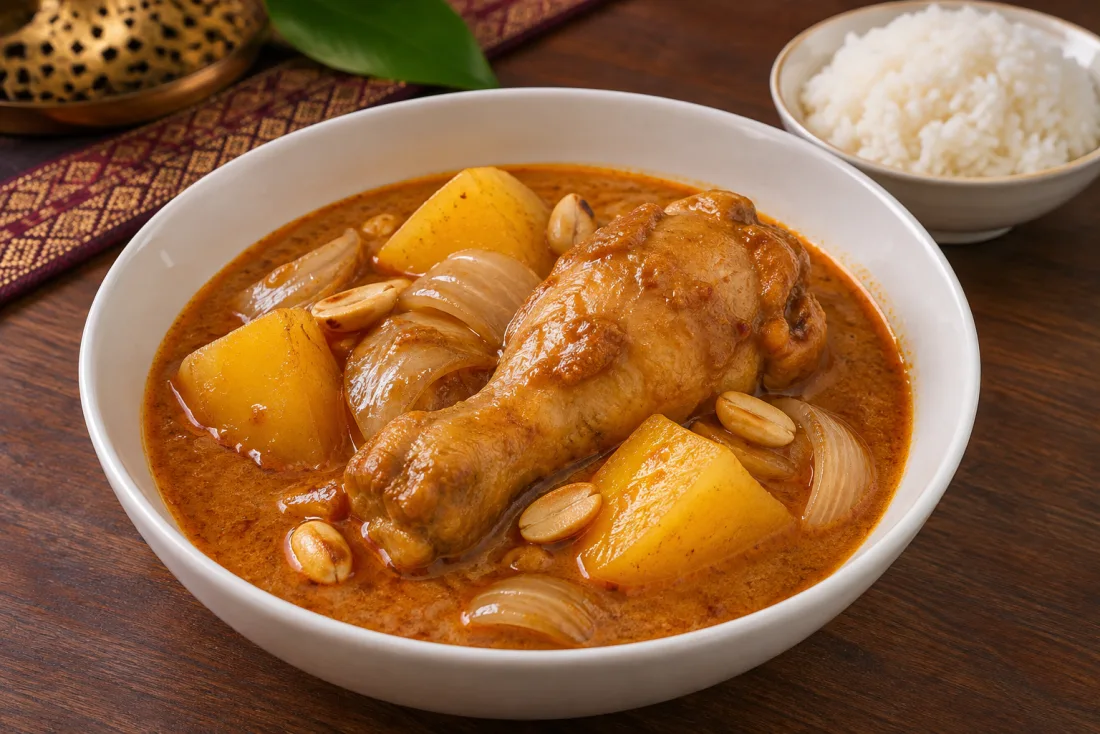

 chicken
Where to place Massaman in Thai cooking
Thailand’s Department of Agricultural Extension connects Massaman with southern Thailand near Malaysia and describes Indian and Persian influences. The Thailand Foundation includes it among curries representative of Central Thai cooking. The first account speaks to how traditions may have met, while the second describes where the dish belongs in today’s cuisine.
That exchange is easy to recognise in the curry paste. Galangal and lemongrass sit alongside cumin, clove and cardamom. Coconut milk carries both the fresh aromatics and the warm dried spices.
What goes in the pot
The agriculture department lists dried red chilli, garlic, galangal, lemongrass, coriander, cumin, clove and cardamom among the ingredients. Coconut milk gives the gravy its body, palm sugar adds sweetness, and potatoes soften and take on the flavour of the sauce. The chicken is named in the dish, and the source also mentions peanuts.
Look at the chicken, gravy and additions separately. The cut of the chicken, size of the potatoes and amount of curry paste change what you taste in each bite. Peanuts can cook into the gravy or appear on top.
How the gravy develops
Heating curry paste releases its aroma before it is simmered with coconut milk and the main ingredients. The thickness of the gravy depends on the cooking time and heat. As the potatoes soften, the sauce clings to them.
Tamarind is an acidity used in some versions, including the Thai SELECT reference recipe for beef Massaman. It can make the coconut and palm sugar taste less heavy. The raw ingredients and how far the cook simmers the chicken, potatoes and sauce explain more about the result than a uniform cooking time.
Flavour, heat and the role of rice
Coconut milk gives a rounded first impression, followed by sweetness and savouriness and the aroma of clove, cumin and cardamom. Tamarind can give a gentle tang. Roasted peanuts can add a crisp texture. The agriculture department describes a mild, slightly sweet style, with the strength of the chilli still depending on the recipe.
Start with gravy and plain rice to taste how the aroma carries through the grains. Then try the chicken and potatoes, which hold the sauce differently. If you prefer gentle heat, ask how the restaurant prepares it.
How it appears on menus
A Tourism Authority of Thailand itinerary records chicken Massaman as part of a meal in Chanthaburi. It can pair with a plate of rice or be shared alongside salads, dips and other dishes. That example shows how it can fit into a meal when travelling.
Gai means chicken; neua means beef. Different cuts of meat bring different textures and savouriness to the coconut and spice base. Thai SELECT publishes a beef Massaman recipe. On a menu, start with the main ingredient and ask how the kitchen serves and seasons its version.
Food allergens and curry paste
Peanuts can be simmered into the curry or scattered on top, so ask about both. Ask separately whether the paste or seasonings use fish sauce, shrimp paste or other seafood, and whether the restaurant adds milk or cream. Coconut milk means coconut is present; other dairy ingredients depend on the kitchen.
Ask whether the paste comes in a package with an ingredient label and whether pans, serving spoons and topping stations are shared with dishes containing the relevant allergens. Removing visible peanuts leaves anything already in the curry behind. If staff cannot verify the ingredients, make the decision according to your own allergy requirements.
If you have a food allergy, tell the restaurant before ordering and ask about ingredients, sauces and shared cooking equipment.