

 beef
 shrimp paste
 fish sauce
The beef version and Thai Muslim cooking
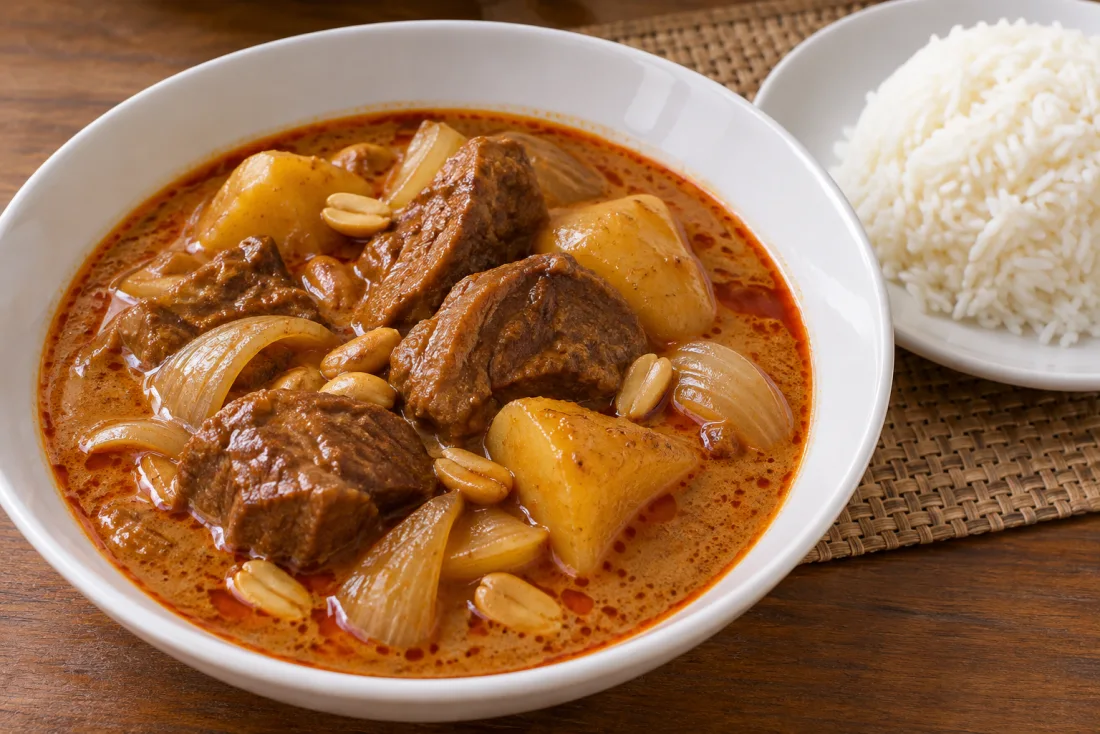
Neua means beef in this dish. Pailin Chongchitnant describes massaman in Thai Muslim cooking, while Thai SELECT and KRUA.CO document beef versions. Check the kitchen separately for any halal requirements; the dish name identifies the main meat only.
Beef, coconut, potatoes and spices
Thai SELECT uses beef, potatoes, coconut milk, roasted peanuts and a paste with cardamom, cumin, coriander and dried chilli. Tamarind and palm sugar season the sauce. Pailin demonstrates beef with onion and white-fleshed sweet potato. The ratios vary by cook.
Why the beef and curry base can cook separately
One method braises the beef first, then adds it to curry paste cooked in coconut milk. Another fries the potatoes before adding them. Cooking the components separately lets the beef become tender without breaking up the potatoes.
Tasting warm spices, tartness and peanuts
Coconut is rich, tamarind gently tart and the beef savoury. Cinnamon, cardamom and cumin can be more obvious than the chilli. Roasted peanuts bring a toasted crunch. Try the sauce with rice and compare the meat and potato separately.
Chicken massaman and panang beef
Chicken massaman shares the coconut and warm spices, but beef can need longer cooking and has a deeper meat flavour. Panang beef is often served in a reduced sauce with aromatic lime leaves. Either curry may contain peanuts. The actual recipe matters.
Allergens in peanuts, shrimp paste and fish sauce
The Thai SELECT example contains peanuts, shrimp paste and fish sauce, as well as coconut. Ask about powdered peanut, prepared pastes, seasonings and shared cookware. Removing visible toppings does not remove ingredients already cooked into the curry.
If you have a food allergy, tell the restaurant before ordering and ask about ingredients, sauces and shared cooking equipment.