
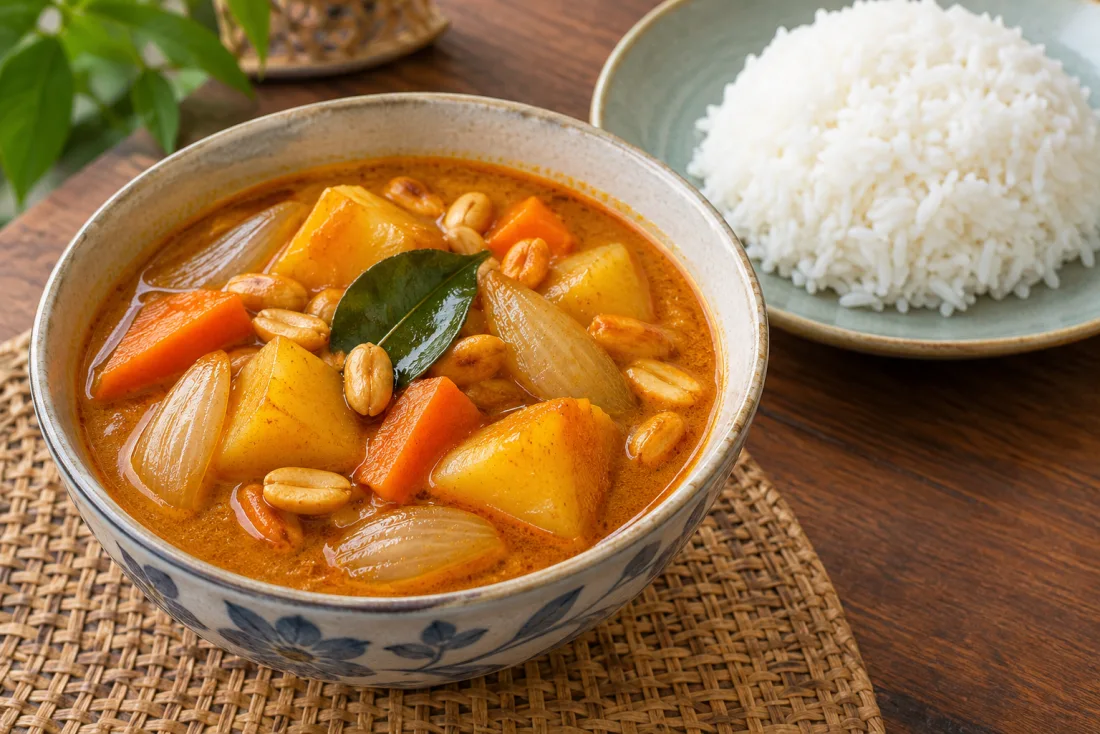

Vegetables are the centre of the curry
Gaeng is a Thai curry or seasoned broth, Massaman names the curry family and pak refers to vegetables. The bowl usually shows chunks of root vegetables surrounded by orange-brown coconut sauce, sometimes topped with roasted or crushed peanuts. Potato and onion absorb the sauce and can carry the dish together with carrot or sweet potato. The visible centre of the bowl is vegetable. To order a vegetarian or vegan serving, ask specifically about the curry paste, stock and seasoning.
Massaman on a Thai table
Massaman belongs to the Thai curry repertoire and is recognised by a coconut base, warm spices and familiar potato pairings. Chicken and beef versions often appear on menus. Vegetable recipes apply the same culinary structure to a different set of ingredients, and there is no basis here to assign the vegetable combination to a single province. It is easily shared with plain rice. The particular restaurant can describe its balance of chilli, sugar and sourness before you order.
Potato, carrot, onion and coconut milk
Potato absorbs sauce while a firm variety can hold its shape. Carrot adds colour and cooked sweetness, and onion turns tender. Orange sweet potato is another option. Coconut milk makes the sauce, and cinnamon, cardamom, coriander or cumin can come from the Massaman paste or be added separately. Tamarind provides acidity, while salt, sugar or a kitchen seasoning adjusts the balance. Peanuts can simmer with the curry or go on at the end. Some cooks add beans, leafy vegetables or squash.
Simmer the vegetables at their own pace
Warm the curry paste in oil or part of the coconut milk until fragrant, then add the rest of the liquid. Cut firm roots evenly so they become tender at a similar pace. A softer sweet potato can go in later, and the onion can soften within the broth. Adjust the sourness towards the end with tamarind. Peanuts kept for the finish taste toastier and feel crisp, while peanuts cooked in the sauce soften. Serve with rice on the side and spoon curry over a little at a time.
A warm spice aroma and tamarind finish
Cinnamon and toasted spices can come through first, while coconut milk softens the chilli heat on the tongue. A little tamarind makes the finish less heavy. Sweet potato lifts the sweetness, whereas potato and carrot offer different earthy notes. Peanuts added at the table give a contrasting crunch against soft onions and roots. Chilli and sweetness vary with the paste and the cook. Tasting a spoonful by itself makes it easier to judge whether the next one wants rice.
Allergens in peanuts, paste and seasoning
Peanuts may be in the sauce as whole nuts, crushed peanuts or peanut butter, so removing garnish cannot remove the allergen. Curry paste can contain shrimp paste and fish sauce contains fish. Soy seasonings or substitutes may include wheat. Coconut milk is a defining ingredient and needs separate confirmation for anyone avoiding coconut. Ask about the actual paste, stock and seasonings, and whether a shared pan, spoon or prep space presents cross-contact. A plant-based version requires a suitable base as well as vegetables.
If you have a food allergy, tell the restaurant before ordering and ask about ingredients, sauces and shared cooking equipment.