

 dried shrimp
A traditional one-bite snack from central Thailand
Thailand’s Department of Cultural Promotion records miang kham as a central Thai snack. The word kham denotes a mouthful, which also describes how the snack is served. The national heritage record notes a mention in a poem about snacks by King Rama VI and lists miang kham as a Thai national intangible cultural heritage entry from 2014.
The documentation records a long-running name and way of eating. The exact province or household where the first parcel was made remains unclear. The heritage account suggests a connection with gardeners in central Thailand because so many of the ingredients could come from a garden.
A leaf, several small fillings and a thick sauce
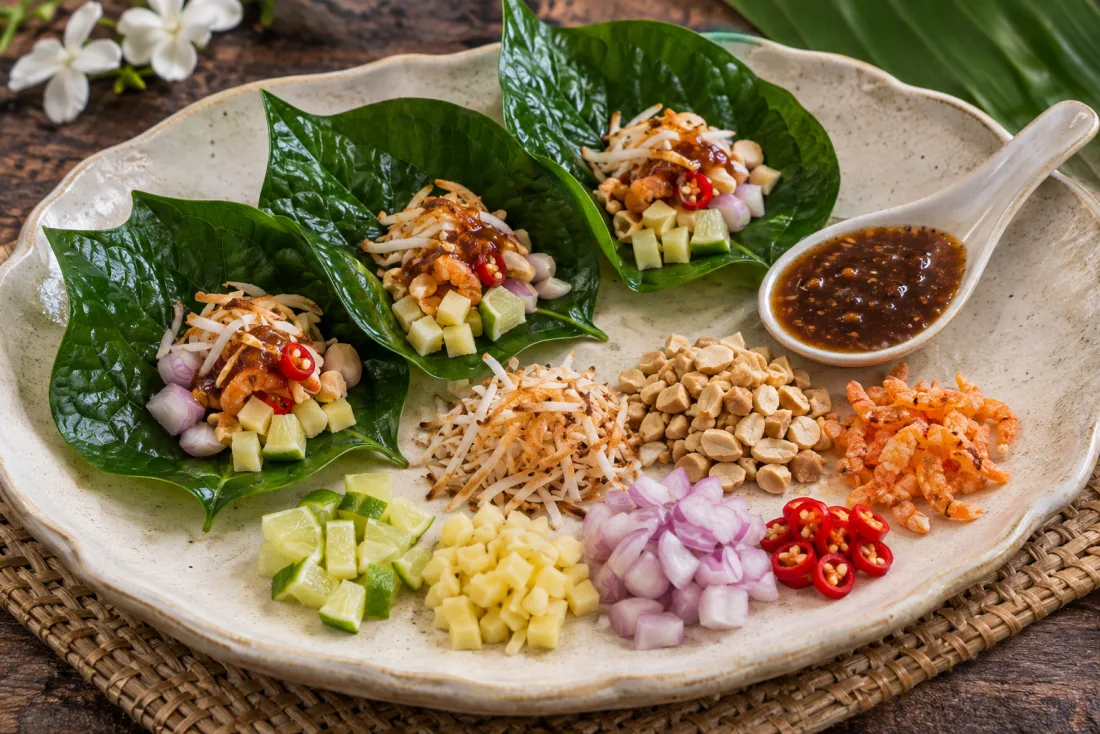
A serving has three parts: leaves, finely cut fillings and a sauce that clings to them. Wild betel leaf, bai cha phlu, is a familiar choice. It folds easily and has a fresh green aroma. Coral tree leaves and lotus petals also appear in some preparations. The wrapper is eaten along with the filling.
Fillings often include toasted coconut, roasted peanuts, dried shrimp, fresh ginger, shallot, tiny pieces of lime with their peel and bird’s-eye chillies. The heritage account includes lemongrass in one version. Peanuts and coconut contribute crunch and richness, ginger and lime add bite, and shrimp bring a savoury, salty note.
Why the lime keeps its peel and how the sauce is made
The Chef Cares Foundation recipe dices the lime with the peel on. A small piece brings fragrant peel with a little bitterness along with the sour juice. Ginger and shallot are cut small as well. The coconut is sliced thinly or shredded and toasted until fragrant.
The same recipe pounds roasted shallot, galangal, dried shrimp and roasted shrimp paste. Palm sugar, water and a little salt are cooked with this mixture until it thickens. The national heritage account records fish sauce in another version. The amber sauce carries savoury seafood and aromatic flavours under its sweetness.
How sweet, sour, salty and hot notes unfold in one bite
The leaf gives the first green aroma. Lime releases its juice when chewed, with toasted coconut and peanuts close behind. Then come salty shrimp, sharp shallot and the warmth of ginger. A slice of bird’s-eye chilli can make the heat more noticeable after several chews. The sauce binds the small pieces and rounds out their sour and salty edges.
Pick the proportions you enjoy. Add a little lime for more tartness or use less chilli for lower heat. A smaller dab of sauce lets the coconut and shrimp come through. The order and prominence of the flavours can change with each parcel.
How to fold one and which versions you may see
Cup a leaf in your palm, put in a few small pieces of your chosen toppings and add a small dab of sauce. Fold the edges over and eat the whole parcel. Separate bowls make it easy to adjust each bite. A pinch or piece of each filling is normally enough to keep the leaf from tearing.
Some restaurants serve folded parcels. The heritage account also describes miang khana, which puts a mixed filling in Chinese broccoli leaves. Other recipes use coral tree leaves or lotus petals. The wrapper and serving style can vary while the sauce and carefully portioned fillings define the bite.
Peanut, crustacean shellfish, fish and coconut
Typical parcels contain peanuts, dried shrimp and coconut. The sauce can already contain ground shrimp or shrimp paste, and some kitchens add fish sauce. Removing a visible shrimp from the leaf cannot remove shrimp in the sauce. If fish is an allergen for you, ask about fish sauce and other fish-based seasonings as well.
The bowls may be set out separately even when cooks share spoons, mortar or cutting boards. Name the ingredient you need to avoid and ask what goes into the sauce, how the fillings are stored and which equipment they share. The recipe at the place serving the dish determines what is in a pre-folded parcel.
If you have a food allergy, tell the restaurant before ordering and ask about ingredients, sauces and shared cooking equipment.