
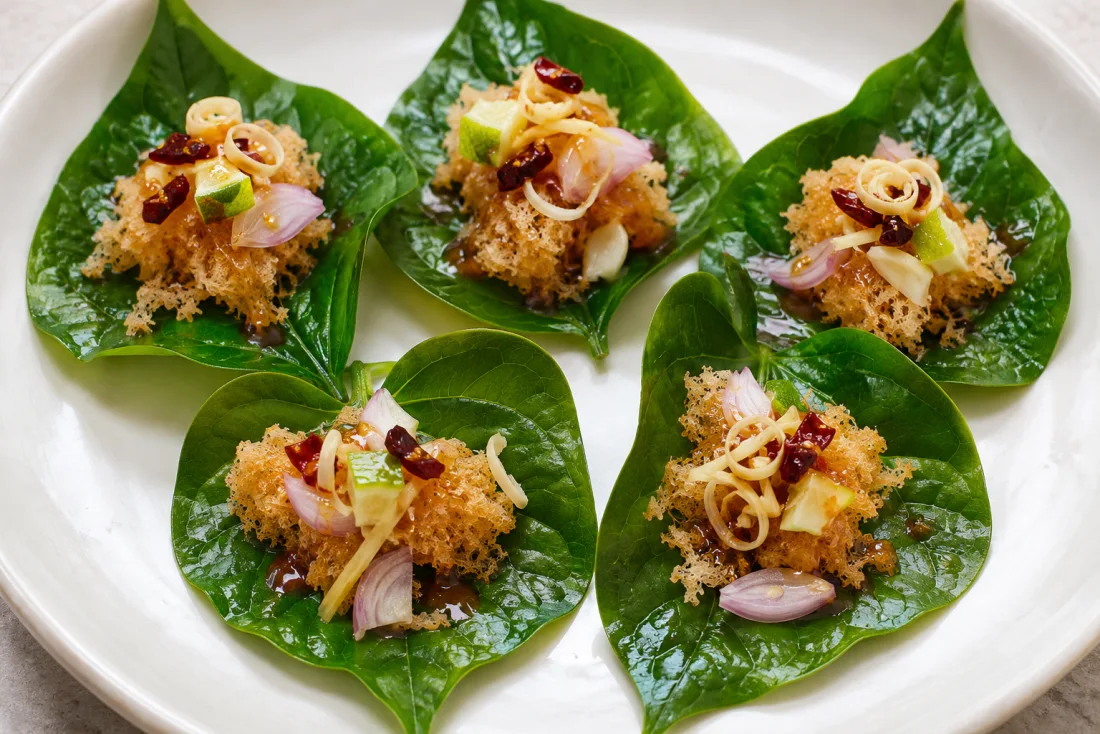

 grilled catfish
What makes it a leaf wrap
Miang pla duk fu pairs individual wild betel leaves with cooked catfish fried until airy and crisp. Pla duk names ordinary edible catfish in this recipe without specifying an exact species. The documented dish uses catfish and does not identify Mekong giant catfish.
Crisp flakes made from cooked fish
Chef Yeast’s recipe starts with grilled catfish flesh, with skin and bones removed. The finely broken cooked flesh fries into delicate flakes that hold together as a small crisp nest. The exposed edges are golden and airy.
Leaves and fresh aromatics
Thai chaphlu leaves are wild betel leaves. A whole leaf holds crisp fish, tiny pieces of shallot, garlic and lime, and slices of lemongrass and young ginger. Fried dried chilli adds heat where used.
The tamarind dressing
Palm sugar, fish sauce and tamarind water make a glossy dressing with tartness followed by sweetness and salinity. Add a little just before eating if you want the fish to stay crisp.
Individual bites or a sharing tray
A Phitsanulok tourism field guide documents crispy catfish eaten in leaf wraps. The chef recipe shows ingredients placed on wild betel leaves. The dish can be illustrated as assembled individual bites or curled leaf cups around a small shared dressing bowl.
Allergens, fryers and bones
Both catfish and fish sauce contain fish. Ask about peanuts, other seafood, flours and shared fryers or utensils for a specific allergy. Small bones may remain even where cooks pick the catfish before frying.
If you have a food allergy, tell the restaurant before ordering and ask about ingredients, sauces and shared cooking equipment.