
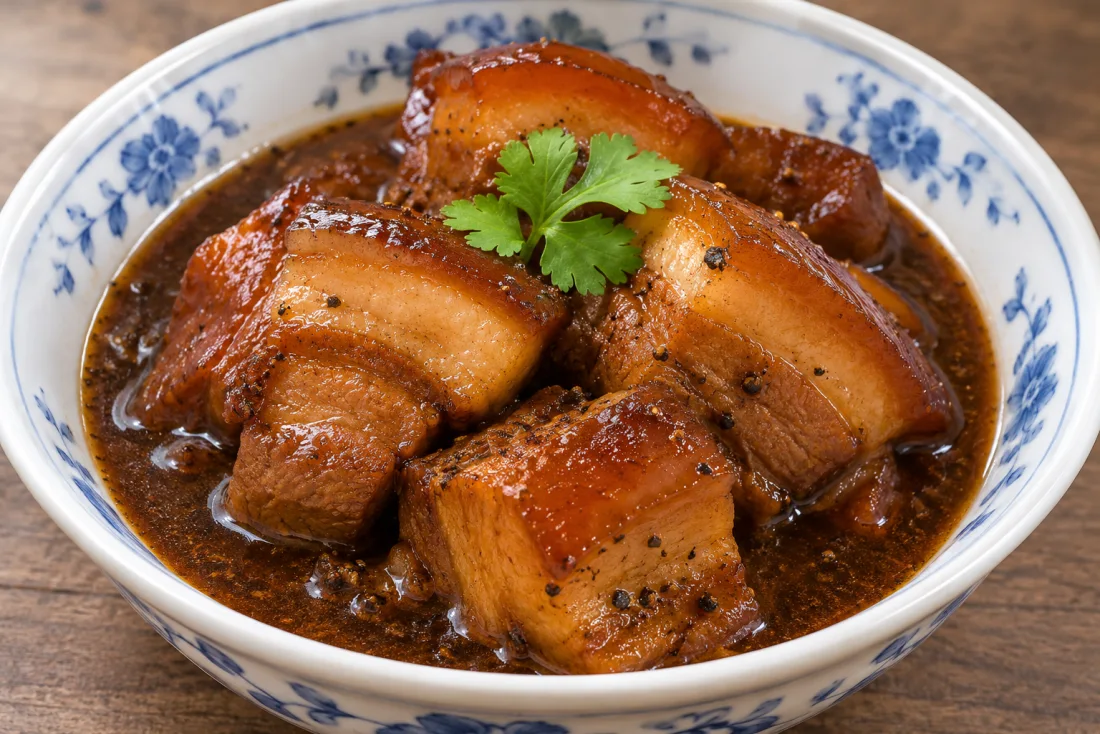

 pork belly
Phuket cooking and Hokkien influence
Moo means pork. Thai cooking sources link Phuket’s moo hong with Hokkien migration. Phuket also has a Peranakan food tradition, with families preparing braised pork with different spices. The name covers both familiar soy-based preparations and family versions.
Some family accounts associate pork belly with special meals, while vendors also serve a soy braise as everyday food. A Phuket-style label is a clue to ask about the meat and peppery seasoning.
Pork belly, soy seasoning and aromatics
Cooks use skin-on pork belly and sometimes add pork collar. They can brown thick cuts before braising. Garlic, white pepper and coriander root can be pounded and fried until fragrant. Some cooks simmer star anise with the pork.
Light or dark soy sauce, coconut sugar or brown sugar and water make a braise that is reduced. Some versions add oyster sauce or use a different sugar. A family recipe also steams the meat after braising.
The sweet-savory glaze and layers of pork
Soy seasoning gives savory saltiness, while sugar and pepper leave sweetness and gentle heat. Star anise can add a warm aroma. The dark shade often comes from soy sauce and reduction.
Pork belly can give you springy skin, soft fat and lean meat in one bite. A thicker piece gives more contrast between the glazed edge and center. A version using collar can have a firmer cut alongside the belly.
Serving with rice and vegetables
Steamed rice takes up the dark sauce. One recipe serves blanched greens alongside the pork for a crisper bite. Try part of a piece and a little gravy together.
A dish can be shared or served over rice for one diner. Check whether rice and vegetables come with it. Cuts, sauce and the balance of lean meat and fat vary by restaurant.
Related soy braises and northern hung lay
Moo hong shares soy, sugar and slow cooking with Chinese red-braised pork, while local recipes can emphasize pepper, garlic and coriander root. Some Peranakan household versions have a broader spice mix. Ask what style the kitchen makes.
Northern hung lay can also use tender pork, but ginger, curry seasoning or tamarind can make it more aromatic and sour. Menu names and seasonings are useful clues when the dishes look alike.
Allergies in soy sauce, oyster sauce and shared cookware
Soy sauce contains soy and may contain wheat. Oyster sauce can contain mollusks. Fish sauce or prepared seasoning can introduce fish or other ingredients. The glaze and marinade need checks even when the meat is served separately.
Ask about sauces, vegetable seasonings, pots, ladles and preparation surfaces. Leaving sauce on the plate cannot remove ingredients already cooked into the pork. Ask the kitchen whether it can prepare a separate portion.
If you have a food allergy, tell the restaurant before ordering and ask about ingredients, sauces and shared cooking equipment.