

 chicken breast
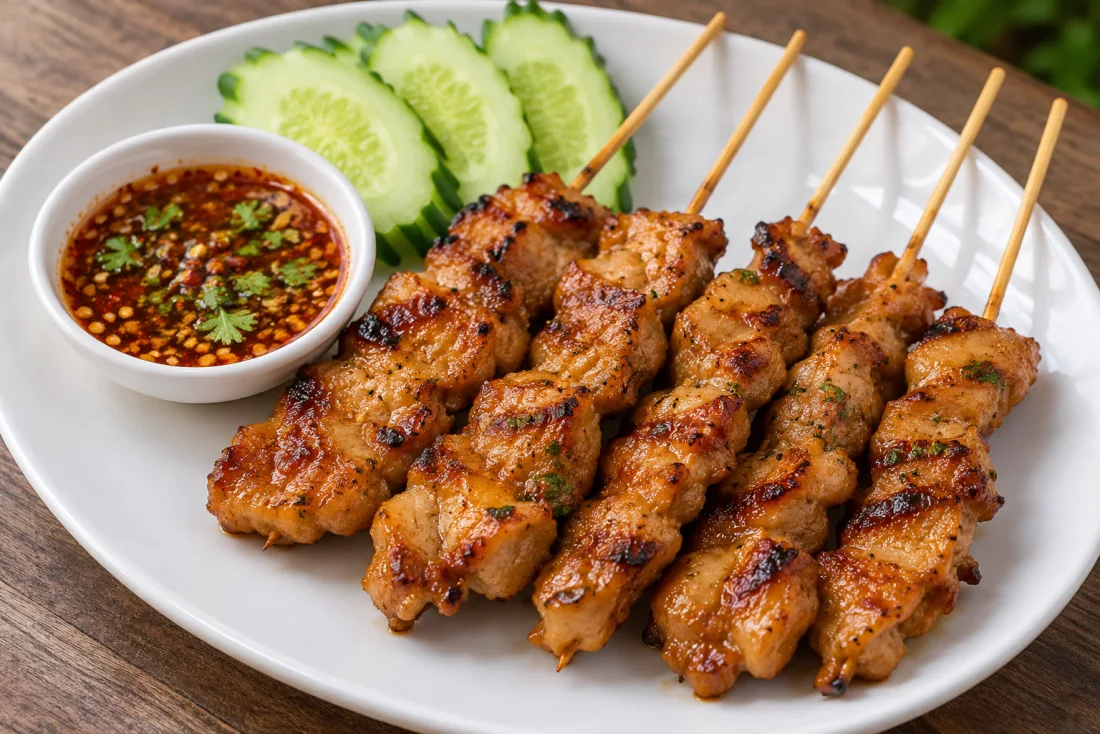
Chicken skewers at a Thai street stall
Gai means chicken and ping refers to grilling. Small chicken pieces are threaded onto skewers and sold individually or with wrapped sticky rice. Vendors may offer herb, sweet or red-seasoned skewers in several cuts.
Coriander root, garlic and sweet-savoury seasoning
Pound coriander root, garlic and pepper for a fragrant marinade. Light soy sauce provides savour and palm sugar rounds it out. Breast is lean and thigh is juicier. Some marinades include dairy or coconut milk, while others rely on aromatics and seasoning sauces.
Marinating and grilling evenly
Similar-sized pieces cook evenly on the skewer. Turn the skewers as they brown and cook the thick pieces through. Charcoal gives smoke, while a grill pan adds browned edges with less smoky aroma. Some stalls brush a glaze over the cooked skewers.
Browned edges and the cut of chicken
Thin edges are toasted while thigh meat can stay juicy. Palm sugar and garlic round out the peppery flavour. Plain sticky rice balances the marinade and green papaya salad adds a sour, crisp contrast. Ask about pre-marinated sweetness and separate chilli dips.
Chicken skewers, whole grilled chicken and satay
Gai yang can indicate a larger cut or whole grilled chicken. Chicken satay is a particular skewer preparation often served with peanut sauce and pickled cucumber. Thai chicken skewers can instead come with chilli dip, greens or no sauce.
Allergens in marinades and dips
Soy sauce can contain soy and wheat. Fish sauce, shrimp paste or oyster sauce can add fish, crustaceans or molluscs. Dairy, coconut and peanut sauces are possible by recipe. Ask about premixed seasonings, shared grills and brushes. Skipping the dip does not remove a marinade.
If you have a food allergy, tell the restaurant before ordering and ask about ingredients, sauces and shared cooking equipment.