

 minced pork
Why are the pork balls wrapped in noodles?
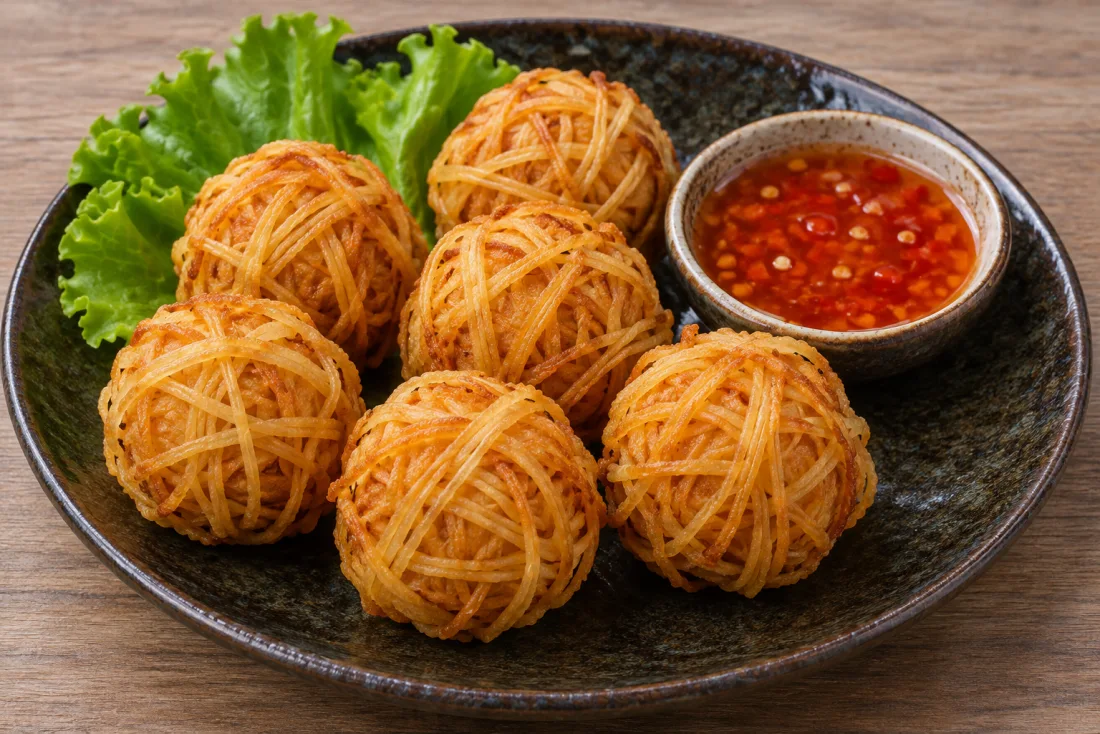
Thai menus write the name as moo sarong, with more than one Thai spelling in use. Moo means pork, while the wrapping suggests a sarong. Culinary sources describe it as a carefully shaped traditional Thai snack and associate the thin noodles with Chinese food and trading traditions. The sources do not establish one exact inventor of the knot.
Wheat noodles, pork and three aromatics
The fine noodles, often called mi sua, soften for wrapping and crisp up when fried. Minced pork is mixed with pounded garlic, coriander root and pepper. The reference seasons the meat with light soy sauce and binds it with egg and tapioca starch. Fish sauce, salt or another seasoning may be used elsewhere. A little pork fat helps keep the centre tender. The saltiness of the noodles can affect how strongly the pork needs seasoning.
How the wrapping changes the texture
Soften the noodles by soaking or briefly boiling, according to the noodle and the kitchen. Roll the pork into balls, then turn each ball while wrapping strands around it in several directions. Some cooks wrap several strands at a time and others wrap one. A light wrap shows the crossings and crisps evenly. The centre still needs to cook through. Drain briefly before serving.
Noodle crunch followed by savoury pork and pepper
The fine strands break first, giving way to tender, salty pork and its cooking juices. Garlic and coriander root give round aromatic notes, with pepper at the end. A looser wrap leaves distinct crisp strands; a close wrap feels more like a shell. Sweet-tart dipping sauce is usually served separately so the crust can stay crisp.
From traditional snack shops to today’s menu
Thai food reporting records renewed attention after the dish appeared in a historical television drama. It still appears at some traditional snack shops and as a restaurant starter or part of a set. The wrapping takes time, so it is often served in small portions. The size and shape may vary, but the visible golden noodle crossings distinguish it from plain fried pork balls.
Allergens in the noodles, seasoning and frying oil
The reference uses wheat noodles. The reference filling contains egg, which may also be present in some noodles or on shared equipment. Fish sauce introduces fish, and soy sauce may contain soy and wheat. Ask what goes into the dip. Removing the wrapper does not address contact within the parcel. The fryer and tools may be shared with shrimp and other battered items. The centre commonly contains pork.
If you have a food allergy, tell the restaurant before ordering and ask about ingredients, sauces and shared cooking equipment.