

 pork
 fish sauce
Recognise the coating and cut
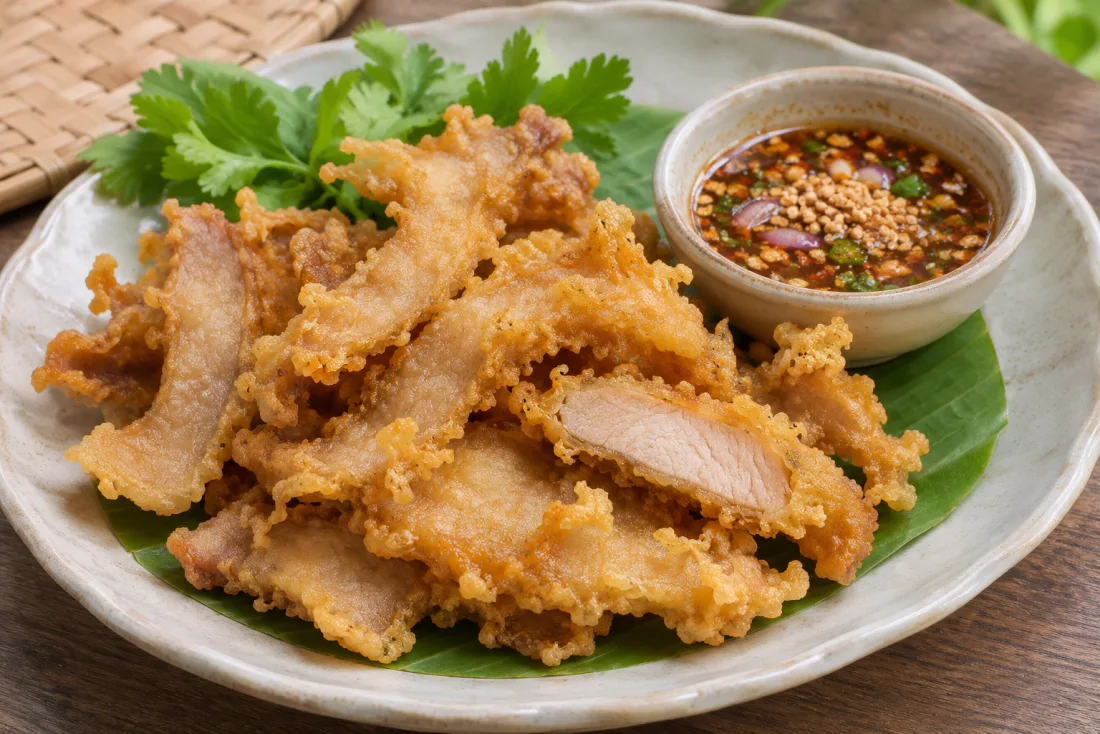
Small strips can be fried separately, while a shop may also fry wider pieces and slice them after cooking. Cucumber and dipping sauce are common optional sides. The short name alone does not specify the cut, coating or serving size.
At market stalls and family tables
Thai market vendors often sell fried pork with steamed sticky rice available separately. Thai home recipes include thin-coated pork seasoned with fish sauce and garlic, as well as versions with sesame or different seasonings. Rice can be a separate order.
Choosing meat and a thin crust
Pork collar and belly balance meat with fat, while lean pieces have a firmer bite. A thin dusting of rice flour or a prepared frying mix may coat the seasoned meat. Typical flavours come from garlic, fish sauce and white pepper. Cook the thicker parts through.
Salty, aromatic and crisp
The edges are light and crisp, the meat savoury, and pork fat softens the centre in fattier cuts. A jaew dip can add lime, roasted rice aroma and chilli. The fried meat itself is often milder.
Ordering the finished plate
Try the pork before adding the dip. Order sticky or steamed rice separately if the listing is for a meat plate. Ask which cut is fried and whether the shop includes vegetables. Crispy-belly moo krob is a separate menu term.
Allergens in seasoning and shared oil
Fish sauce contains fish. Soy sauce can contain soy and wheat, and a flour coating may blend rice and wheat. Some recipes use sesame. Ask about prepared mixes, dipping sauces, shared oil and equipment.
If you have a food allergy, tell the restaurant before ordering and ask about ingredients, sauces and shared cooking equipment.