

 pork
Recognising the casing and the size
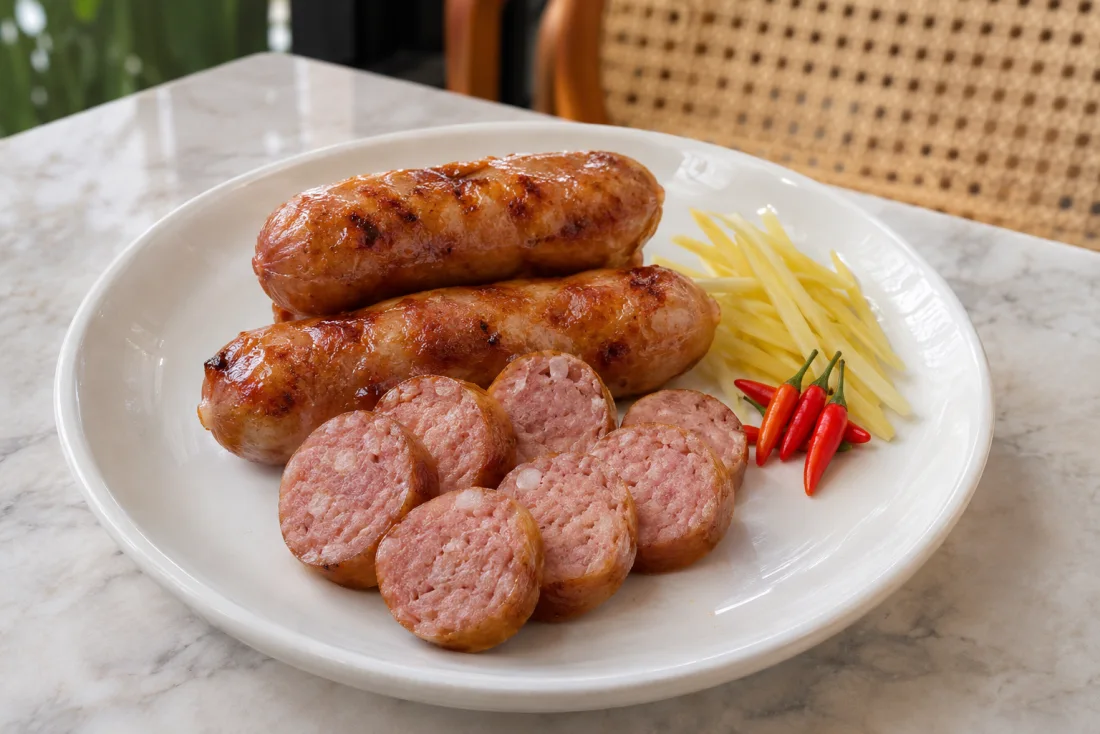
A cooked casing can look taut, wrinkled or browned. Inside is a firm minced-meat texture. Shops offer short links, slices and mini pieces. Garnishes at the side can include ginger, red chilli and cabbage.
How it is named in Thailand
Naem refers to a family of sour fermented meat products. Sai krok identifies the sausage format. Regular wrapped naem can look like a cut roll without a separate casing. Isan rice sausage can also be sour and cased; the name, meat and recipe should be read together.
Pork, rice and garlic
Pork, cooked rice, garlic and salt are representative ingredients. Commercial recipes and casings vary. Kitchens can cook links whole and cut them, or cook smaller pieces as they are. Condiments and vegetables are usually served separately.
Sourness and the texture of cooked sausage
A fermented tang is joined by savoury meat and garlic. The casing tightens as it cooks. Ginger or fresh chilli adds a separate spicy bite. Heat, sourness and the skewers per portion depend on the vendor.
Ordering it fully cooked
Ask whether it is served cooked or sold in a pack to cook later. A menu can specify piece count, link size and garnishes. Cooked pieces can be served as a snack or alongside rice.
Allergens and commercial ingredients
Pork, casing, premixed seasoning and dip should be checked separately. Soy, wheat or fish ingredients are possible depending on the recipe. Ask about shared grills, boards and sauces when avoiding a specific allergen.
If you have a food allergy, tell the restaurant before ordering and ask about ingredients, sauces and shared cooking equipment.