
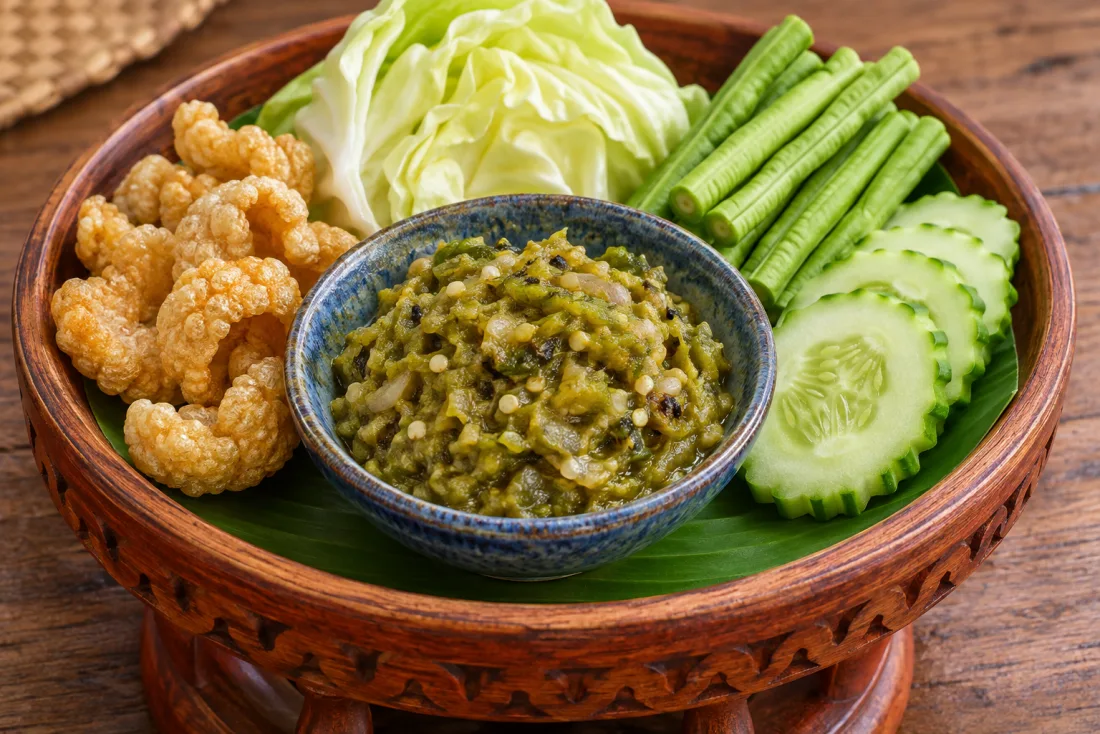

 fermented fish
The name and the northern Thai table
Nam prik refers to a chilli dip; noom describes young chillies. Chiang Mai University’s Lanna archive records its popularity in northern Thailand and use as a gift. KRUA.CO describes home and festival meals. These sources document regional use without naming a single birthplace.
Young chillies, shallots and garlic
Young green chillies give the dip body. Roast shallots add mild sweetness and garlic adds aroma. Salt can be enough in a simple version. Others use fermented fish, fish sauce, shrimp paste or roasted tomato. A green dip can still contain fish or shrimp.
Why roasting and pounding matter
Roasting softens the chillies and gives the shallots and garlic a toasted aroma. Cooks peel away the charred skins and pound the pulp. A coarse dip retains fibres and small pieces, while a finer one spreads more easily. The cook can adjust thickness.
Roasted flavour, warmth and sweetness
Look for smoky garlic and shallot, green chilli sweetness, salt and heat. Fermented fish can deepen the savoury taste. Cucumber cools the bite, pork rind adds a crisp contrast, and sticky rice brings a quieter sweetness. Try a little before judging the heat.
At the market and on the table
Northern tables may pass a bowl with vegetables, pork rind and sticky rice. Markets may pack the dip separately. The ingredients can vary from stall to stall; ask whether fish or shrimp seasoning is mixed in and which sides are included.
Allergens and shared utensils
Check separately for fish in fermented fish or fish sauce and crustaceans in shrimp paste. Pork rind served alongside contains pork. Ask what is in the prepared dip, whether sides are separate, and whether the mortar, spoons and other tools touch other dips.
If you have a food allergy, tell the restaurant before ordering and ask about ingredients, sauces and shared cooking equipment.