
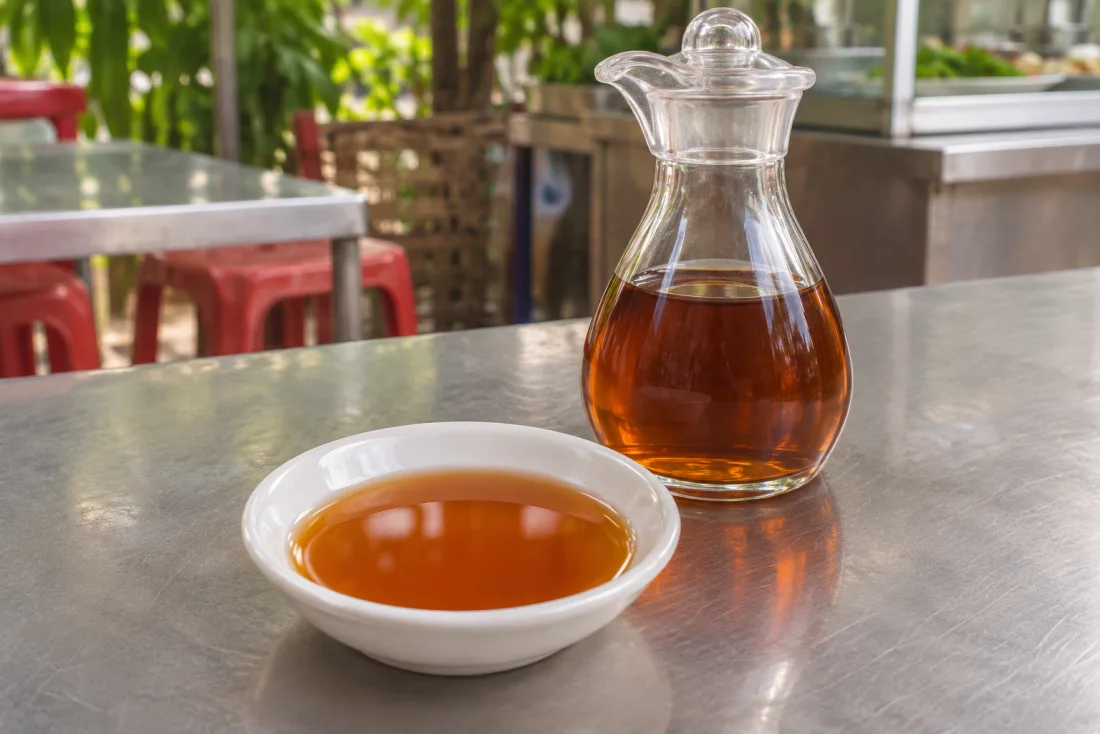

 fish such as anchovies or other suitable species
A familiar Thai table seasoning
The name nam pla refers to fish sauce. It can be offered in a table carafe or used behind the scenes in soup, dressing and stir-fries.
Fish, salt and different products
Fish and salt are the usual base. Anchovies are common, and other marine, brackish or freshwater fish may be used. Check the label for the actual fish and additions.
From aged fish to clear liquid
Fermented liquor is drawn off and filtered. It can remain clear when stirred into soup or mixed with citrus and sugar for a dressing.
Concentrated savoury flavour
The first taste is salty, followed by the aroma of fermented fish. Lime, sugar and other ingredients change how that note comes across.
A small saucer at the table
Serve a small amount in a shallow bowl and refill from a carafe if needed. If chilli or lime is added, list those separately as part of that preparation.
Allergens and alternatives
Fish is an allergen here. Ask about dressings, stock, marinades and shared tools. A vegetarian seasoning must be checked separately.
If you have a food allergy, tell the restaurant before ordering and ask about ingredients, sauces and shared cooking equipment.