

 shrimp paste
 fish sauce and sugar
 tamarind and minced pork
A court relish for rice
Thailand’s National Library lists this historical relish among court dips. Tam sadet means accompanying a royal journey, and the food records associate the name with a relish carried on such journeys. The small portion could season a plate of rice. Court cookbooks and later demonstrations document the style without establishing how common or widely available it is today.
The name and the spice paste
Prik khing is a culinary name for an aromatic pounded seasoning. One recorded version uses galangal, lemongrass, makrut zest, dried chillies, garlic, shallots and shrimp paste, with dried shrimp pounded in. Fresh ginger is not a fixed ingredient in this recipe. Fish sauce and sugar round out the cooked paste. Tamarind can add acidity, and a later variation includes cooked minced pork.
Heat, aroma and texture
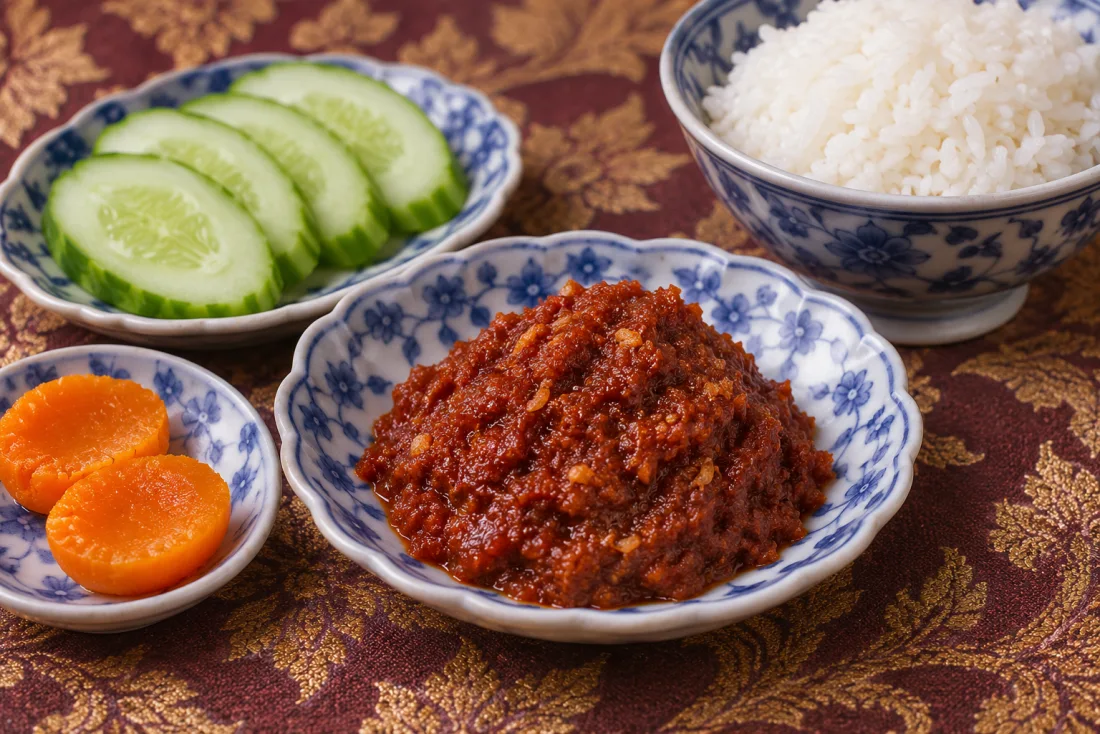
The fried paste is a scoopable brick red to deep red-brown, with small dried-shrimp flecks in some servings. Makrut, garlic and lemongrass give it fragrance. Chilli, dried shrimp, shrimp paste and fish sauce build the heat and saltiness, softened with sugar and sometimes tamarind. Minced pork makes the texture a little coarser. A spoonful mixes easily through plain rice. Warm relish gives off more of its lemongrass and citrus aroma while retaining its spoonable body as it cools.
Two ways to serve it
One serving presents the original-style paste without added pork with cooked salted duck egg yolk and rice. Another uses the tamarind and minced-pork variation, with fried salted dried fish and mild vegetables on their own plate. Historic side examples also include a pickled garlic omelette. The side dishes can vary.
What to look for on a menu
Look for the full name if you want this particular relish. The word prik khing also appears in stir-fry names, often with meat or long beans, which describes a different serving. Ask whether the relish is served on its own and whether it contains tamarind. Egg and dried fish can be salty alongside an already savoury relish, so diners may start with a small amount.
Allergens in the relish and sides
Shrimp paste and dried shrimp contain crustaceans, and fish sauce and dried fish contain fish. A fish-based substitute for dried shrimp does not remove shrimp paste from a recipe that still uses it. Salted egg yolk or omelette adds egg when served. Ask about the actual paste, side dishes and shared mortars, fryers or utensils when any allergen matters.
If you have a food allergy, tell the restaurant before ordering and ask about ingredients, sauces and shared cooking equipment.