

 minced pork
 shrimp paste
Where the dip is from
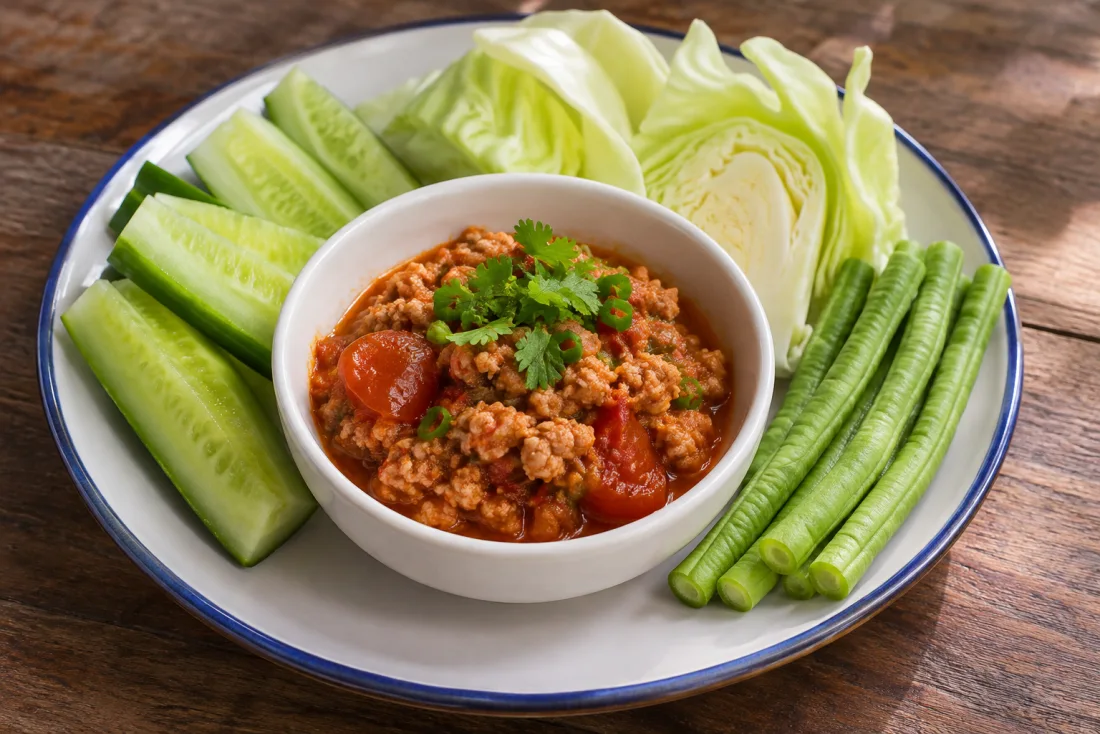
Lanna cooking in northern Thailand has many chilli dips. Chiang Mai University Library describes this tomato and pork version and nam prik num as popular regional examples. Nam prik names the broader group, while ong identifies this preparation. The sources describe how it is made and served in Lanna without identifying a first kitchen or city.
What tomatoes, pork and chilli paste contribute
The library’s example uses cherry tomatoes for sweetness, acidity and juice, and minced pork for savoury flavour and texture. Dried chillies, shallots, garlic, shrimp paste and salt go into the chilli paste. Chopped coriander and spring onion can finish the dish. Both tomatoes and chillies colour the dip, so its redness alone gives little indication of heat.
How different methods change the texture
Some cooks fry the pork first and add chilli paste and tomatoes. Others mix the pork with the paste and crushed tomatoes before frying them together. How thoroughly the tomatoes are crushed and reduced changes whether the dip contains visible pieces and how well it clings to a vegetable.
How it tastes with vegetables
Cooked tomatoes bring fruitiness, while minced pork, shallots and garlic build savoury depth. Dried chillies supply the heat and shrimp paste can add a salty fermented note. A crisp cucumber tastes different dipped in the same sauce from boiled greens that hold more pork. Start with a little if the heat level is unfamiliar.
Its place on the Lanna table
The dip frequently comes in a small bowl alongside fresh or boiled vegetables. It forms part of a shared spread and can appear on a northern khan tok, a raised serving tray. In separate serving dishes, the familiar way to eat it is still to pick up a vegetable and dip it into the sauce.
Allergies and dietary restrictions
The example chilli paste contains shrimp paste, a concern for crustacean allergy even when no whole pieces of shrimp are visible. Ask separately whether fish sauce or another fish seasoning was used. Tell the kitchen about the specific allergen and ask about prepared paste, the mortar, wok and shared spoons. Minced pork and the sauce are cooked together.
If you have a food allergy, tell the restaurant before ordering and ask about ingredients, sauces and shared cooking equipment.