

 fish sauce
A Thai table dip made from mackerel
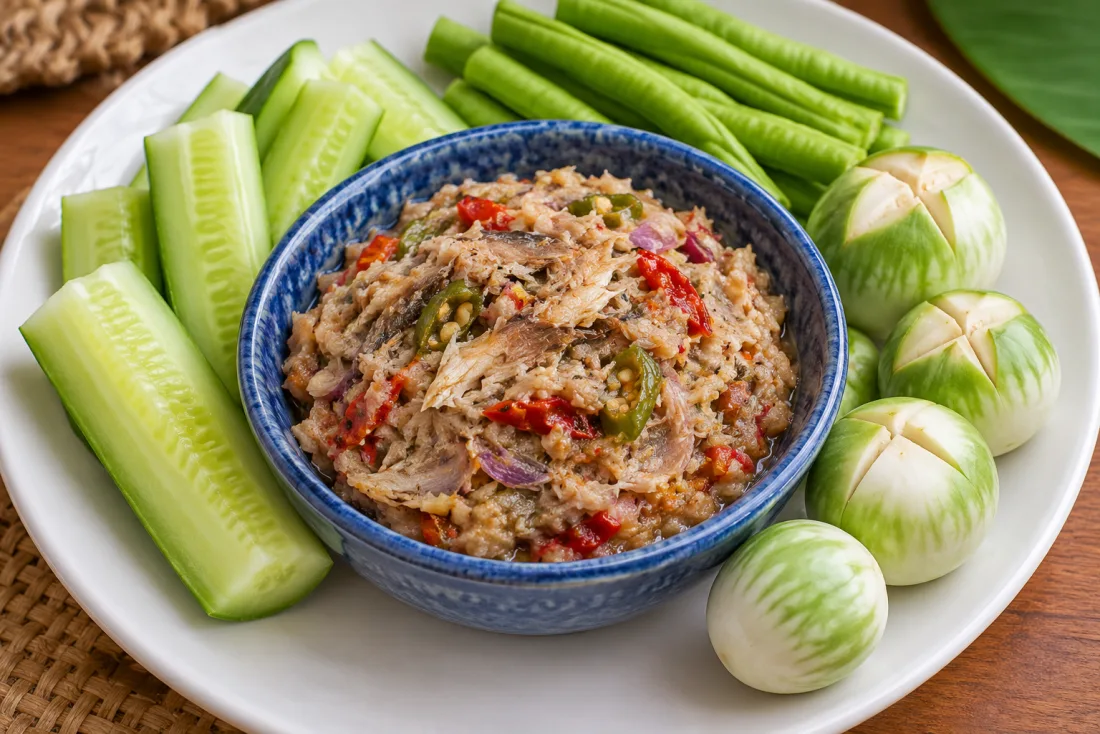
Nam phrik names a family of pounded chilli condiments. Pla thu is the fish. In this dish, boned cooked fish goes directly into the mortar and leaves fine flakes in a spoonful of dip. Thailand’s Department of Fisheries identifies pla thu as short mackerel and documents it in the Gulf of Thailand and on the Andaman coast. These records identify the fish and where it is caught, while the recipe documents its use without assigning the dip an exact birthplace.
Grilled fish, aromatics, lime and fish sauce
The fish supplies aroma, savouriness and a flaky texture. The reference recipe grills the cooked fish and removes the bones. Combining a fleshy chilli suited to grilling with a hotter variety gives both body and heat. Grilled shallots and garlic become soft and fragrant. Fish sauce adds salt and savouriness, and lime brightens the cooked flavours. A little boiled water loosens the mixture so it can be dipped into or spooned over rice.
Pound the aromatics and keep some texture in the fish
Grill the chillies, shallots and garlic until soft and peel away any blackened skin. Remove the head and bones from the cooked and grilled mackerel. Pound the aromatics first, then add the fish so that it retains a few fine flakes. Gradually add fish sauce, lime and a little water. The dip should mound softly on a spoon and spread when it touches a piece of vegetable. Extra liquid can separate the fish from the dressing.
Roasted savouriness, lime tang and variable heat
Grilled fish and alliums give the dip an initial smoky aroma. Fish sauce brings salt, and then lime and chilli follow. The fish itself makes the texture pleasantly rich even without a layer of oil. Chilli variety and quantity determine the level of heat, and the lime also varies. Try a small amount on cool cucumber or warm rice to taste the difference between the seasoning and the roasted fish.
Serve with fresh vegetables, cooked vegetables or rice
The dip may come with cucumber and long beans, boiled vegetables, or vegetables fried in egg. Cool cucumber carries less of the dressing than soft cooked vegetables. Plain rice is another common partner. A different menu name, nam phrik kapi pla thu thot, normally refers to a shrimp-paste dip with fried mackerel served beside it. Ask whether the fish is pounded into the dip or presented alongside if you are deciding between the two.
Allergens in the dip and its accompaniments
Mackerel and fish sauce both contain fish. Picking out the larger flakes does not remove fish from the dip. Some kitchens may add shrimp paste or dried shrimp, or share a mortar with seafood preparations. Vegetables fried in egg contain egg, and other fried sides may have wheat batter or use shared oil. Ask separately about the dip, sauce and sides, and about shared equipment. Fish bones are a separate consideration.
If you have a food allergy, tell the restaurant before ordering and ask about ingredients, sauces and shared cooking equipment.