

 pork
 fish sauce
Which miang sauce this is
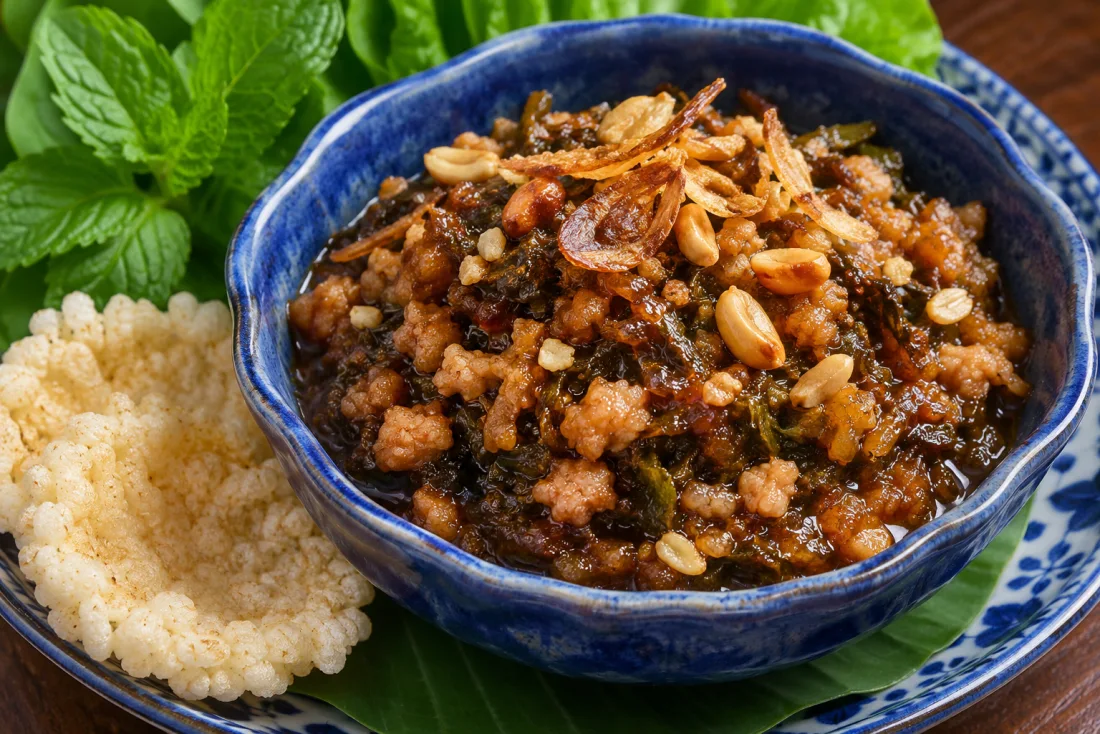
Nam miang can refer to seasonings for several miang dishes. This historical recipe is a thick relish with pork and finely chopped miang leaves. The Thai leaf name can refer to prepared tea leaves. Ask which leaf and seasoning the kitchen uses. The rice cracker is the edible base.
A Thai rice-cracker accompaniment
A historical Bangkok cookbook pairs the relish with fried rice crackers. Other Thai miang preparations wrap fillings in edible leaves with a different sauce. Here the meat relish can be served in a bowl or spooned onto individual crackers. The recipe records one serving style.
Tamarind, pork, peanuts and fried aromatics
The original recipe uses pork, miang leaves, fried shallots, fried garlic, roasted peanuts, tamarind, block sugar, salt and fish sauce. The sugar rounds the acidity. Chopped peanuts add texture and fried aromatics add a roasted finish.
Cook the pork and reduce the sauce
Cook small pork pieces through before simmering with the dressing and leaves. Use clean equipment and keep cooked food away from utensils used for raw meat. Reduce to a spoonable consistency. Add crisp garnishes near serving and keep crackers separate until eating.
Crunchy rice and savory sweet-sour relish
Crisp crackers contrast with the moist pork. Tamarind is tart, sugar sweet and fish sauce deepens the savoriness. Fried garlic and shallots add crunch and the roasted peanuts linger. A small spoonful goes a long way.
Allergens in the relish and crackers
The original contains peanuts and fish sauce. Commercial crackers or sauces may add soy, wheat, shrimp or mollusks. Check the frying oil and shared utensils. Removing the peanut garnish does not remove peanuts blended into the relish.
If you have a food allergy, tell the restaurant before ordering and ask about ingredients, sauces and shared cooking equipment.