
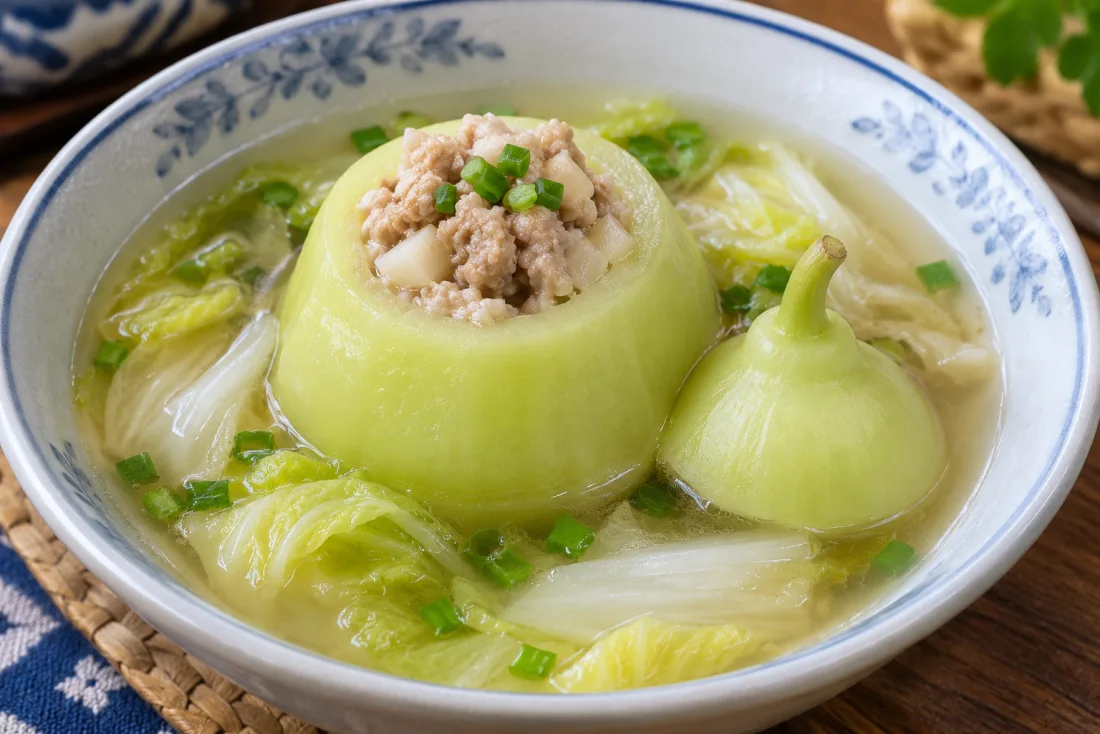

 ground pork
What the Thai name describes
Nam tao is bottle gourd, and banchu sai means filled or stuffed. The archived recipe fills a small hollowed gourd with pork and keeps the cap for presentation. The name does not specify a soup. Restaurants may serve the stuffed gourd with broth.
The pork, crisp vegetables and sesame
The historical filling uses minced pork, jicama, napa cabbage stems, spring onions, white sesame, pepper, salt, light soy sauce and cooking wine. Ground sesame can be present even if no whole seeds are visible.
The flavor of gourd and filling
The gourd is mild and juicy, while the pork is savory with sesame, pepper and onion aromas. Finely chopped jicama and cabbage leave a slightly crisper texture in the soft filling. Broth further softens and distributes the flavor in soup versions.
How the form is made
The old recipe hollows out a small gourd, reserves the cap and fills the body with the prepared meat mixture. It sets the filled gourd and separate cap in heatproof cookware and replaces the cap after cooking. Larger gourds may be cut into halves or rings before stuffing.
Serving and similar dishes
Plain bottle gourd soup can contain separate gourd pieces and meat. This dish has filling inside the gourd. The vegetable can be served with rice and shared dishes, or as a stuffed piece in a restaurant’s soup variation.
Allergens, wine and additional broth
The old recipe includes sesame and soy, and some light soy sauces contain wheat. It also contains pork and cooking wine. Ask about broth, fish sauce, prepared seasonings and shared equipment. Cutting away the filling will not remove ingredients that cooked against the gourd.
If you have a food allergy, tell the restaurant before ordering and ask about ingredients, sauces and shared cooking equipment.