

 shrimp paste
 fish sauce
Recognizing the salted egg and crab
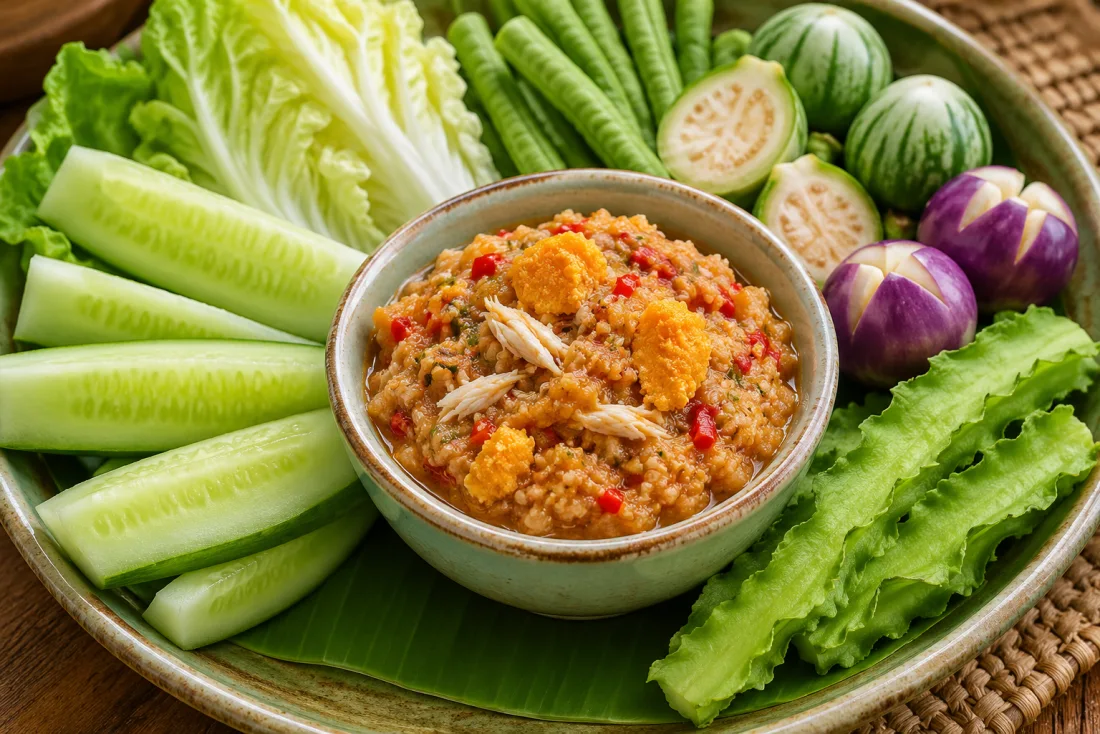
Khai khem means salted egg. The cooked white is pounded into the seasoning and yolk is added later, so golden pieces may remain. Look for pale crab shreds, chili and finely sliced hairy eggplant. Some cooks pound it more smoothly than others.
A Thai cookbook variation
Tamrap Ahan records the sea crab and dried shrimp version with salted egg and hairy eggplant. It suggests mixing the relish into rice and eating it with raw vegetables. A separate recipe published by Thailand's Fine Arts Department shows another version with salted egg, shrimp paste and hairy eggplant. The records do not identify one province of origin.
Salted egg, sea crab, hairy eggplant and chili
Pound salted egg white with shrimp paste, dried shrimp and garlic. Add yolk and slices of hairy eggplant, then fold in crab. Season with fish sauce, sugar and lime, with yellow chili and bird's-eye chili at the end. Hairy eggplant, called ma uek, brings tart fruit flesh.
Rich yolk and a tart finish
The yolk is dense and savory, then crab adds light sweetness and dried shrimp a deeper note. Lime spreads acidity through the relish. Hairy eggplant gives a burst of tartness when chewed. Crushed chilies leave some mouthfuls hotter than others.
Serve with rice and crunchy vegetables
Offer a small bowl with cucumber, long beans and small round eggplant. Spoon a little over plain rice. Blanched vegetables work best drained. A menu may shorten the name to salted egg relish, so ask about the crab and other seafood in the version served.
Allergens and savory seasonings
Salted egg contains egg; crab, dried shrimp and shrimp paste contain crustaceans; fish sauce contains fish. The ingredients touch one another throughout the relish. Other versions may still contain shrimp paste. Ask about shared mortars, spoons and plates. Mention hairy eggplant if relevant to your allergy.
If you have a food allergy, tell the restaurant before ordering and ask about ingredients, sauces and shared cooking equipment.