

 shrimp paste
 fish sauce
Fresh ingredients stay visible
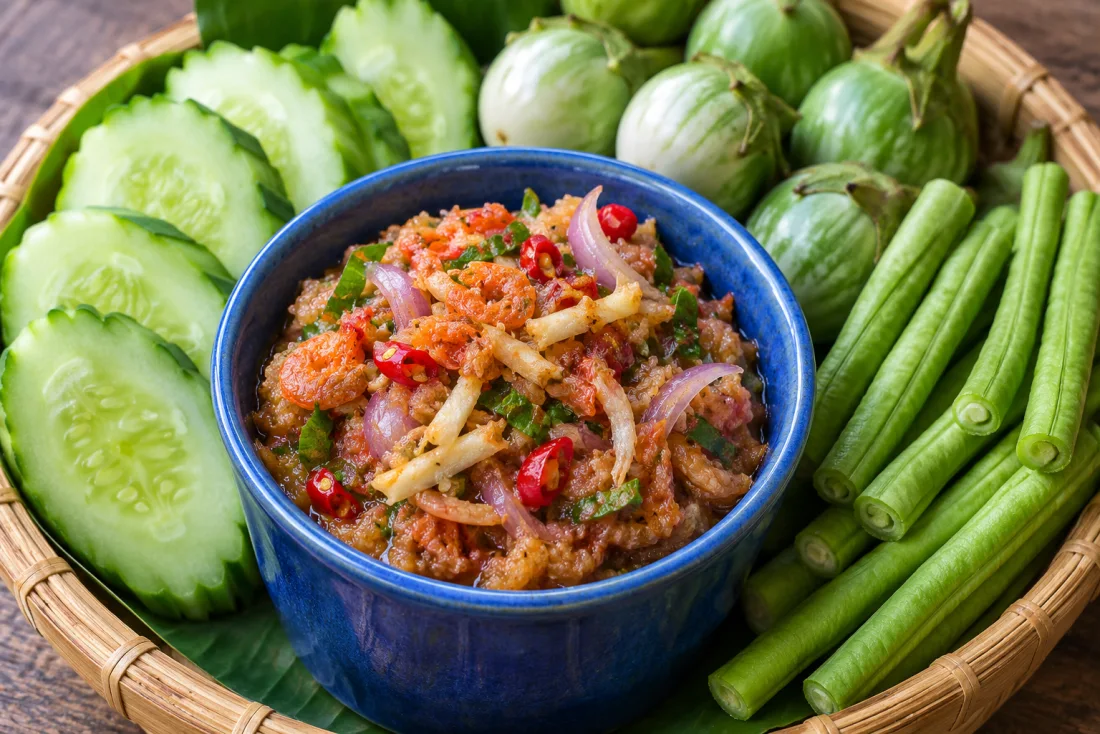
The name describes a fresh-ingredient relish. Chopped garlic, shallot, fruit and dried shrimp remain distinct in the bowl. Serve small spoonfuls with cooked rice or fresh vegetables. The shrimp paste is heated and the shrimp is dried, so the name does not imply every ingredient is raw.
A preparation preserved in a Thai cookbook
A Thai recipe records shrimp paste, dried shrimp and a sour palm fruit in the same relish. It documents how the ingredients were combined. A local fruit growing area does not establish a single place of origin for the relish.
Shrimp paste, dried shrimp and two sour notes
The recipe uses toasted shrimp paste, dried shrimp, garlic, shallot, lime, rakam fruit, chilies, fish sauce, sugar and culantro. Rakam is Salacca wallichiana. Its flesh gives a tart bite, and lime gives citrus juice. Shrimp paste has a fermented aroma while dried shrimp adds chew.
Toast the paste, then mix the sliced ingredients
Heat the shrimp paste until fragrant. Prepare the dried shrimp and thinly slice the fresh ingredients. Mix with crushed chilies, lime, fish sauce and a little sugar. The finished relish keeps the texture of the chopped ingredients and is served in a separate bowl.
Fresh sourness meets fermented savour
Lime and raw aromatics arrive first, followed by shrimp paste and fish sauce. The dried shrimp is chewy and the sliced fruit gently tart. Chili heat reflects the amount and type added. Cucumber and plain rice lighten the salt and acidity.
Crustacean, fish and shared equipment
Shrimp paste and dried shrimp contain crustacean, and the fish sauce contains fish. Ask about the fruit, prepared seasonings and shared boards or scoops. Removing visible shrimp does not remove shrimp paste or fish sauce already mixed into the relish.
If you have a food allergy, tell the restaurant before ordering and ask about ingredients, sauces and shared cooking equipment.