

 river prawns
 fish sauce
How to recognize the orange relish
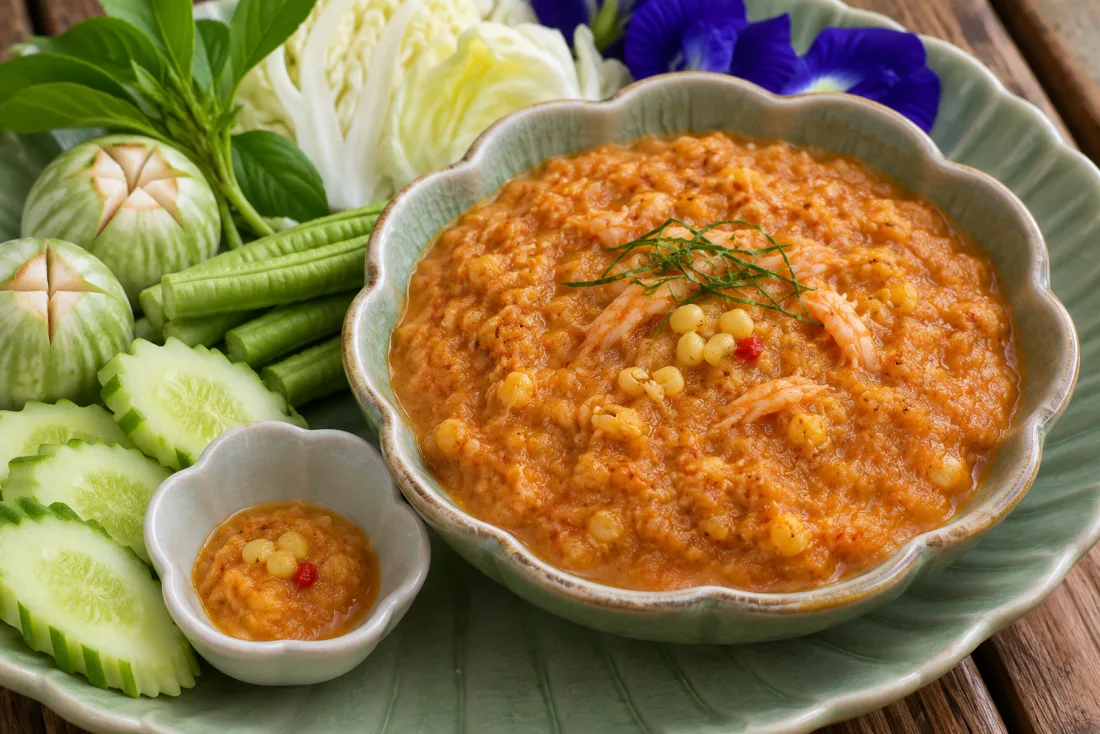
Look for a thick orange relish that clings to a spoon. Soft beans give it a finely grainy texture. Prawn is pounded into the relish, so a whole prawn need not be visible. The coconut base allows it to spread on a crisp snack.
Where the recipe appears
Tamrap Ahan records toasting and softening the beans before cooking them with coconut cream and prawn. Its tamarind blossom miang recipe also calls for this relish. The cookbook does not give a province of origin. Coconut, bean and prawn are the clues to this particular preparation.
Mung bean, chili jam and river prawn
The recipe uses toasted, cooked hulled mung beans, roasted chili jam, river prawn, coconut cream and cooked prawn head fat. Fish sauce and sugar give the savory-sweet base; tamarind and lime supply acidity. Thin coconut milk can loosen the relish a little if needed.
Toasted beans, prawn and fruit acidity
The first mouthful is creamy. Toasted mung bean and cooked prawn follow, with a deeper note from the head fat. Tamarind gives round tartness and lime gives a brighter edge. Heat varies with the chili jam. Cucumber gives a juicy contrast, while crisps add crunch.
Pair it with vegetables, crisps or rice
Share a shallow bowl with cucumber, long beans or small round eggplants. A crisp snack can carry a small spoonful, or use steamed rice to soften the concentrated taste. The cookbook also uses it as part of a leaf-wrap filling.
Allergens and the chili jam
Prawn and its head fat contain crustaceans. Fish sauce contains fish. Ask about mung beans and coconut if they are relevant to your allergy. Chili jam may contain seafood ingredients or other seasonings. Check the crisps for shrimp or wheat and ask about shared mortars, spoons and trays.
If you have a food allergy, tell the restaurant before ordering and ask about ingredients, sauces and shared cooking equipment.