

 dried shrimp
 fish sauce
How salted crab becomes a relish
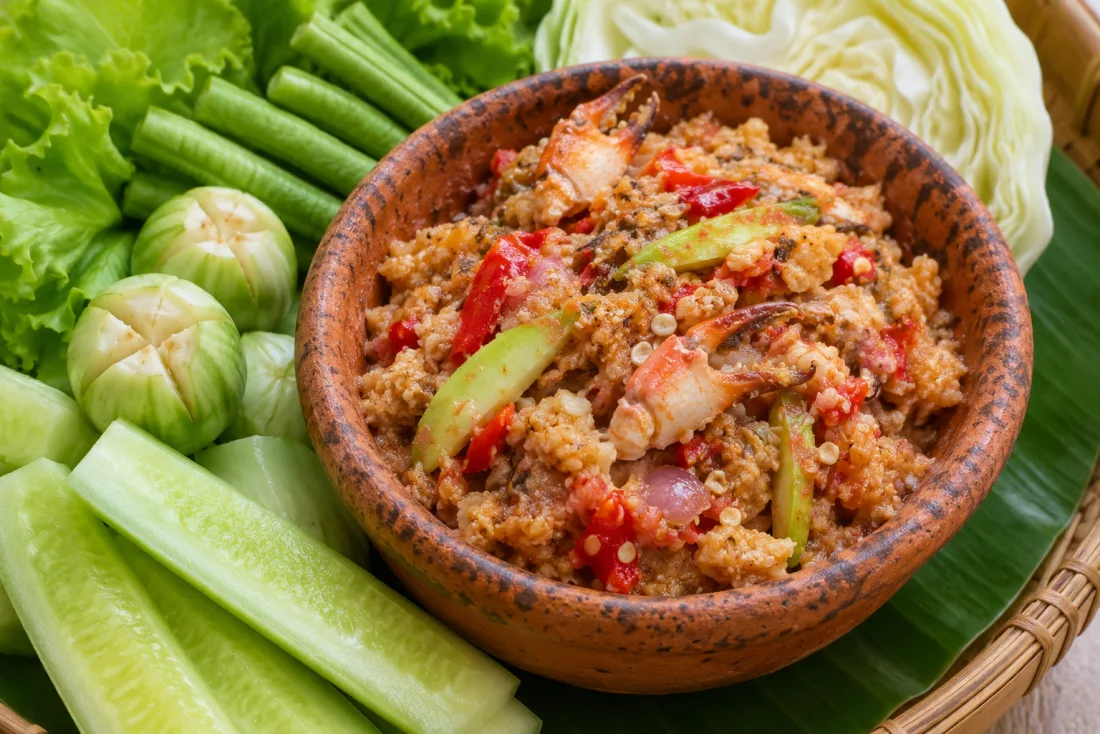
Pu khem means salted crab. After the top shell is discarded, the crab is mixed with pounded seasoning. Look for pieces of crab, red chili and pale slivers of madan. A cracked claw may appear in the bowl. The dish can come as a small bowl among vegetables or as a plate with rice.
A salted-crab relish in an old Thai cookbook
Tamrap Ahan records this pairing of salted crab and madan. It does not identify a province of origin. Salted crab also appears in other Thai dishes, including styles of papaya salad. Here it seasons a small shared bowl for eating with plain rice and vegetables.
Crab, shrimp and two kinds of acid
The archived version combines salted crab, dried shrimp, shrimp paste, garlic, sliced madan, lime, sugar, fish sauce and fresh chili. Madan is the sour fruit Garcinia schomburgkiana. Thin pieces of its flesh can stay distinct in the relish, while lime juice distributes the acidity through the mixture.
Several tastes in a small spoonful
Crab and dried shrimp give the first savory notes, followed by citrus. Madan gives small bursts of tartness as you chew. Crushed rather than smoothly blended chili makes some spoonfuls hotter than others. Taste the crab and shrimp paste before adding more salty seasoning.
Serve with rice and vegetables
Use a little relish alongside plain rice or dip sliced cucumber and long beans. A light soup makes a gentle companion. Drain blanched vegetables before dipping and watch for shell when a piece of claw reaches your plate.
Allergens, crab shell and sodium
Crab, dried shrimp and shrimp paste contain crustaceans. Fish sauce contains fish. All are mixed together and may contact shared utensils. Ask a restaurant about its type of preserved crab and whether it has been cooked. Look for hard shell fragments. Several of the ingredients contribute sodium.
If you have a food allergy, tell the restaurant before ordering and ask about ingredients, sauces and shared cooking equipment.