
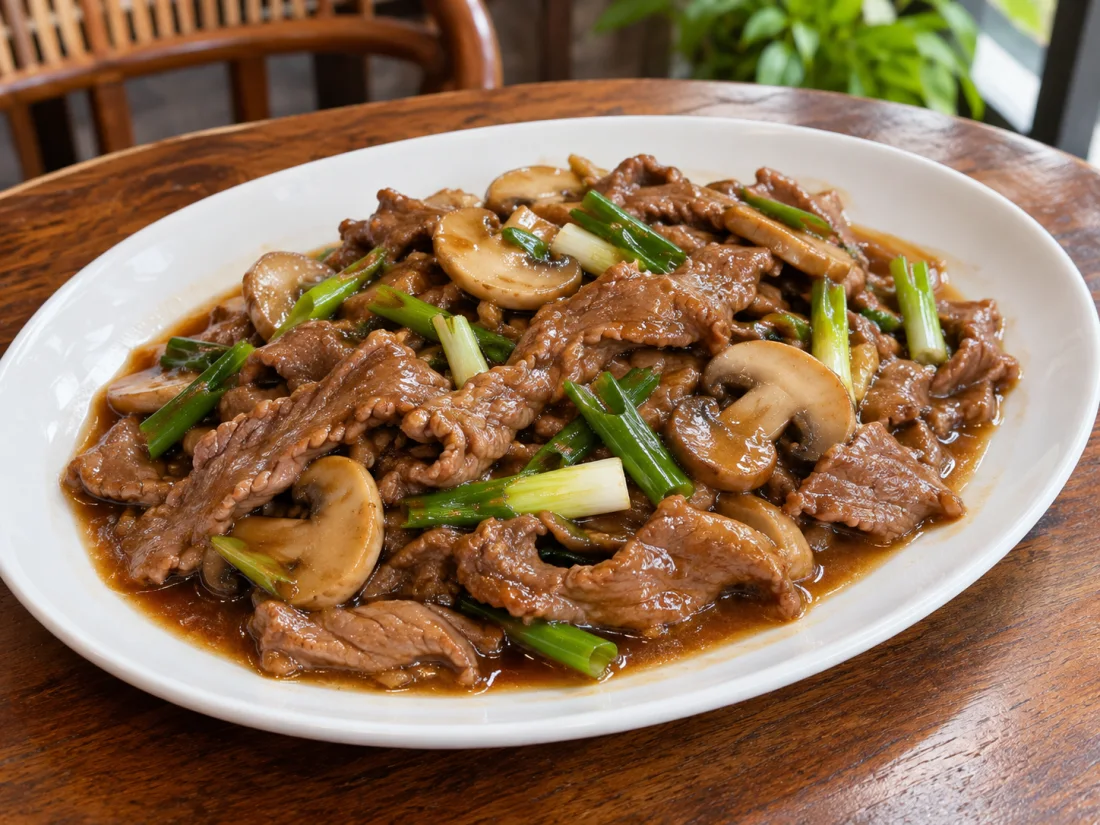

 beef
Why oyster sauce is in the name
Neua is beef and nam man hoi refers to oyster sauce. It describes the seasoning, and the dish can have no visible whole oysters. Fresh chili beef may also use oyster sauce, but this dish emphasizes its savory glaze rather than the chili as the main flavor.
Thai-Chinese cooking and restaurant menus
Thai-Chinese restaurants commonly serve the pairing. Thai recipes show it with crisp onion and straw mushrooms, and a Koh Samui restaurant lists the beef stir-fry by name. It can be shared with other dishes or eaten over rice.
Tenderloin, straw mushrooms and sauce
One chef marinates beef tenderloin with light soy, seasoning sauce, potato starch and rice bran oil. The wok sauce adds oyster sauce, soy, sugar, black pepper and Chinese cooking wine. Straw mushrooms, onion, garlic, mild long chili and scallions accompany it. Another recipe uses ginger and sesame oil.
Keeping beef tender in the wok
The cook can start the beef in oil, remove it after partial cooking, fry the vegetables, then return the beef to finish with sauce. A light starch coating helps the meat stay moist. A thin layer of sauce should coat the slices without pooling excessively.
Savory, lightly sweet and warm
Oyster sauce and meat give a deep savory flavor. Mushrooms add their own savor and onion softens to a gentle sweetness. Ginger and sesame can add a different aroma in some versions. A red chili does not establish the heat level. Rice is a natural accompaniment.
Allergens in oyster sauce, soy and sesame
Traditional oyster sauce can contain molluscs. Soy and seasoning sauces can bring soy and wheat. Sesame oil introduces sesame when used. Ask about beef marinades, added fish or fish sauce, shared woks and any cooking wine if you need to avoid it.
If you have a food allergy, tell the restaurant before ordering and ask about ingredients, sauces and shared cooking equipment.