
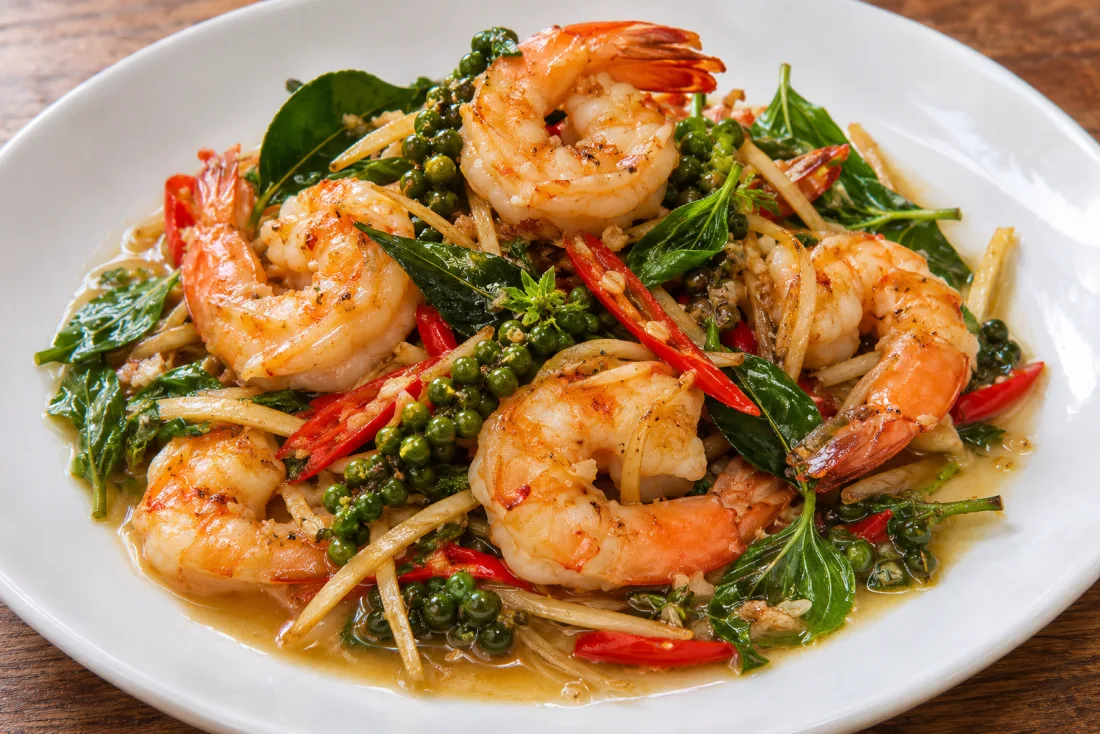

 shrimp
 fish sauce
Shrimp in a Thai pad cha stir-fry
Kung means shrimp. Pad cha can use seafood or other proteins. Thai home recipes document shrimp with vegetables and aromatic herbs. Shrimp size, species and tail preparation vary.
Garlic, fingerroot and peppercorn in the wok
Fry crushed chili and garlic, then add shrimp, fingerroot, green peppercorn and lime leaves. Fish sauce, oyster sauce, seasoning sauce and a little sugar can make a light glaze. Baby corn, carrot and sweet basil appear in one version.
Sweet shrimp and herbal heat
Shrimp is springy and lightly sweet. Peppercorn gives a direct heat when bitten, and fingerroot and makrut leaves perfume the sauce. Baby corn and carrot can stay crisp. Sauce color does not indicate heat.
Serving with rice
Try the shrimp with rice and share the vegetables and sauce. Set tails, stems and tough leaves aside. Ask about the chili and green peppercorn before cooking.
Comparing curry paste and holy basil stir-fries
Pad cha often highlights fingerroot, peppercorn and makrut leaves. Pad krapao emphasizes holy basil, though basil can also appear in pad cha. Pad phrik gaeng highlights red curry paste.
Allergens in shrimp and the sauce
Shrimp is a crustacean, fish sauce contains fish and oyster sauce can contain mollusks. Soy or wheat can be in bottled seasonings, and an egg side adds egg. Ask about shared equipment and oil.
If you have a food allergy, tell the restaurant before ordering and ask about ingredients, sauces and shared cooking equipment.