

 fish sauce
Fish choices for pad cha
Pla means fish. Thai cooks document sea bass and freshwater catfish. Check the species and whether the fish is filleted, cut into steaks or fried. The name identifies the stir-fry and main protein.
Fish, garlic, chili and fresh herbs
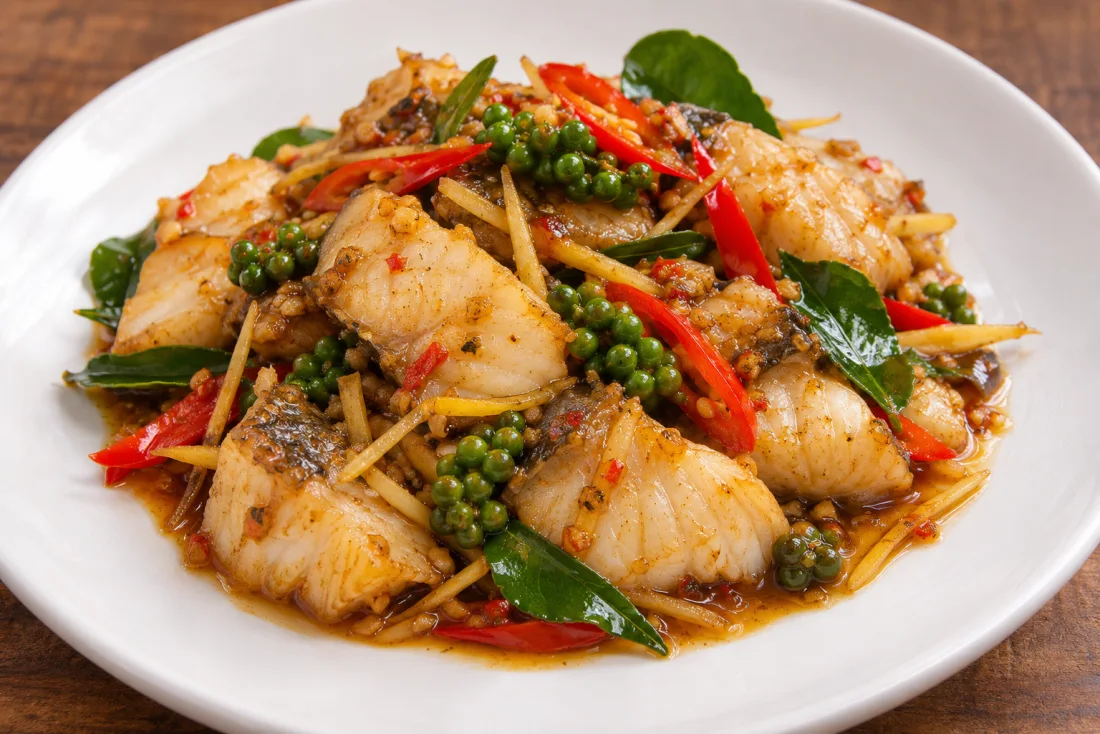
Fry chili and garlic, then cook fish gently in the sauce. Skin-on pieces hold together and skinless fillets are easy to spoon with the sauce. Add torn lime leaves, fingerroot and green peppercorns. Other cooks fry fish first or toss crisp catfish with red curry paste. Seasoning sauces and herbs vary.
Tender fish and green peppercorn heat
Directly cooked fish stays tender and fried fish starts crisp before sauce softens it. Fingerroot and lime leaf are aromatic. Green peppercorn and chili provide distinct heat. Oyster or fish sauce can add savor.
Serving with rice and checking bones
Serve with rice and check pieces for bones. Set tough leaves and stems aside. Ask whether the cook can reduce chili or serve sauce separately from crisp fish.
Light sauce, curry paste and coconut curry
Some recipes use aromatic chili and garlic, while others include red curry paste. Pad phrik gaeng and pad phet can also use that paste. Pad cha is usually a stir-fry, with less sauce than a coconut curry. Pad krapao emphasizes holy basil.
Fish, paste and coating allergens
Fish and fish sauce contain fish. Shrimp paste adds crustaceans and oyster sauce can add mollusks. Check soy, wheat and egg in seasoning or batter, and ask about shared pans, boards and oil.
If you have a food allergy, tell the restaurant before ordering and ask about ingredients, sauces and shared cooking equipment.