

 fish
 prawn
 squid
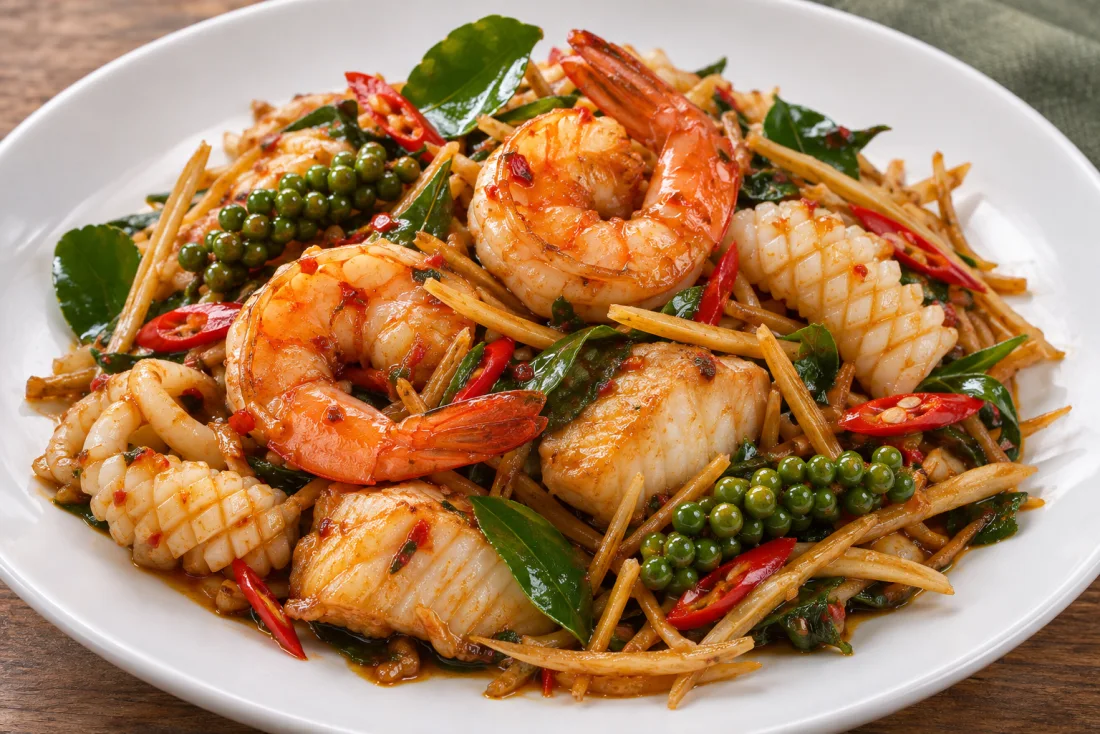
An aromatic Thai stir-fry with mixed seafood
Pad cha is an aromatic stir-fry and talay means seafood here. Ruam mit can specify a mix. One recipe combines fish, shrimp, squid and mussels. Restaurants can choose the seafood based on what is available.
Thai cooks use the same method for individual fish. One recipe describes king mackerel from Rayong as a regional example. That helps place the technique in coastal cooking without identifying one birthplace for the mixed-seafood version.
Fingerroot, green peppercorns, garlic and seafood
Fresh chilli, garlic, salt and pepper can be pounded coarsely before frying. Stock, fish sauce, soy sauce, oyster sauce or sugar can season the pan. Sliced fingerroot, clusters of young green peppercorns, torn makrut lime leaves and holy basil are possible additions. Other versions use Thai sweet basil.
Shrimp, squid, fish pieces and mussels cook and feel different depending on their size. Shrimp may keep their tails, and some shellfish can be served in the shell. The finished stir-fry usually has enough liquid to coat the seafood.
The aroma and heat of the fresh seasonings
Green peppercorns give a fresh bite, while fingerroot is aromatic and slightly spicy. Makrut lime leaves give a citrus fragrance and basil adds a fresh note. Chilli can leave a lingering heat, and fish sauce or oyster sauce brings savor. Sweet shrimp, springy squid and soft fish give contrasting textures.
The plate can be hot even if the sauce looks pale. Biting a peppercorn intensifies its heat. Ask whether the kitchen can reduce the chilli or serve peppercorns separately if you prefer a milder taste.
Serving with rice or sharing the plate
Steamed rice takes up some sauce and combines well with seafood and herbs. The seafood can come as a shared dish or over rice. Try a bite without a whole peppercorn cluster and another with a strip of fingerroot to taste how the aromatics differ.
One version serves seafood pad cha over a crisp omelette. A menu usually identifies the egg separately. Leave tough lime leaves or pepper stems on a side plate. Ask whether rice is included.
Distinguishing it from other spicy seafood
Holy basil seafood stir-fry can share garlic and chilli. Pad cha also often uses fingerroot, young peppercorns and makrut lime leaves. Check the combination of herbs and the Thai name.
A dish made only with mussels or fish may specify that ingredient. Compared with seafood tom yum, pad cha is cooked in a pan with its sauce coating the seafood. Sourness is less central. Ask about which seafood, the amount of sauce and whether shells are left on.
Allergies in seafood, fish sauce, oyster sauce and soy sauce
Shrimp and crab are crustaceans. Squid, oysters and mussels are mollusks. Fish and fish sauce can contain fish. Oyster sauce can contain oyster, and soy sauce can contain soy and wheat. An omelette version adds egg. Check individual seafood and seasoning ingredients.
Ask about shared woks, spatulas, preparation trays and sauce spoons. Removing visible shrimp or mussels cannot remove ingredients that were already stir-fried into the sauce. Tell the kitchen what you need to avoid and ask whether separate preparation is possible.
If you have a food allergy, tell the restaurant before ordering and ask about ingredients, sauces and shared cooking equipment.