

 chicken
 shrimp
How to recognise the components
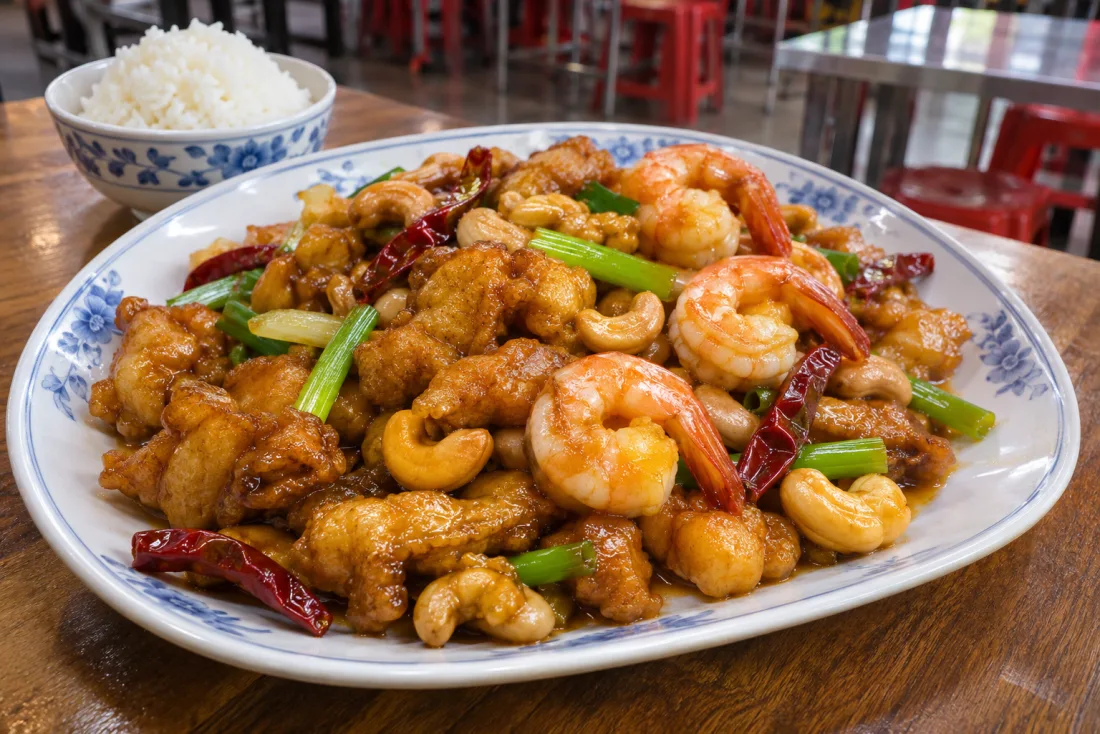
The chicken has golden edges. Cooked shrimp curl and turn pink-orange, while cashews are pale golden whole nuts or halves. Dried red chilli and scallion can be visible among them.
How Thai restaurants name the two-protein version
Met mamuang himmaphan means cashew. Some menus list cashew chicken and prawn dishes separately. A Bangkok vendor names a crispy chicken version mixed with shrimp. Serving size, onions and peppers depend on the restaurant.
How it is cooked
The chicken can be lightly coated and fried. Shrimp are cooked through, and cashews can be toasted separately. Garlic, chilli, soy sauce, oyster sauce or a little sugar may flavour the glaze. The cashews often go in late.
Contrasting textures and flavours
The chicken has a crisp edge, the shrimp a springy bite, and toasted cashews a hard crunch. A little glaze clings to each component. Dried chilli can flavour the sauce even when large pieces are picked out.
What to ask when ordering
Specify both chicken and shrimp if offered. Ask whether the rice is included and how the chicken is coated. The same dish can appear as an individual portion or a shared plate.
Allergens and shared surfaces
Cashew is a tree nut, and shrimp is a crustacean. Oyster sauce can contain molluscs. Soy, wheat, egg, milk or fish ingredients can occur in sauces or coating. Ask about fryers, cookware and preparation surfaces if you have an allergy.
If you have a food allergy, tell the restaurant before ordering and ask about ingredients, sauces and shared cooking equipment.