

 pork
 shrimp paste
A shrimp-paste method and a southern pork version
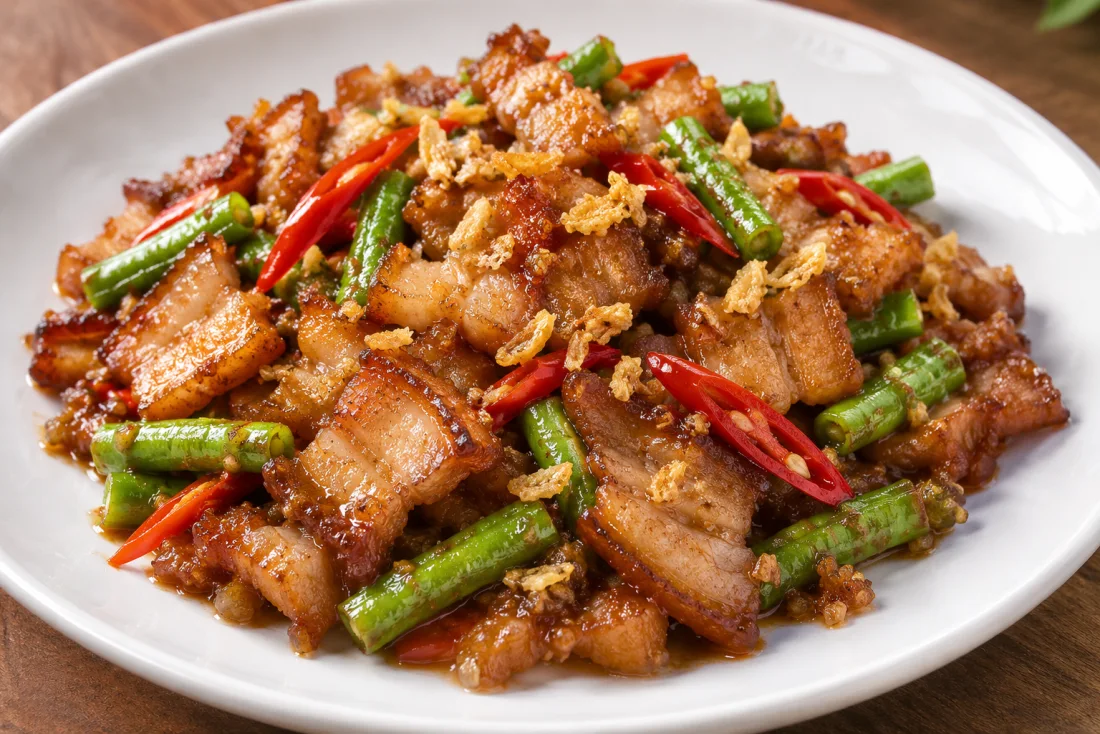
Pad means stir-fry and ka pi means fermented shrimp paste. The name without another noun does not specify the main ingredient. Pork with long beans is one documented example, alongside dishes using squid or other vegetables.
Thai cooks document southern pork versions with collar or belly. This helps locate a pork style without making every shrimp-paste stir-fry a single regional dish.
Pork, long beans and the wok
Sliced pork belly or collar can be fried with garlic, shallot and shrimp paste. A little water can loosen the paste. Coconut sugar can balance saltiness, and chilli supplies heat.
A documented long-bean version leaves the beans a little crisp. Recipes also use lemongrass, makrut lime leaves or lime juice. Check which main ingredient and vegetables the menu specifies.
Fermented savor, garlic and sweetness
Cooked shrimp paste contributes fermented savor, while garlic and shallot soften the aroma. Some versions add sweetness, lime acidity or chilli heat. Fatty pork and crisp beans give distinct textures.
Some cooks reduce the sauce, while others leave enough to spoon over rice. Dark paste does not indicate chilli level. Ask about chillies and any lime served separately.
With rice and fresh vegetables
The stir-fry can be shared with steamed rice and fresh vegetables. Try a small piece with sauce and then a bite with rice. Add lime sparingly if it comes on the side. Short pieces of long bean are easy to pick up with a spoonful of rice.
Some stalls serve it over rice as an individual meal. Ask whether rice is included and about the proportion of meat, vegetables or sauce.
Shrimp-paste stir-fries and shrimp-paste rice
Moo pad kapi indicates pork, muek pad kapi squid and phak bung water spinach. Shrimp paste creates a shared aroma, but the textures and additional seasonings differ.
A shrimp-and-stink-bean dish specifies sataw. Shrimp-paste rice mixes paste into the rice, while a stir-fry can be served over plain rice.
Allergies in shrimp paste and prepared sauces
Shrimp paste contains crustaceans even when the main ingredient is pork or vegetables. Fish sauce, oyster sauce and soy sauce can introduce fish, mollusks, soy or wheat. Squid is a mollusk.
Ask about the paste, other sauces, shared woks, tools and containers. Removing intact seafood does not remove shrimp paste that has already been mixed in.
If you have a food allergy, tell the restaurant before ordering and ask about ingredients, sauces and shared cooking equipment.