
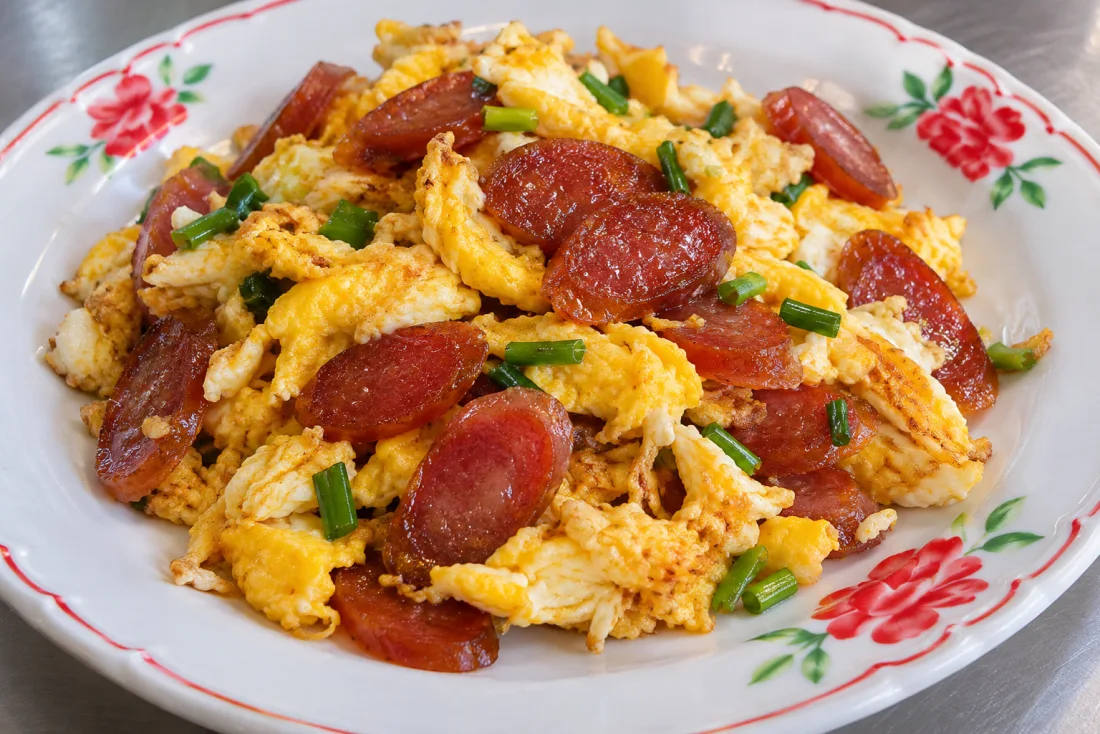

Kun chiang in a Thai kitchen
Kun chiang names Chinese-style sausage. Phat khai indicates that it is fried with egg. It can be a household dish or a side for rice. The sausage can be made from pork or another labelled meat, so ask if its source matters.
Sausage slices in the pan
Thin diagonal slices can brown at the edge and stay tender. Small pieces distribute the sweet-savoury flavour through the egg. Some cooks add a little water and let it evaporate. Check the sausage label and cook the meat and egg thoroughly.
Garlic, pepper and egg
Some kitchens fry garlic first, while others use pepper and spring onion to finish. Egg sets in small golden pieces that can catch the sausage seasoning. Soy or a little sugar are optional depending on the sausage and recipe.
Tender or more deeply browned
Larger soft curds and thin sausage slices give distinct bites. Smaller browned pieces make the finish more fragrant. The plate can be served with cucumber, rice or other dishes when available.
Choosing it rather than fried rice
Kun chiang fried rice mixes rice and sausage together in the wok. This dish is an egg and sausage topping or side. Ask whether rice is included and whether the shop can pack the two separately.
Allergens and compound sausage ingredients
Egg is a defining allergen. Sausage and sauces may contain soy or wheat. Fish sauce, oyster sauce, shrimp, milk or sesame may be used in prepared seasonings. Check the sausage meat, its label and shared cooking equipment if relevant.
If you have a food allergy, tell the restaurant before ordering and ask about ingredients, sauces and shared cooking equipment.