

 fish sauce
The name at a Thai rice shop
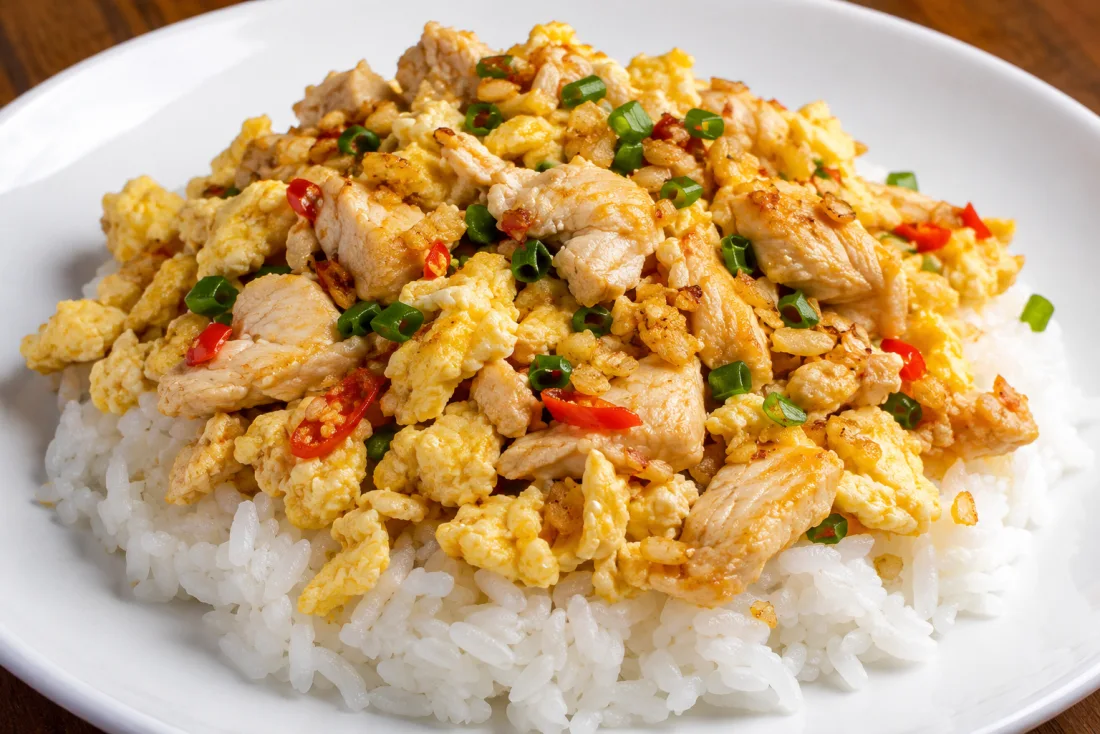
Khai means egg and khayi refers to breaking it up. Shops cook and stir the eggs into loose pieces. A menu with khao offers them with rice. Garlic and chilli can be named in the menu, and meat or shrimp additions depend on the order.
Why the curds look different
A cook can mix the eggs first or break them in the pan. The latter can give yellow and white pieces. Stirring more yields small pieces. Larger fully set curds can stay tender and may have browned edges.
Garlic, chilli and seasoning
Frying garlic and chopped chilli briefly adds fragrance before the eggs go in. Light soy, fish sauce, pepper and scallion may flavour the eggs. Ask about the source and amount of heat if it matters.
Drier curds or a softer style
Small dry curds catch more of the garlicky seasoning. Larger fully set pieces can be gentler and softer. Plain rice, cucumber or a little chilli fish sauce may be served beside the egg or beneath it.
Choosing it among other egg dishes
Scrambling gives irregular curds, while a fried egg or omelette holds a whole shape. Egg fried rice mixes the rice in the wok. Ask if the eggs and rice can be packed separately and whether chilli is mixed through.
Allergens and cooking tools
Egg remains an allergen once cooked. Fish sauce contains fish, soy sauce can have soy and wheat, and oyster sauce can contain molluscs. Ask about milk, sesame or shrimp if added and about shared woks and spatulas.
If you have a food allergy, tell the restaurant before ordering and ask about ingredients, sauces and shared cooking equipment.