
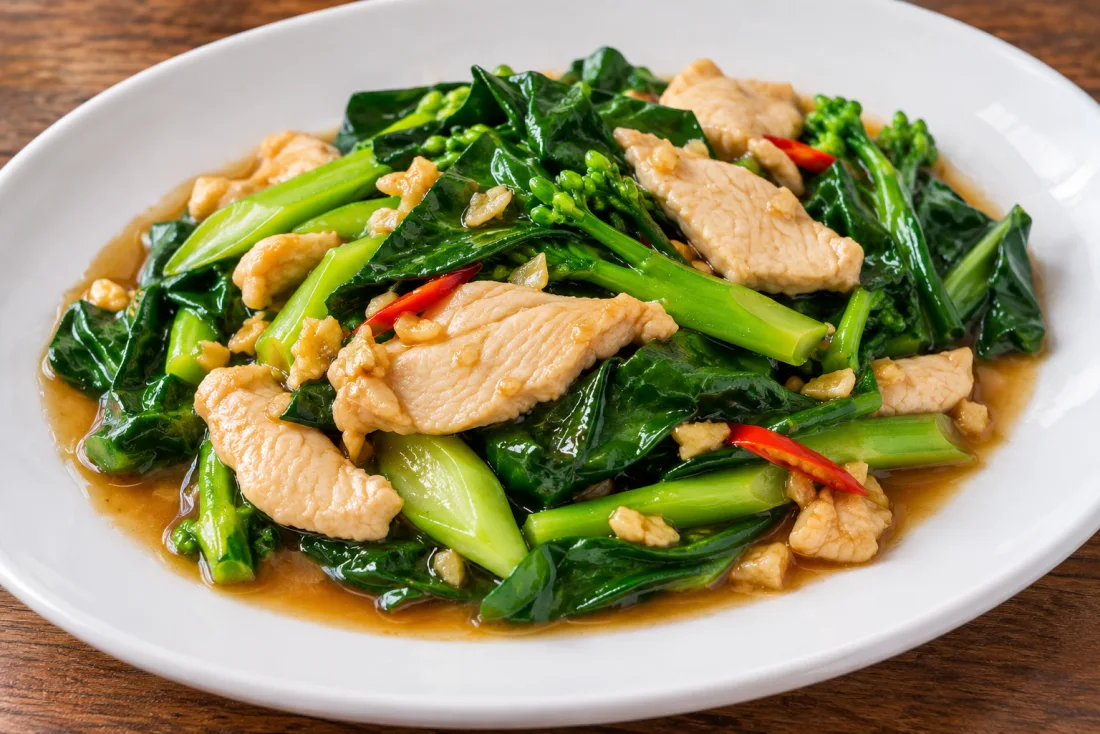

 chicken breast
A Thai home stir-fry with chicken
Kana means Chinese broccoli, gai means chicken and pad means stir-fry. The vegetable has substantial green stalks and tender leaves. An everyday Thai preparation uses chicken breast, garlic and oyster sauce. Family versions document the combination without assigning it a province.
Preparing the stalks, leaves and chicken
Peel tough stalk bases and slice across them. Leaves can go into the wok later than stems. Slice thick stems thinner and leave slender stems thicker so both retain a little bite after cooking. Stir-fry chicken breast with garlic before adding the vegetables. Documented seasonings include oyster sauce, light soy and a little sugar or shiitake seasoning.
Crisp stems and garlic-seasoned chicken
Stalks stay crisp, leaves soften and can have a hint of bitterness, and chicken has a mild savory taste. Garlic scents the sauce. Oyster sauce or soy can bring savor, while a small amount of sugar rounds it out. Chili depends on the cook.
Serving with steamed rice
Order over rice or as a dish with soup. Try the stems, leaves and chicken, then spoon some sauce over rice. Share both cuts of vegetables as well as meat. Ask if the cook can use less sauce or if the stems can be cooked softer.
Crispy pork and soy sauce noodles
Pad kana moo grop uses crispy pork belly. Oyster sauce greens may be offered without added meat. Chicken and Chinese broccoli also appear in soy sauce rice noodle dishes, which may include wide noodles and egg. Menu terms can tell you if starch is already included.
Allergens in sauce and marinade
Oyster sauce can contain mollusks. Soy sauce and mushroom seasoning may contain soy and wheat, and fish sauce adds fish. Check any marinade or seasoning powder. Ask if the wok, chopping board, spatula and sauce containers are shared with seafood or other allergens.
If you have a food allergy, tell the restaurant before ordering and ask about ingredients, sauces and shared cooking equipment.