

 pork
Pork and Chinese broccoli on a Thai menu
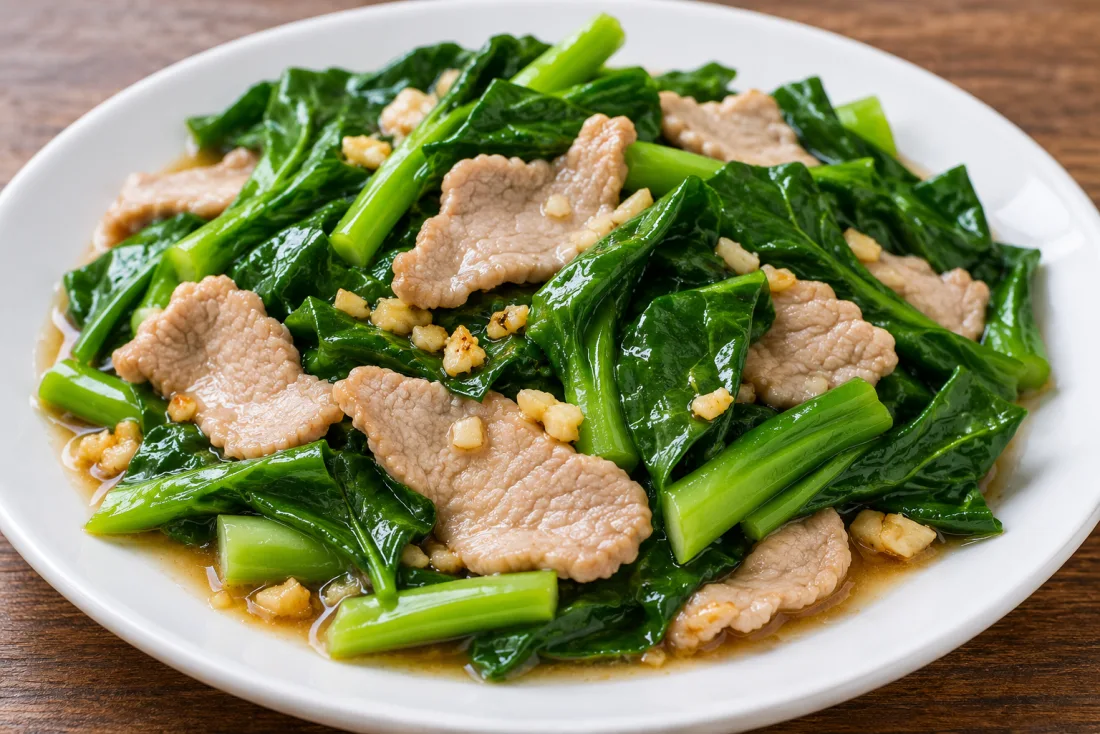
Kana is Chinese broccoli or gai lan, moo is pork and nam man hoi is oyster sauce. This Thai stir-fry can be served alongside rice or over it. Recipes use different pork cuts and stem sizes.
Cooking the pork and greens in oyster sauce
One Thai recipe blanches the greens, cooks chopped garlic and sliced pork in oyster sauce, and then adds chili, greens, light soy, seasoning sauce, sugar and water. Other cooks stir-fry the stems before the leaves. A little starch may help the sauce cling.
Tender pork, crisp stems and a savory glaze
The pork has a firm, tender bite, the stems remain crisp and the leaves soften. Garlic and oyster sauce give the main aroma and savor. Chili is optional. More water gives a spoonable sauce for rice; a drier stir-fry keeps sauce on the pork and greens.
Serving with rice or plain rice porridge
Try the pork and stem first, then add a little sauce to rice or porridge. When sharing, distribute pork, stems and leaves. Ask about stem texture and chili before cooking, or whether rice is included.
Plain oyster sauce greens and crispy pork
Plain Chinese broccoli in oyster sauce may have no pork. Moo grop identifies crispy pork belly rather than sliced pork. An all-plant option uses a suitable mushroom sauce and plant-based stock and leaves out pork and fish sauce.
Allergens in oyster sauce, soy and marinade
Oyster sauce may contain mollusks. Light soy and seasoning sauces may contain soy and wheat. Fish sauce contains fish when used. Check marinade and starch ingredients and ask about shared woks, oil, cutting boards, spatulas and strainers.
If you have a food allergy, tell the restaurant before ordering and ask about ingredients, sauces and shared cooking equipment.