
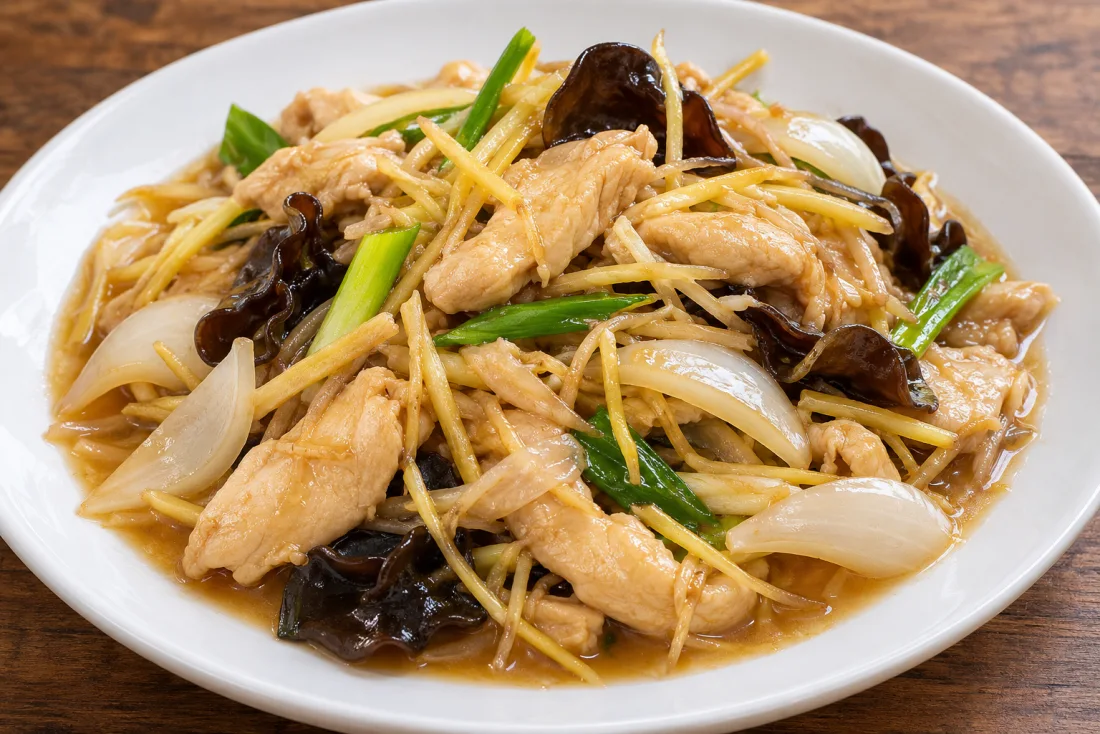

 chicken
A Thai ginger chicken dish with two name orders
Gai means chicken, pad means stir-fried and khing means ginger. Gai pad khing is a common menu order. Thai cooks describe it as an everyday dish and document both lightly sauced stir-fries and thicker versions poured over rice.
Ginger, soybean paste and wood ear can help identify one version. The ingredients vary across kitchens, and the menu name cannot identify one province of origin. Ask if it includes rice.
Chicken, ginger and wood ear in the wok
A cook can use chicken thigh or breast. Sliced ginger softens and flavors the sauce. Wood ear mushrooms, onion and scallions can contribute different textures.
Garlic, soy sauce, oyster sauce and a little sugar are familiar seasonings. Some recipes emphasize fermented soybean paste. A small amount of water helps coat the cooked chicken. Chilli, mushrooms and other vegetables vary.
Ginger warmth and savory sweetness
Ginger still smells fresh after frying, especially when you bite a strip. Soy seasonings give savor, softened onion or sugar adds sweetness, and wood ear has a springy crunch. Chicken and vegetables give several textures in the same bite.
Some versions use fresh chilli, which gives different heat from ginger. Ask about each separately if you prefer a mild dish. Brown sauce or a little red pepper does not establish how hot it is.
With rice, as a rice plate or to share
Steamed rice picks up the sauce, and the chicken can come on a shared table. Try the chicken, ginger, soft onion and springy mushrooms separately before combining them.
A documented variant pours a thicker ginger sauce over rice. Ask whether it comes as a separate stir-fry or a rice plate and how much sauce is used.
Ginger broth and other chicken stir-fries
Tom khing points to chicken simmered with ginger in broth. Pad khing uses a pan and commonly has strips of ginger in a thinner sauce. Similar-looking versions are easier to distinguish by the Thai name and cooking method.
Pad krapao gai has holy basil as a main flavor. Ginger chicken emphasizes ginger and savory seasoning. Thai cooks can also stir-fry another meat with ginger.
Allergies in soybean paste, soy sauce and oyster sauce
Fermented soybean paste and soy sauce can provide soy and wheat. Oyster sauce can contain mollusks and fish sauce can contain fish. Ask about prepared sauces and the chicken marinade.
Tell the kitchen what you need to avoid, then ask about shared pans, spatulas and utensils. Removing ginger or using less sauce cannot change what was already cooked with the chicken.
If you have a food allergy, tell the restaurant before ordering and ask about ingredients, sauces and shared cooking equipment.