
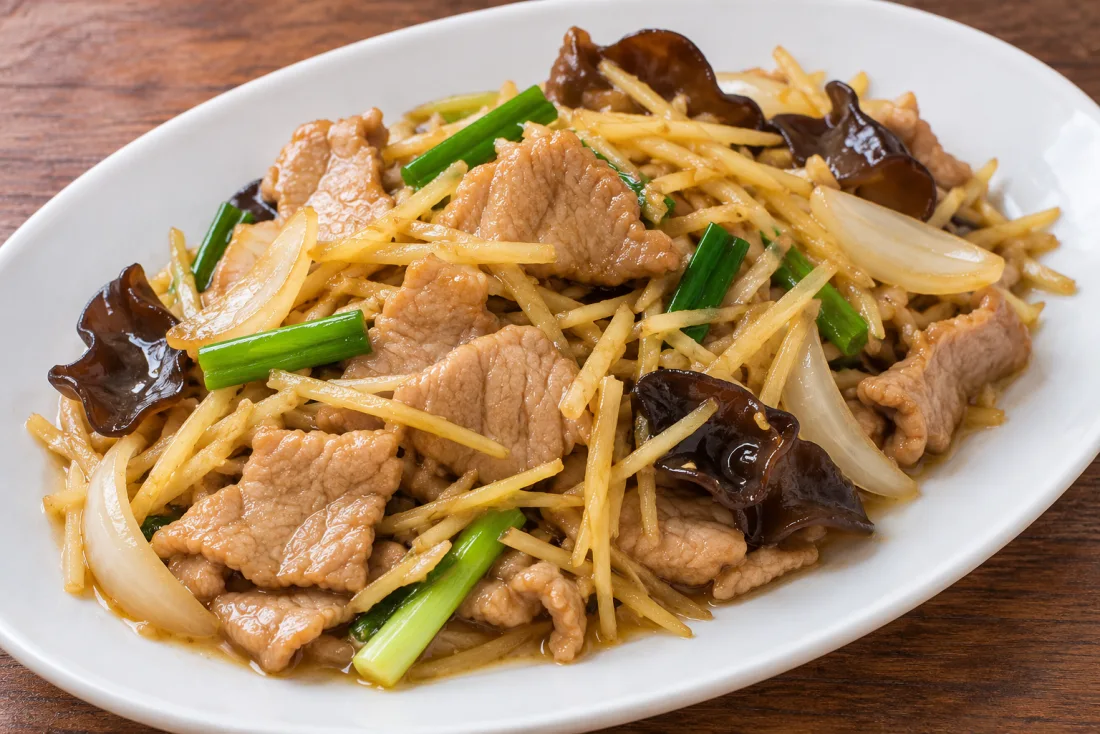

 pork
Pork in Thai home-style ginger stir-fries
Khing means ginger and moo means pork. Moo pad khing is another common word order. Home recipes use available ginger and wood ears, with varying seasonings and vegetables. It can be served as a Thai rice accompaniment without a specific provincial attribution.
Pork slices, young ginger and wood ears
Slice pork and cut the young ginger into fine strips. Trim wood ears and prepare garlic, scallions, chili and optional onion. Fry the garlic and pork before adding mushrooms and ginger. Soy sauce, oyster sauce and fermented soybeans can flavor the dish, and some cooks marinate their pork first.
Warm ginger and crisp mushrooms
Thin young ginger gives a warm fragrance and light crunch, while wood ears have a springier bite. Pork can be lean or juicy and retains the seasoning. Fermented soybeans add depth. Sliced chili can add a separate heat, and more moisture can leave sauce for rice.
Serving with rice
Try pork, ginger and mushrooms with steamed rice, then portion sauce and vegetables if sharing. Order it over rice or as a side dish. Ask about reducing fresh chili and ginger separately, as both can contribute heat.
Distinguishing prik khing and ginger pork styles
Pad khing puts visible ginger at the center. Pad phrik khing uses a chili curry paste and can include long bean and makrut lime leaf. Japanese ginger pork can use grated ginger in the seasoning and is often served with rice. Wood ears and scallion are common clues in the Thai style.
Allergens in soybeans, oyster sauce and marinade
Fermented soybeans and soy sauce contain soy, and some preparations include wheat. Oyster sauce can contain mollusks and fish sauce contains fish. Ask about commercial sauces and any marinade, and about shared woks, spatulas, containers and boards.
If you have a food allergy, tell the restaurant before ordering and ask about ingredients, sauces and shared cooking equipment.