

 beef
Beef in a Thai ginger stir-fry
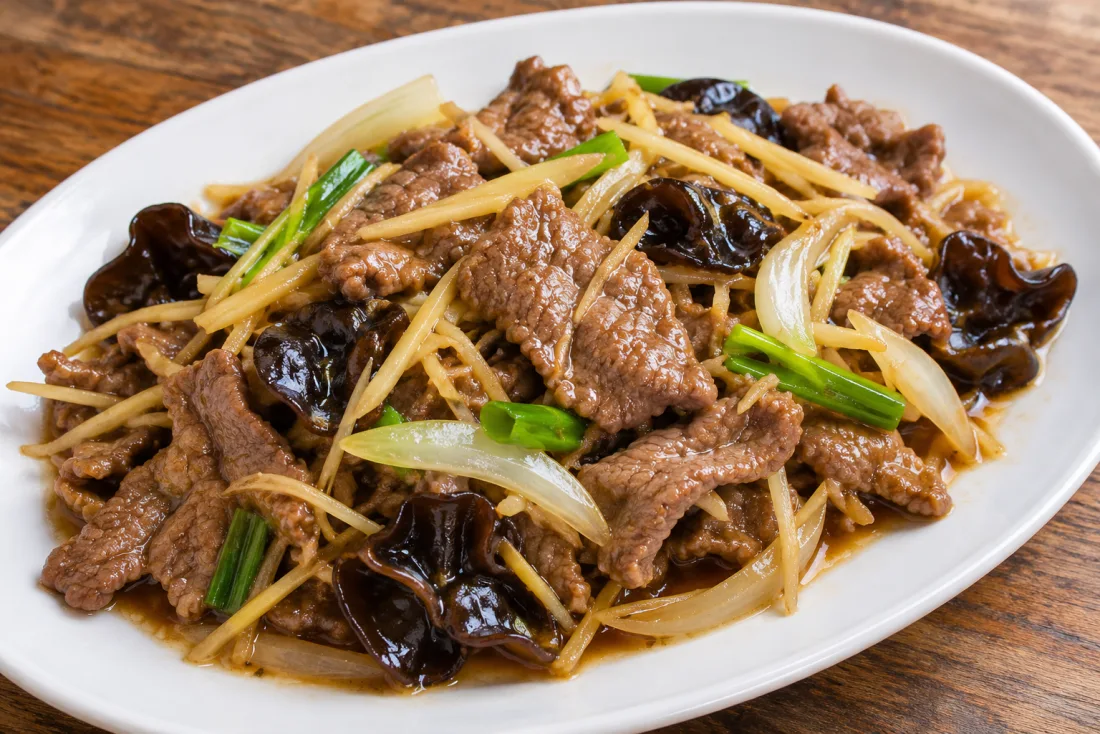
Khing means ginger and neua means beef here. A Thai chef documents rump beef with young ginger, black wood ears and onion. The beef cut and preparation vary by kitchen.
Young ginger, beef and wood ears
Fry garlic and beef and stir in oyster sauce, fermented soybean paste, seasoning and a little water. Add wood ears, ginger and onion before the scallion and chili. Onion softens and tastes sweet beside springier mushrooms. The cooking time depends on the thickness of the beef.
Savory beef and warm ginger
Beef adds richness, wood ears can be crisp, and young ginger has a softer bite than mature ginger. Fermented soybean paste adds savor. Fresh chili is a separate source of heat.
Serving with steamed rice
Put some beef, ginger and sauce over rice and share the vegetables. Ask about the beef cut and whether ginger or chili can be reduced before cooking.
Prik khing, shogayaki and pad cha
Pad khing uses ginger strips, while prik khing uses a curry paste. Japanese shogayaki can use grated ginger in the sauce. Pad cha emphasizes fingerroot, peppercorn and lime leaf.
Allergens in soybean paste, oyster sauce and marinade
Fermented soybean paste contains soy and some seasonings contain wheat. Oyster sauce may contain mollusks, fish sauce contains fish and sesame oil adds sesame. Ask about marinades and shared oil, boards, woks and utensils.
If you have a food allergy, tell the restaurant before ordering and ask about ingredients, sauces and shared cooking equipment.