
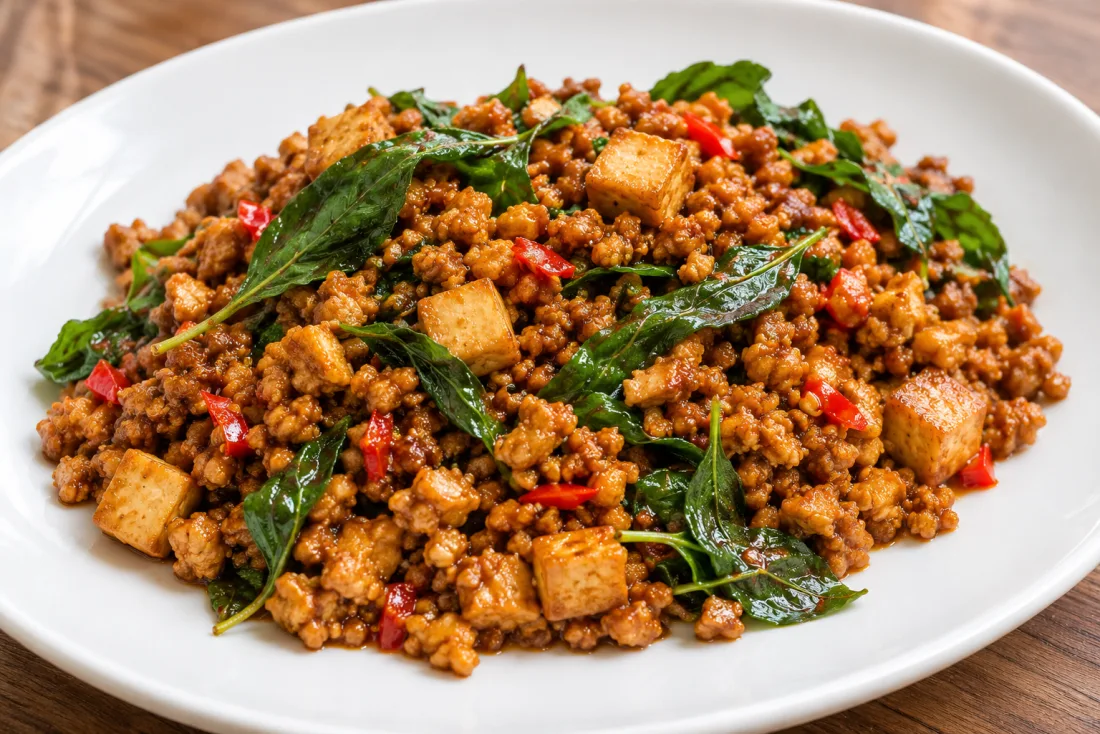

Holy basil in a Thai jay kitchen
Pad krapao jay combines the stir-frying method with a Thai dietary practice. Thai sources record avoiding meat, eggs and dairy as well as specified pungent vegetables. It appears at festival stalls and in home recipes. A documented version starts with chilli and adds tofu and textured soy protein.
Tofu, soy protein and holy basil
Firm tofu may be cubed or crumbled. Textured soy protein holds some of the seasoning and adds chew. Chilli, light soy sauce, sugar and salt can season the stir-fry. Add holy basil late for a peppery aroma. Mushroom and tofu are possible variations. A dish with tofu alone is not necessarily jay.
Drain the tofu and add the basil late
Drain any soaked soy protein and prepare the tofu according to the desired texture. Fry chopped chilli first, then toss the plant protein with enough sauce to coat it. Let excess moisture reduce, then add the holy basil briefly. Some kitchens keep extra chilli separate for diners.
Wok aroma, peppery basil and chilli heat
Cooked chilli and holy basil smell strongest as the food reaches the table. Tofu can brown outside and stay tender inside. Textured soy may hold more seasoning. Soy sauce or an appropriate mushroom seasoning adds savouriness. Holy basil has a peppery aroma distinct from Thai sweet basil.
Ordering strict jay or other vegetarian versions
Ask about garlic, onion, eggs and animal seasonings, even if the menu lists tofu. A vegetarian menu may offer fried egg, while strict jay avoids it. A specialist stall may offer tofu, mushrooms or textured plant protein with rice. The cooking method and the sauce are useful things to ask about.
Allergens in soy, seasoning and shared equipment
The reference contains soy. Some sauces, coatings or packaged plant proteins contain wheat. Sesame or peanuts can appear in other recipes. Shared woks and tools may contact egg, fish sauce, oyster sauce or shrimp. Ask separately about packaged seasonings, toppings and cross-contact when an ingredient matters.
If you have a food allergy, tell the restaurant before ordering and ask about ingredients, sauces and shared cooking equipment.