

 shrimp
 fish sauce
Shrimp at a Thai made-to-order kitchen
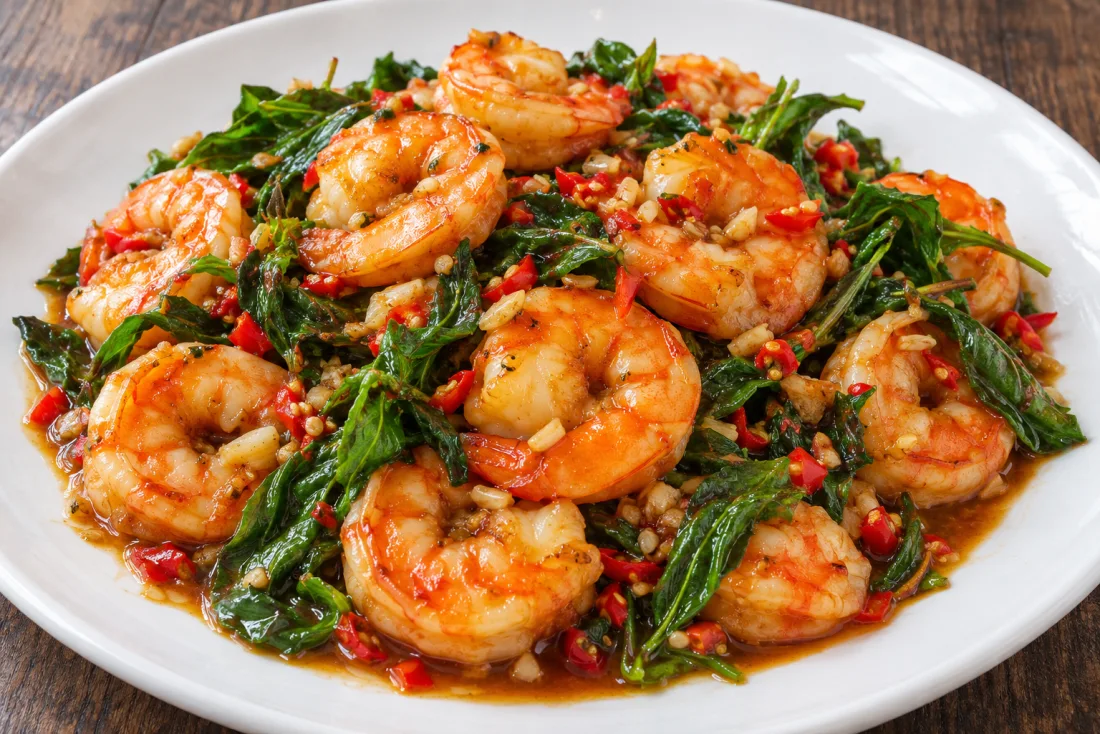
Pad means stir-fry, krapao is holy basil and kung means shrimp. This is a seafood option in an everyday style that can also use pork or chicken. Restaurants and home recipes may use different sizes or leave the tail attached. The name identifies the shrimp and stir-fry style.
Shrimp, garlic, chili and basil in the wok
Garlic and chili perfume the oil before the shrimp goes in. An institutional recipe seasons prawns with fish sauce, dark soy and stock and can use onion. A home version uses packaged seasoning and a little water. Holy basil normally goes in near the end so its aroma stays clear.
Sweet shrimp and peppery basil
Firm shrimp has a delicate sweetness, while the thin sauce adds savory saltiness and garlic. Holy basil has a peppery aroma distinct from Thai sweet basil. Heat varies with the chili; larger shrimp or curled split shrimp give a different bite. Versions can be relatively dry or saucy.
Rice, egg and serving styles
Order it over rice or as a separate dish. A fried egg or soft omelet is optional. Tails can be set aside if attached. Spoon shrimp, basil and rice together, or portion sauce separately when sharing. Ask whether the kitchen can reduce the chili in a fresh batch.
Garlic shrimp and mixed seafood versions
Garlic shrimp emphasizes garlic and sometimes pepper. Look for krapao in Thai for holy basil, or horapha for Thai sweet basil. Talay can mean a mix of seafood. Kung marks a shrimp-focused order, while egg may be an optional topping.
Allergens in shrimp, sauce and toppings
Shrimp is a crustacean. Fish sauce contains fish and oyster sauce may contain mollusk. Soy or wheat can be in soy sauce and packaged seasonings. Egg is present when added. Ask about cross-contact with other seafood through the wok, spatula, oil or containers.
If you have a food allergy, tell the restaurant before ordering and ask about ingredients, sauces and shared cooking equipment.