
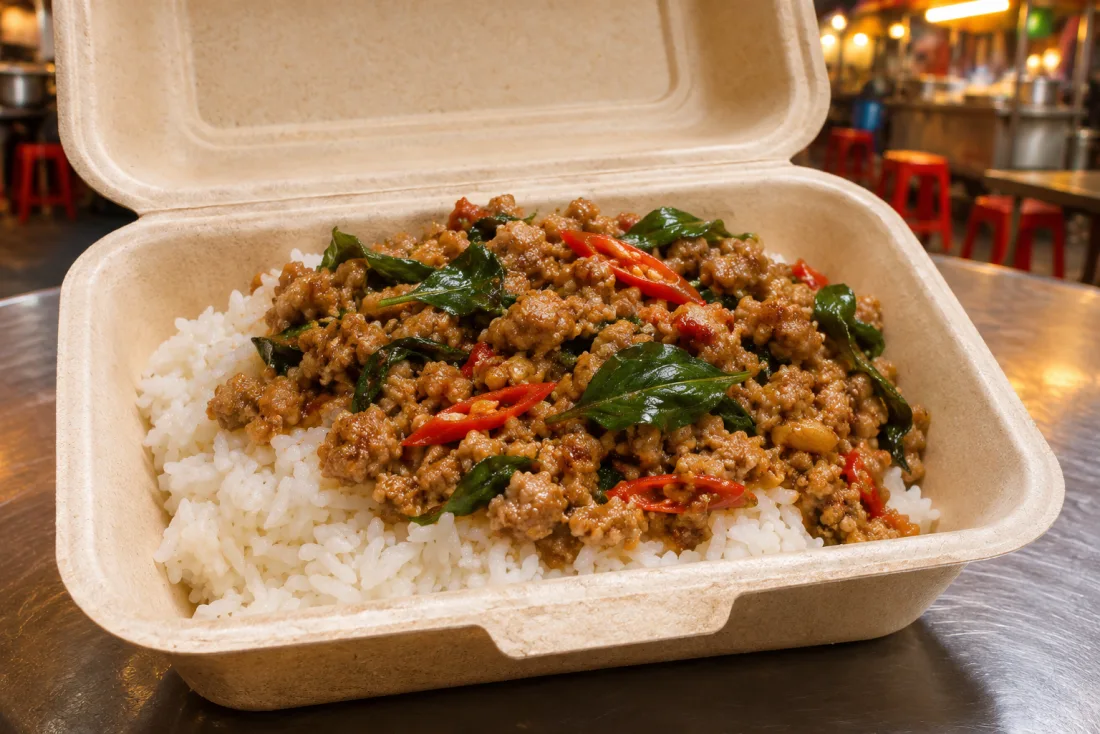

 minced pork
 optional minced beef
 fish sauce
What stays on the rice
Minced pork, red chilli and wilted holy basil can cover part of the rice. Another documented restaurant version uses minced beef with pickled bamboo shoots. Both can be served without a fried egg, with optional chilli fish sauce packed separately.
Why the menu says no fried egg
Thai cooked-to-order restaurants may price an egg separately. Some menu photos show an egg that is not included by default. Mai sai khai or mai mi khai dao can describe an omitted egg. Check the actual menu selection and which meats are available.
What goes into the wok
Garlic, chilli and mince are cooked in a hot pan, with holy basil folded in near the end. The seasoning can use fish sauce, oyster sauce or soy-based blends. Pickled shoots add tang and crunch if selected. Plain cooked rice is added during plating.
How the stir-fry tastes without egg
Holy basil, garlic and chilli come forward. Sauce can seep into the rice; a drier wok style highlights the texture of the mince. Pickled shoots bring a sour, crisp accent in the beef variation. Taste the plate before adding extra chilli condiment.
Choosing or listing this rice plate
Ask if the named meat, rice, pickled bamboo, chilli sauce or broth are included. A menu picture can show the actual no-egg serve. Omitting an egg topping and preparing a dish for an egg allergy require different kitchen information.
Allergens and shared utensils
Shared equipment, sauces and sides may still bring egg cross-contact. Traditional fish sauce contains fish, oyster sauce may contain molluscs, and some sauces contain soy or wheat. Ask directly if the kitchen can accommodate your specific allergy.
If you have a food allergy, tell the restaurant before ordering and ask about ingredients, sauces and shared cooking equipment.