
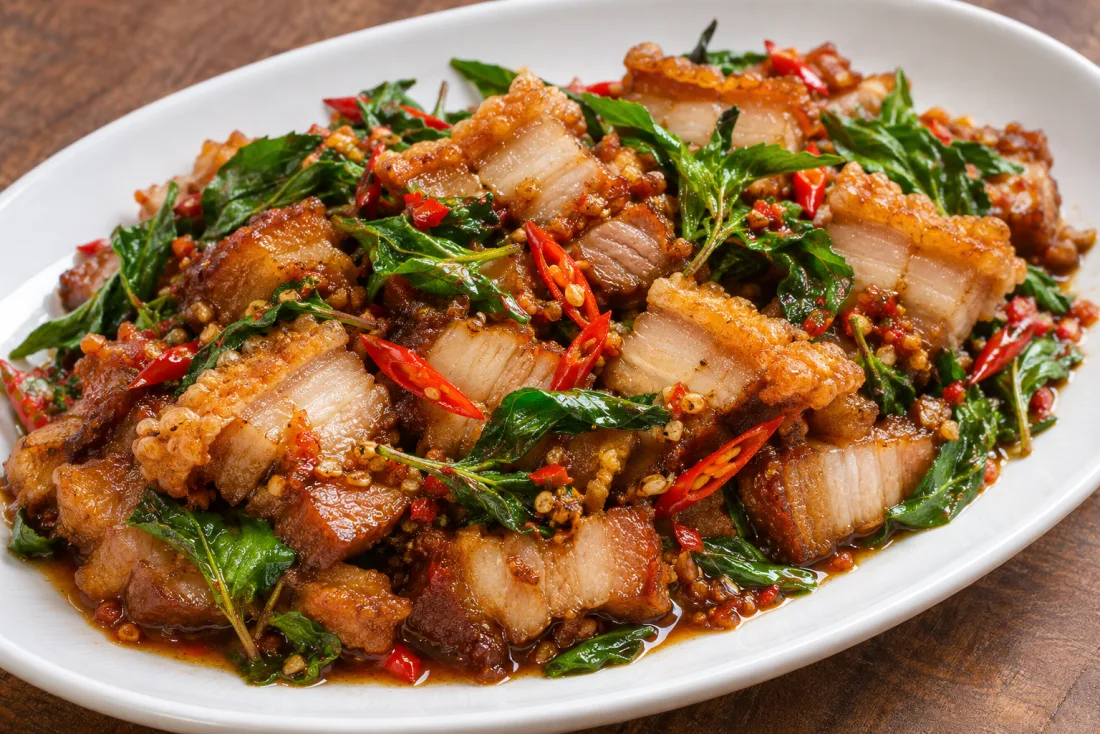

 crispy pork belly
 fish sauce
Crispy pork in a Thai cooked-to-order stir-fry
Pad means stir-fried, krapao means holy basil and moo krop means crispy pork. Thai cooked-to-order menus use different proteins with holy basil. This version emphasizes pork with crisp skin.
The cook can stir-fry the pork and herbs for the order and serve them over rice. A generic basil label is less clear than the Thai word krapao.
Crisp the pork first, then stir-fry with aromatics
One recipe uses skin-on pork belly. Cooks can boil and fry it or roast it before crisping the skin. The cut pieces show distinct layers, and the pork may be prepared in advance.
Garlic and chilli can scent the wok before the cook adds a little water, oyster sauce, fish sauce, seasoning and sugar. Crispy pork goes in with the sauce and holy basil is added toward the end. Sauce and cooking time affect the skin.
Crisp skin, pork richness and holy basil
The skin can give a crisp bite, followed by soft fat and lean pork. Garlic, chilli and holy basil give fresh and warm aromas, while sauces bring savory salt. A little sugar can round out the taste.
More sauce softens the pork skin sooner. A dry version can keep more crunch. Ask separately about chilli in the cooking and any chilli fish sauce at the table.
Rice plates, sharing and fried egg
The stir-fry can go over steamed rice, where the rice picks up the sauce. A fried egg can add a different kind of crisp edge and a rich yolk. It is an optional addition. If chilli sauce comes on the side, try a piece of pork alongside the plain rice before mixing the whole plate.
A separate plate can be shared with rice, vegetables and soup. Ask about portion size and separate packing if you want the crust to stay crisp longer.
Minced pork, chilli-salt pork and noodle variations
Pad krapao moo sap uses minced pork, while moo krop uses pieces with distinct skin and fat. Phrik kluea can indicate a chilli-and-salt version with different aromatics.
One recipe combines crispy pork and holy basil with thin rice noodles. Sen lek points to thin noodles. For rice dishes, ask whether the pork is put over plain rice or stir-fried into the rice.
Allergies in the marinade, sauce and fried egg
The pork marinade and stir-fry sauce can use soy sauce, fish sauce and oyster sauce. These may contain soy and wheat, fish, and mollusks respectively. A fried egg adds egg. Frying oil can be shared with coated foods or seafood.
Ask about the two seasonings and shared fryers, woks and utensils. Removing a condiment does not change ingredients already cooked into the pork. Check whether the kitchen can prepare a separate portion.
If you have a food allergy, tell the restaurant before ordering and ask about ingredients, sauces and shared cooking equipment.